Ease Your Admission into a Post-Graduation College with these Interview Questions

Most of the post-graduation colleges admit students by testing their capabilities through different procedures.

One of these hurdles that the students face is the interview round that takes place mostly as a final test before starting the curriculum. So, it is important to prepare yourself with the common interview questions and tackle them in a way that makes your way smooth inside the institute.

Read the following article to get a hang of the interview questions and how to deal with them.

Getting to the interview in itself means that your application has displayed your abilities to an extent. The interviewer further wants to test your skills and commitment. Interviewers also want to see how you will fit into the institution or a research group. These questions have a specific meaning and the interviewer exactly know what to ask.

The questions would definitely depend on the course that you are getting into but some of the typical questions with not so typical answers are listed here. Having a look at them once before you are appearing for the course will ease your process of admission to the course and getting to know what is the interviewer expecting out of them.


Let’s take a look:

Why do you want to take up this program/course?

With this question the interviewer wants to understand how passionate you are for the course or the program that you want to pursue. Referring here to modules and projects about or a paper from your undergraduate course that further developed your interest. Explain to the interviewer that why this course is important in order to achieve your career aim.

Take for example you are seeking admissions to MS courses in UK or an M.Tech course in US, or a M.Com degree in India you will have to know that how a particular course will draft your career. It is possible that you may need to discuss your plan in detail, so you should better be prepared for it.

Why do you choose this University?

Another hurdle that you may need to clear is to make the interviewer believe that you have chosen the best university for you. The familiarity with the departments related to your research and how well it is known in the academic community should be your main focus. Do not try to butter them, just simply tell them how being here will help you tailor your career path.

Secondly, highlight the research aspects of the course that you find attractive, the methods, the structure of the program and display your firm believe in the college.

For example picking one of the above mentioned examples, MS colleges in UK would like to know what search do you have about the college you have chosen and what about the other colleges offering same course in UK.

What are your five years goal?

You may think that once you are out of the room, the interviewer may not even remember what you said. Still, you have to be prepared to the fullest because they are not interested in your five year plans, rather they are interested to know about your organizing skills, planning skills etc.

Not only do they test the skills but also become sure that you will be committed to the course for the entire tenure and have plans to take it further.

How will you be beneficial to us?

To ensure success, do not list your skills. Rather give examples of your achievements in the past. Research about the competencies that the universities are looking out and try linking your skills to the competencies required. What they want to know is:

  • Your achievements weather from earlier courses or work if any
  • How are you a performer?
  • Will your skills benefit the course in some way

Which part of the course were you the most interested?

The question is designed to understand weather you have a genuine enthusiasm for the study or not. Again explain your career path and how important this course is to you. Even you do not have a set plan, display interests that make you a serious student. 

What are you as a person?

Getting to know about your interests and future plans, the interviewer now will shift the focus on if you are going to be a healthy part of the system. In other words, he will want to know if you will be able to adjust to the environment that the university offers to the students. You may offer your strengths and weaknesses here. You may talk about:

  • Your accomplishments in extracurricular activities
  • Contributions made in previous academic session or work (if any)
  • What do you like

You can talk about yourself as much as you wish to do, just remember you have to leave a positive impact when you leave.

Final Words

Your goals will define your career path and will help you answer most of the questions, some listed here; some may come up randomly. You never know what the interviewer can think!

Also, keep in mind a formal attire when appearing for an interview. The way you dress up ends half of the interview; in a positive or a negative manner depends on you.

AUTHOR BIO

Akansha Arora is a professional writer and blogger who loves to pen down her views on a number of topics that interest a reader. She writes keeping in mind the current scenarios and wishes to keep her readers well informed.


Interview Questions and Answers Kitchen Assistant Interview

Interview Questions and Answers Kitchen Assistant Interview

Kitchen assistants earn, on average, £15000-£1800 a year.

The industry is vast with employers, large and small, recruiting for skilled staff. Job roles are often competitive with a mixture of students, job seekers looking for part-time work and wanna be chefs  (who don’t want to take a higher educational pathway) applying for the advertised roles.

How competitive is a kitchen assistant job interview?

Job interview competitiveness - easy

Interview Specfics

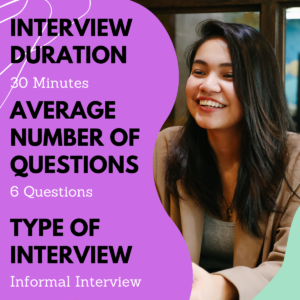
Informal job interview lasts around 30 minutes with 6 questions being asked

In the main, kitchen assistants prepare food, support and work closely with chefs, ensuring the chef and his team, have everything they need and ensure the hygiene of the kitchen. With that in mind the interview questions will be based on these duties.

10 Interview Questions and Answers for A Kitchen Assistant

Kitchen Assistant Job Interview Question – Can you tell me a little bit about yourself?

To answer the opening job interview question, applicants are required to explain their kitchen assistant experience and state any catering or hygiene-related qualifications.

Start with a summary opening line: “I have over 10 years’ experience in catering” before giving more details “for the last 2 years I have worked at….” Keep this answer about your kitchen-related employment history and your work ethic, not your hobbies and interest.

Kitchen Assistant Job Interview Question – Why do you want to work as a Kitchen Assistant?

The hidden meaning behind this open job interveiw question is employee retention. Restaurants spend a large part of their profits on on-going recruitment. By hiring employees who want a catering career the hired applicant is likely to stay with the organisation.

Show your passion for wanting to work as a kitchen assistant; how you enjoy cooking, mixing ingredients and seeing customers eat your dishes.

Explain how you are excited to be working in the catering sector. If an employer believes this is a job stepping stone for you, they will presume that you will leave once you find a more suitable position and not offer you the kitchen assistant position.

But if the interviewer sees an applicant’s passion and desire, they are more likely to hire them.

Kitchen Assistant Job Interview – What do you think are the main duties of a Kitchen Assistant?

During a kitchen assistant job interview applicants will undrtake an infromal job interview or will be asked a number of competency-based job interview questions. 

Employers will ask the interviewee what duties they are required to perform to test the applicant’s knowledge of a working kitchen. If an applicant can talk about food preparation, food hygiene, and general kitchen duties, the employer will score the applicant high.

To answer this question, list a few duties and make them relevant to past roles “you have to A, B and C in my last role I (give example) …”

Kitchen Assistant Job Interview Question – What experience and qualifications do you have?

For a kitchen assistant position, applicants aren’t required to have a degree-level qualification, as catering employers are more focused on a candidate’s skill set.

Saying that, applicants with a catering related qualification can be seen as more favorable.

Open with a confident line “I’m a qualified and highly experienced kitchen assistant…” and follow this with more detail “I have a food hygiene certificate as well as a Btec Level 3 in catering….”

In the main though, applicants need to state their kitchen experience. Explain if you can prep salads, make sources, trim and peel vegetables and give examples of complying with food hygiene regulations. Using real-life examples works best here.

Kitchen Assistant Job Interview Question – Do you prefer working in a team or alone?

The kitchen assistant role is a team-based position.

The employer is looking for someone who will fit in with the current team. You need to highlight how you are a team player and what you would bring to the team.

In the main, kitchen assistants are required to support other kitchen assistants if demand requires it. As well as working collaboratively, like a well-oiled machine.

Give a work-related example of being part of a team.

Kitchen Assistant Job Interview Question – Describe what you think a daily routine would be like, working in a kitchen?

Often in the kitchen, employees will follow a routine; unloading, prepping food, clearing away, opening up, cooking and serving.

This question is to check your knowledge base of a routine in a kitchen. An experienced kitchen assistant will answer this question confidently, explaining step-by-step what duties they would perform.

Answer this question in a time-line; “when I arrive in the kitchen, my first task is to wipe down the surfaces, before collecting the vegetable for preparation…..”

Kitchen Assistant Job Interview Question – If you prepared a meal and the customer didn’t like it, what actions would you take to resolve the issue?

Situational interview questions, like this one, are designed to check what you would do or have done previously.

When answering this question give 3 steps  “If a customer didn’t like a meal that had been prepared for them I would first reassure the customer that we would give them a new dish free of charge, as this increases customer loyalty. Next, I would explain to the chef what the customer said they didn’t like about the meal before checking that the ingredients or sources hadn’t turned sour.”

Kitchen Assistant Job Interview Question – What is your understanding of kitchen hygiene?

Food Hygiene is key in a kitchen.

Give a detailed answer here of your knowledge and the reason why you use certain chemicals, storing processes, hygiene processes.

To answer the interview question state the process you followed in a previous kitchen, as all kitchens adopt a similar routine when it comes to high hygiene standards.

Kitchen Assistant Job Interview Question -Do you have any questions for me?

Good questions to ask interviewers at the end of the job interview include questions on the company growth or expansion, questions on personal development and training and questions on company values, staff retention and company achievements.

Tips to Prepare a Career Emergency Plan

One of my friends called me some time back completely panicked. The reason? She was about to be laid off by her employer and did not know what to do! I tried to calm her down and asked, “Do you have a career emergency plan?” But she had no idea about what this career emergency plan is! Well, do you know, and do you have a back-up plan for your career emergency? If not, read more…

Why do you need a career emergency plan?

Just as emergency plans are made to meet crisis such as an earthquake or fire, our career plan also needs an emergency plan to meet the last minute changes or situations.  Many people continue with their current job for years without getting an idea of where they are heading in their career.

Nowadays, one can come across one or the other news about job cuts, companies planning to downsize, etc. This could certainly raise a question- “Is your job at risk?” In fact, no job is 100 percent secure. Companies hire when their business demands and cut some jobs when required. In that case, a career emergency plan can help you not to hit the panic button during a layoff, career change, or finding a better opportunity.

Hence, it is always advisable to prepare yourself for a ‘pink slip’. Here’s how you can create your perfect career emergency plan:

How to prepare for it?

  • Keep looking for new opportunities

The simple rule is to stay in an unexpected game. Do not stop exploring new or better career opportunities even if you are comfortable in your current job. A plan ‘B’ is always recommended in the form of a continuous or a passive job search.

  • Maintain your emergency fund

Save on your unnecessary expenses and save a major amount from your paycheck to maintain an emergency savings fund. Proper financial planning can help you to meet your expenses in case of any critical situation like a sudden layoff.

  • Keep updating your resume and online profiles

It is always good if you keep updating your resume and online profiles on professional social networking sites like LinkedIn. Keep on adding your latest accomplishments, skills, projects, career plans, etc.

  • Compile a list of your dream companies

A clear focus on your preferred employers/companies makes it easier to search a new job. Hence, prepare a spreadsheet and include important details such as company name, website, contact details, and job page links.

  • Build your network

Maintaining a strong career network helps a great deal in finding a new job and circulating your resume in the right hands. Social networking platforms such as LinkedIn and Twitter offer a great place to connect with people across the geographical boundaries. Hence, if you are looking for a job abroad or in your own country, your career network can play a vital role in updating or referring to a relevant job. All you need to do is to keep your network informed about what you are looking for.

  • Stay in touch

Creating profiles on social media platforms and joining groups is not sufficient to get great results. It is vital to manage your network regularly and reach out to all your contacts. Retweeting posts, inviting others to join various groups, complimenting them on their accomplishments, etc. are some ways to stay in touch with your network.

  • Identify your career ‘Non-Negotiables’

In situations like layoffs, it is natural to get panic and tempt to take up any first job that comes your way. However, this might turn up to be worse when the decision taken in a hurry makes you search your job again after six months. Hence, prepare a list of the factors that you prefer in your new job.

The best way to sail through a bad stage in your career path is to have a ready action plan. Take out some time from your daily work schedule for all the above-mentioned points- social networking, profile updating, looking for new opportunities, and maintaining an emergency savings fund.

Good luck!

Likeability The Key to Interview Success

People often underestimate the power of likeability in the job interview situation.

Throughout the application process, the employer has checked your qualifications, experience and skill set. The final stage, the job interview, is to decide if you are a good fit for the team, to undercover your unique selling point/strengths and to decide if they like you.

Teams that work well together produce a higher quality of work, have increased retention and employees have fewer sick days. The interviewer at this stage of the application process is looking at your temperament as much as they look at your skill base and experience.

In many situations employers have hired not the best qualified or the most experienced, rather they hire the person they feel will fit in best with the team.

Remember if you have been invited to the interview stage you have already met the essential criteria of the job spec, the employer knows you have the minimum requirements, they are now focusing on your personality, values and work ethic.

How to Increase Rapport

The interview is, for many, a stressful situation. When stressed your personality, likeability and rapport-building skills take a back seat.

These simple techniques will help you increase your likeability increasing your chances of being offered the position.

Gaining Employers Agreement

In the interview, you may find yourself in a situation where you disagree with a point the employer has made. Is this a test? Are you more of an expert than the employer? Do you agree or disagree?

By agreeing with the employer they will like you more than if you disagree. But in many situations, you need to highlight your knowledge and expertise by disagreeing. To overcome this, you can agree than disagree by using this simple line.

“I agree on that point (this breaks down resistance) but (add in your expertise)…” Compare that line to “no that not true” or “I don’t agree with that” these two lines will instantly break rapport, by agreeing and then adding a “but…” you breakdown resistance, the employer likes you and you get your own thoughts/expertise across.

Adding value

To really build up your likeability while at the same time showing off your knowledge and expertise you can use a sneaky technique that works in any sector interview.

The idea is to share your knowledge and expertise, the interviewer will see you as pure gold, thinking “if they are sharing this valuable content with during the interview what will they share when I employ them.

When the interviewer makes a statement, you need to “repeat and then add value” By repeating first, shows that you respect the interviewer’s thoughts, experience and opinions which builds rapport. The sharing of insight will increase the value the interviewer unconsciously attributes to you.

As an example, the interviewer may be discussing a piece of technology they use in your sector. Your answer would be “yes that piece of technology is very good at X(repeat) ……(now add value) recently a new version of the software has come to market the advantages of this is X and the disadvantages is Y…”

By giving both advantages and disadvantages of the technology, you can wait to hear the employer’s opinion and then agree with this, to increase likeability. If you only quoted either the advantage or disadvantage and the employer discussed the opposite you would break rapport. And rapport easier to break than it is to build.

Likeability

People like people who like them.

At the interview end when asked if you have any questions to ask the employer, make reference to how you would enjoy working together as you like there (work ethic, values or commitment)

By stating that you like X about the employer, the employer will automatically like you in return.

As well as structuring your interview questions, as well as preparing your answers, as well as planning which key strengths and unique selling point to discuss you also, and this is key to job interview success, have to learn how to build rapport and likeability.

Next Job Interview Answers

Job Interview Questions and Answers for Next Retail

The Next company job interview is relatively easy and delivered in a laid-back fashion. Often the first interview round is via telephone, followed by an in-store assessment and traditional interview.

As well as being asked the below job interview questions applicants are normally asked to ‘pick out an outfit for a customer’ It is a focus on customer service skills that will result in a job offer.

NEXT clothing retail interview competitiveness

Type of NEXT job Interview

Informal job interview lasts around 30 minutes with 6 questions being asked

NEXT retail job interview questions and answers

  • Job Interview Question 1: What is your experience in retail?

“I have over X years of experience in retail, my career highlights are A, B, and C (give lots of detail and selling points) I have always enjoyed working in retail and long term I am keen to progress in Next clothing and move into management roles”

    • Job Interview Question 2: How would you handle a customer complaint?

“In my previous roles, I have worked on the customer service desk where I was responsible for dealing with complaints. An example of this was when (give a real-life example of when you turned around a complaint) ”

    • Job Interview Question 3: What would you do if a customer order hadn’t arrived and they desperately needed the item?

“For me, customer service is key for customer retention. I always do my best to support customers. This situation happened to me recently. To support the customer I first checked if we had the item the customer had purchased in the stock room because we hadn’t I rang around other stores and sent a courier to deliver to the customer’s address. This pleased the customer and she ended up spending more money in the store”

      • Job Interview Question 4: How would you deal with busy periods when customers just literally want to get in and out?

“In my last role, I worked in a really busy store and many customers were wanting to come in and buy goods rather than shop around. I had the idea of approaching customers with an iPad to check if we had the goods in-store. This was a real success of the idea was rolled out across all stores”

  • Job Interview Question 5: If you were due to go home and you were supporting a customer what would you do?

“I’m a very customer-focused person. If a customer needs my support I will work with them until they have finished shopping. As an example, when I was working for (company name) I was at the end of my shift when a customer asked for support. I (add actions) and supported the customer with their request.”

  • Job Interview Question 6: Have you ever dealt with a rude customer? What did you do?

“Yes on the customer service desk I worked on I would deal with rude customers each day, but I was very good at calming customers down and resolving their issues. An example was (give a real example with a positive outcome)”

  • Job Interview Question 7: Why do you want to work for Next retail?

“As a next customer, I enjoy the atmosphere in next, plus I like the style of clothing. For me, I want to sell goods that I believe in and because I love the next brand and wear the clothes myself I would find it easy to sell these garments to customers”

    • Job Interview Question 8: Do you have any questions to ask me?

Good interview questions to ask interviewers at the end of the job interview include questions on the company’s growth or expansion, questions on personal development and training, and questions on company values, staff retention, and company achievements.

  • Have you seen an impact on in-shop customers with an increase in online buying?
  • What are the busy times of the year?
  • Who is Next biggest competitor?

5 Career Paths You Never Considered

When asked which occupations are the most meaningful, many people say, doctors, lawyers, and teachers. Since the American workforce is on the rise after a major recession in the last few years, several new career paths have emerged. If you are looking for an entry-level position or a job change, you should add these five career options to your list:

If you have an upcoming telephonic interview and you are still thinking about how to crack it, understanding some of the common telephonic interview bloopers would help you to excel in it.

These include:

International:

With globalization and the recovery of the American economy after a financial crisis, international opportunities are increasingly attractive to many applicants. Positions such as flight attendants, ambassadors, and traveling nurses can work around the globe and see hundreds of destinations. If you are fluent in a foreign language, you might consider an international job that doubles as a world adventure.

Jewelry Designer:

If you have a knack for creating special jewelry, you can start your own business or join a team of designers. Accessories like necklaces and rings are in high demand for awards shows, meetings, and even the red carpet! Designing jewelry is one of the best career options because you may be able to work a flexible schedule and even open your own location. This job change can open doors to hundreds of other opportunities and let your career take off.


Non-Profit:

Millions of non-profit companies offer positions all around the world. Organizations like the American Red Cross and Doctors without Borders hire thousands of workers each year. Contrary to popular belief, non-profit careers are not unpaid positions. Employees can earn annual salaries comparable to those in other career paths, and these people often display increased happiness because they help others.

Resale Entrepreneur:

As an entrepreneur who buys and sells antiques or other items, you can work from home or open your own store in town. To launch your business, find a reliable wholesaler for clothing, home décor, or accessories. Research several online outlets where you can sell your products, including eBay, etsy, and Bonanza. Start listing your items or display them in your showroom and watch your bottom line grow!

Freelance:

If you want to spend less money on gas and less time in traffic, consider a job change to freelancing. Websites like Freelancer and Elance connect contractors who work from home with clients for a variety of positions, including translating, animation, photography, and voiceover work. Self-employed writers can also find a broad range of opportunities for children’s books, blog articles, science fiction novels, and news stories. Whatever your skills and interests may be, there are career options in freelance work that will suit your needs and passions.

You may not have thought about these five career paths in your search, but they are certainly viable options for a job change. Use these ideas as a starting point to create your own business plans. Remember, determination and patience will benefit you in whichever direction you choose to take your career.

Good luck!

Author Bio:

pritam nagrale1

The article is contributed by Pritam N. He is SEO, Digital marketing tutor and also owner of the site SureJob.in. He likes to write on career, job search and interview related articles. He has appeared as guest blogger on various Blogs. You can visit his site to get more career tips; he is striving to make his website your source for getting knowledge, information and guidance for job search and career building.  When he doesn’t work he spends time with his family and travels around the world.


Top 5 Telephonic Interview Bloopers to Avoid

Interviewing for a job, in-person or telephonic, is one of the most critical stages of job-hunting. Many of us experience stress and high anxiety. However, making interview mistakes in any form can make you pay for it!

Most of the companies prefer a telephonic interview, which is probably like a ‘mini job interview’ before the final ‘face-to-face’ interview. If all goes well, it paves the way for the final in-person interview.

If you have an upcoming telephonic interview and you are still thinking how to crack it, understanding some of the common telephonic interview bloopers would help you to excel in it.

These include:

Neglecting the importance of the right place for the interview

Most of us fail to understand the importance of a right environment for conducting a telephonic interview. Avoid a noisy location, in presence of friends, or while driving your car. Choosing your home or a private office cabin where no one disturbs you is a perfect place. When at home, avoid distractions like kids, other phone calls, TV, or your pet barking. Use a right phone connection with the proper network. Take out sufficient time to attend the call and do not assume that it will get over in ten minutes or so.

Treating it casually

Don’t think a phone interview to be just another casual ‘know you’ call. These are seriously taken by employers as a part of their screening process and choosing the best candidates for final interview. Never assume that you will get another call, as this might be your first and the last interview call from the company depending on your performance.

Lack of preparation

When you do not take this interview as real, the chances are high that you will lack in your preparation for the same. Like an ‘in-person’ interview, it is vital to prepare for a telephonic interview by researching about the company, job description, and practicing some common interview questions.

Not concentrating on your voice tone

Since you are not present in front of the interviewer, your voice is the only medium that will help you to send across the right impression. Make your pitch convey that you are interested, enthusiastic, and attentive to answer his questions. Speak clearly and slowly to convey your thoughts clearly. A right voice modulation is the key to overcome the disadvantage of the absence of facial expressions, body language, and eye contact.

Forget to keep the application form handy

Keeping your resume, application form and other required details handy is required to answer any related questions quickly. Do not hassle your phone interview by remembering and looking for required details, such as previous salary, at the time of attending the call. Not doing so gives an impression that you have not prepared for the interview, and hence, you are not much interested!

What to do then? Some important tips:

  • Do not drink, chew, or eat anything during the interview, as it might not sound pleasant while speaking.
  • Prepare some common questions such as reasons to leave the previous organization, what you know about the current company/role, what are your strengths and weaknesses, etc.
  • Choose a location that has an appropriate background to avoid any distractions.
  • Keep resume details handy to waste any time.
  • Keep relevant questions ready to ask the interviewer at the end.
  • Avoid multi-tasking (no emails, chats, household work, etc. at the time of phone interview).

All the best!

Author Bio:

Swati Srivastava is an avid writer who loves to pen down her ideas and career tips for job seekers and professionals. Her blog posts, new stories, and articles are focused on the extensive domain of employment sector in the gulf. Currently, she is writing for Naukrigulf.com. Follow her @LinkedIn 

The Answers to Postman or Post Women Interview Questions

The answers to the most commonly used postal delivery Interview Questions

Often out of 300 applicants only 6 candidates will be interviewed. In most interviews, but this varies depending on the job sector and employer, you will be asked around 10 questions during a 45 minute interview.

The key to passing job interviews in preparation and practice, this sounds obvious but is often overlooked with the average interviewee spending around only 60 minutes preparing for their job interview. This article will give you the questions ask at interviews for the position of a delivery person, and the desired answers – make sure you tweak and personalise these answers to fit your own experience and skill base.

Job Interview Questions and Answers for Royal Mail Delivery Worker:

Job Interview Question 1: Give an example of when you had to work on your own initiative?

In the main, you are responsible for your own post-round, timing and responsible for getting the delivery completed.

The interviewer will ask this question to check if you are self motivated. To answer this question start by saying “in all my roles I have had to work on my own initiative…” and then follow this up with a real-life example.

To get extra bonus points use a story where you have to go above and beyond or where you have had to make a decision without the support of a line manager.

Job Interview Question 2: How would you deal with a customer who is not happy with the royal mail service they have received?

As a customer-facing role, you will at some point throughout your royal mail career come across an unsatisfied customer.

Customers may complain about lost mail, letters then had been ripped or got to wet and even late mail.

The interviewer needs to check if you have the skills to deal with this type of customer and the interviewer will be listening out for an explanation of how you would turn around the customer getting then from being angry to being happy with the service or explanation you give.

To answer this interview questions use an opening line to grab the interviewers attention “This has happened to me before, I had a customer who we called British bull dog, as she had a British bulldog with her when she was complaining…”

By stating that you have dealt with angry customers the interviewer knows you have the experience, all you need to prove now is that you have the skills and knowledge to successful deal with the complaint.

Follow your opening line with this Interview Question 3 Step Process

Step 1 – State the problem “the customer was complaining about X”

Step 2 – Explain what you did to resolve the situation “I did A, B and C…”

Step 3 – Give the outcome “in the end the customer X, Y and Z (with a big smile)..”

Job Interview Question 3: As a post person you will do a lot of walking, how do you keep yourself fit?

Often the role as a delivery person requires someone who enjoys exercise.

Answer the question by giving in detail the amount of exercise you, and how you enjoy walking and being in the fresh air. You can even go as far as saying that you are applying for the role as you enjoy the idea of working outside and getting paid to exercise.

Job Interview Question 4: Give an example of when you worked to a deadline?

The post has to be delivered on time and customers will often complain if their post is 20-30 minutes late. You need to convince the interviewer of your work ethic, your strategy to deliver the post on time and how you enjoy meeting deadlines.

There are several ways to answer this question, one positive answer is to your strategy for meeting deadlines.

“In previous roles I have always met my deadlines. For me the key is in preparation; I would first organise my post depending on the round, as this will make it easy to find the correct letters for each address. I would also look at maps and Google street view to see if there are short cuts between streets. I can easily estate the amount time require to complete the round and use this knowledge to ensure I start the round in enough time to meet the delivery deadlines”

Job Interview Question 5: How do you feel about working in snow or rain, how would you prepare?

The interviewer when asking this question is checking that you understand the details of the position. if you can give details of when you have worked in similar conditions and what you do to stay motived by staying dry and warm.

Job Interview Question 6: Have you ever done a repetitive job before and what did you do to make it easier?

Part of the role as a post-delivery person is to short mail which can be repetitive and walk the same round each and every day. For some people they enjoy repetition, while others don’t. You need to explain how you enjoy this type of work and the benefits repetition brings to a role.

“I really enjoy repetition in a role, for me I like to master a skill and the more repetitious the role the quicker I can complete the task, an example of this is…….”

Job Interview Question 7: Give an example of when you have faced with a particularly difficult situation, what happened?

Questions like this are great as they are open-ended.

If you have a key skill to get across that you haven’t managed to discuss due to previous questions, you can embedded into this answer – such as the customer service story above.

To answer this question resort back to the 3 step process

Step 1 Problem

Step 2 Your solution

Step 3 Outcome

Interview questions and answers

Job Interview Question 8: How would you deal with a customer who is disappointed with the service provided?

When answering any “how would you…” questions use a real example when possible “I had a client once who said she was disappointed with the service the company provided…”

Notice how we refer to the customer being disappointed with the company not you the employee. Follow this up with how you solve the customers issue “to help the customer I asked what she wanted from the service and then made the best effort to provide this…”

Job Interview Question 9: What makes you different than other candidates?

This is the time to really sell yourself and to make yourself stand out from the crowd.

Think about your unique selling point, why you would be a better employee then other applicants, the thing that will make you the best delivery person and tell the interview this in the most positive of ways. “I love working outside, meeting deadlines, im at my best when I work alone, I possess amazing customer service skills – even digs like me!!!”

Use this answer to summarise all your key selling points.

Job Interview Question 10: Do you have any questions for me?

Good interview questions to ask interviewers at the end of the job interview include questions on the company growth or expansion, questions on personal development and training and questions on company values, staff retention and company achievements.

How to answer the “what is your experience” interview question when you have never worked before

Passing job interviews is hard! But it can be even harder when applying for a position when you have no experience in that sector, or for graduates with no experience what so all.

So how do you answer the “what is your experience?” interview question when you have never worked in this role before?  This article will teach you one of the techniques to get around this tricky interview question.

First, you need to think about your employability skills and where you gained these skills from.

Many people have volunteered, worked part time while at college or undertook work placements.

When you have never worked in the sector your applying for before, you need to still be able to pull up stories that highlight your skills from previous experiences. A technique to help your creative juices flow is to mindmap skills. Write down a skills “customer service” and mindmap when you have used/or where you gained this skill from

The technique is a 3 step approach to answering the interview question “what is your experience” when you have never worked in this job sector before.

When asked this interview question you need to Step 1. Answer the question in the first answer

As an example, if you have been asked “what is your customer service experience” (applying for a retail position) you can summarise your customer service experience “I have over 2 years of customer service experience”

By stating that you have X years’ experience in this skill, the interviewer will be intrigued and will want to listen to the rest of your interview answer.  If this example your customer service experience doesn’t have to be in a retail setting, as customers come in all shapes and forms. If you were, let to say a scout leader, then your customers are your scouts and their parents.

Step 2. Give an example “an example of my customer service experience is when A, B and C…” again the example doesn’t have to be shop related when applying for a retail role, but it does have to highlight your experience in customer service. This second stage is about you explaining how you possess these required criteria. Really sell yourself here.

The final step, Step 3, is to relate your experience to the position you are applying for. Ideally, if you have direct experience in a similar role, you would use this as your example. But because you are using a different context to highlight your experience you need to make it relevant to the employer.

“…this is the same approach I would use in your store if a customer asked X I would A, B and C…”

The 3 Step Approach

The technique to highlight your skill base (because you have no direct experience) is to

Step 1 Answer the question in the first sentence

Step 2 give an example of you using the skill

Step 3 to make the experience relevant to the job role by explaining how you would do X in their company.

In most interview situations, the interviewee who lacks experience will often just state that “I haven’t really done that before.”

This type of answer will only lead to a lack of job offers. Most employers when recruiting low-paid positions are more interested in people’s work ethic, commitment and skill base, as they are willing to mentor and train new employees which is why the wage is set low.

Employers looking for high-paid staff required highly experienced employees who can join their company and with only a quick indication can carry out the required job duties.

By explaining how you have the skill and how you will transfer this skill to the new role the employer will see you as a positive investment.

How to Answer Social Media Interview Questions

Social media is the new rising star when it comes to upcoming job sectors.

For many applicants applying for this new role the job interview can be a scary place, as it is hard to predict the interview questions for a position that has only been available for the past few years.

Social media is a common tool for marketing services and products and all businesses are joining in. For some social media positions, you will be part social media assistant and part administrator.

Whereas in large organisations and online marketing companies you be full-time social media coordinator. Even though this role is relatively new competition for these roles is high. Surprisingly though many employers, especially in small businesses hire social media techs but don’t really know what they should ask them to do!!

Job Interview Questions for Social Media Jobs

          • Job Interview Question 1: What is your experience in social media and marketing?

Here you need to discuss your online experience by quoting how you/the company you work for have increased page likes, Twitter followers, +1’s on Google, followers on Instagram and on your like me profile. describe that strategy you used to increase your social media presence and explain how these same skills would benefit the company. Experienced marketers can also discuss marketing strategies, presentations and project management

        • Job Interview Question 2: Why is social media an integral part of a business plan?

To be successful in this sector you need to explain to the interviewer how your skills will increase the company’s social media presence, which increases website hits, increasing sales and profit. Give really examples of this in action and quote figures and percentages. You need to show that you can increase profit, making your wage look insignificant

        • Job Interview Question 3: What social sites do you use and how would you compare them against each other?

This is a knowledge based question. start by discussing the success of well know brands such as Facebook, explain how as an example vine and youtube get a percentage of hits compared to other social media sites and discuss the future of social media – G+ is predicted to be highly popular and how the increase of browsing on smart phones increase year on year

          • Job Interview Question 4: What social media pages or profiles have you created and managed for previous employers?

This is a great question to highlight your worth. start by explaining how poorly a site/page was doing quoting numbers. Discuss what strategies you used to increase hits (in detail) and give the out (number of users, followers, outward referrals to the website and increase in sales from direct referrals)

        • Job Interview Question 5: Which social media platform will popular in the next 5 years and why?

first you need to explain how tablets, phones and TV web channels are changing the face of online marketing. research future trends regarding social media and discuss what you predict will happen, explaining how you would incorporate this into your marketing plan.

        • Job Interview Question 6: How can a business generate income from social media?

As you know there are several money making streams available for the employer. Discuss this in general and then pick one key point that you know your future employer would be interested in and discuss what systems you would implement to make your department a financial success.

        • Job Interview Question 7: Which social media monitoring, analytics and publishing tools do you use?

Again, this question is to test your knowledge. Discuss two or three analytic systems and compare them against each other talking about the pro’s and con’s. Finish this question by explaining how you would use this data to change your marketing campaign.

          • Job Interview Question 8: What are the benefits of platforms such as Hootsuite, TweetDeck?

To answer this question, start by explaining which platforms you have used in the past and give an appraisal of each platform. Discuss any new platforms that have recently come to market and discuss the benefits to that particular company.

        • Job Interview Question 9: What are the pro’s and con’s of a LinkedIn group vs. LinkedIn page

This question can be asked for a range of different social media tools. To answer the question give the advantages and disadvantages of the page/group. If you have had any key successes with any tool, explain this in detail  

        • Job Interview Question 10: How would you design a social media page to increase customer retention?

Before answering this question think about the companies targeted audience and use this knowledge to give a relevant answer. Explain the importance of niching, picture vs text percentage, interactive webpages and tools. The relevant the better!!

        • Job Interview Question 11:Why is Google+ becoming leader in social media?

G+ is becoming a force to be reckoned with. In this answer explain why G+ is increasing in usage. Also discuss some of the Google set backs and recent trails such authorship.

        • Job Interview Question 14: Do you have any questions for me?

 Good interview questions to ask interviewers at the end of the job interview include questions on the company growth or expansion, questions on personal development and training and questions on company values, staff retention and company achievements.