2022 will see an increase in job interviews as employers recover from pandemic and great resignation.
Already there has been a significant rise in job vacancies. The office for national statistics said “The number of job vacancies in October to December 2021 rose to a new record of 1,247,000, an increase of 462,000 from the pre-coronavirus (COVID-19) pandemic level in January to March 2020”
Competition for job roles is at an all time high, with a higher number of degree-level qualified career professionals looking for new career opportunities.
Technology and remote working has open the job market up to a global audience.
To be successful in a job interview, the candidate not only has to have the best experience, skills and qualifications, they also have to be the best interviewee.
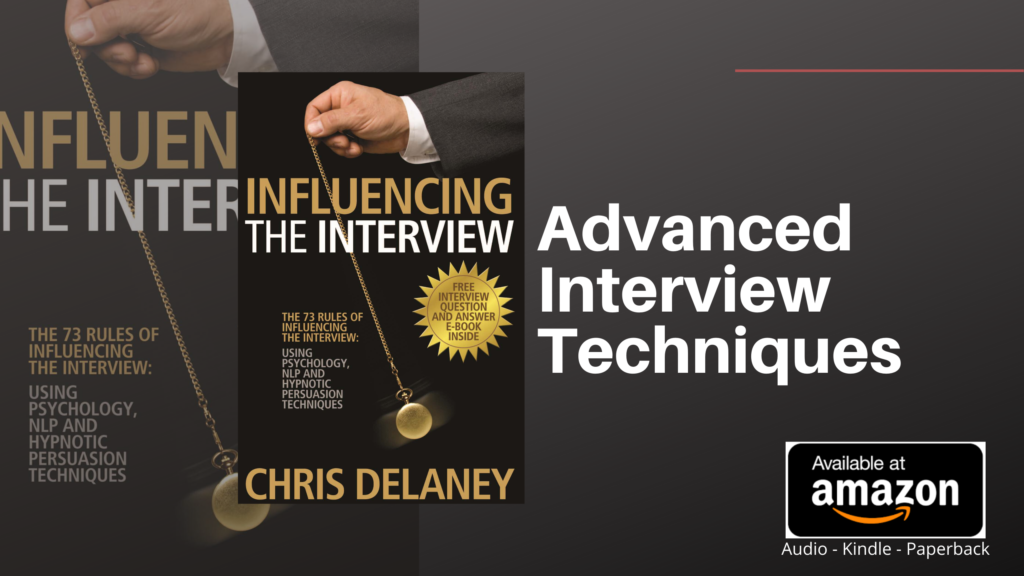
Below is a list of the 5 best job interview books for 2022 to help you land your next job role.
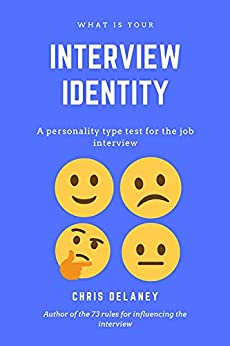
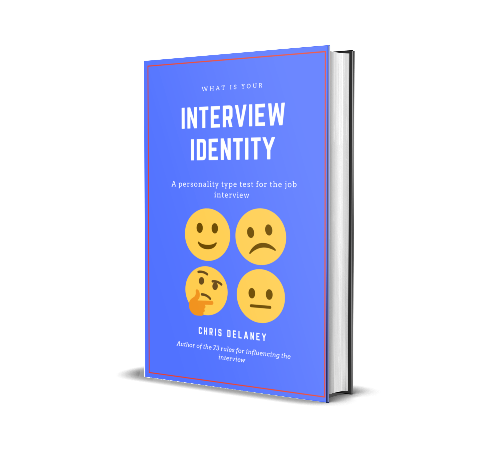
Job Interview Book – what is your interview identity?
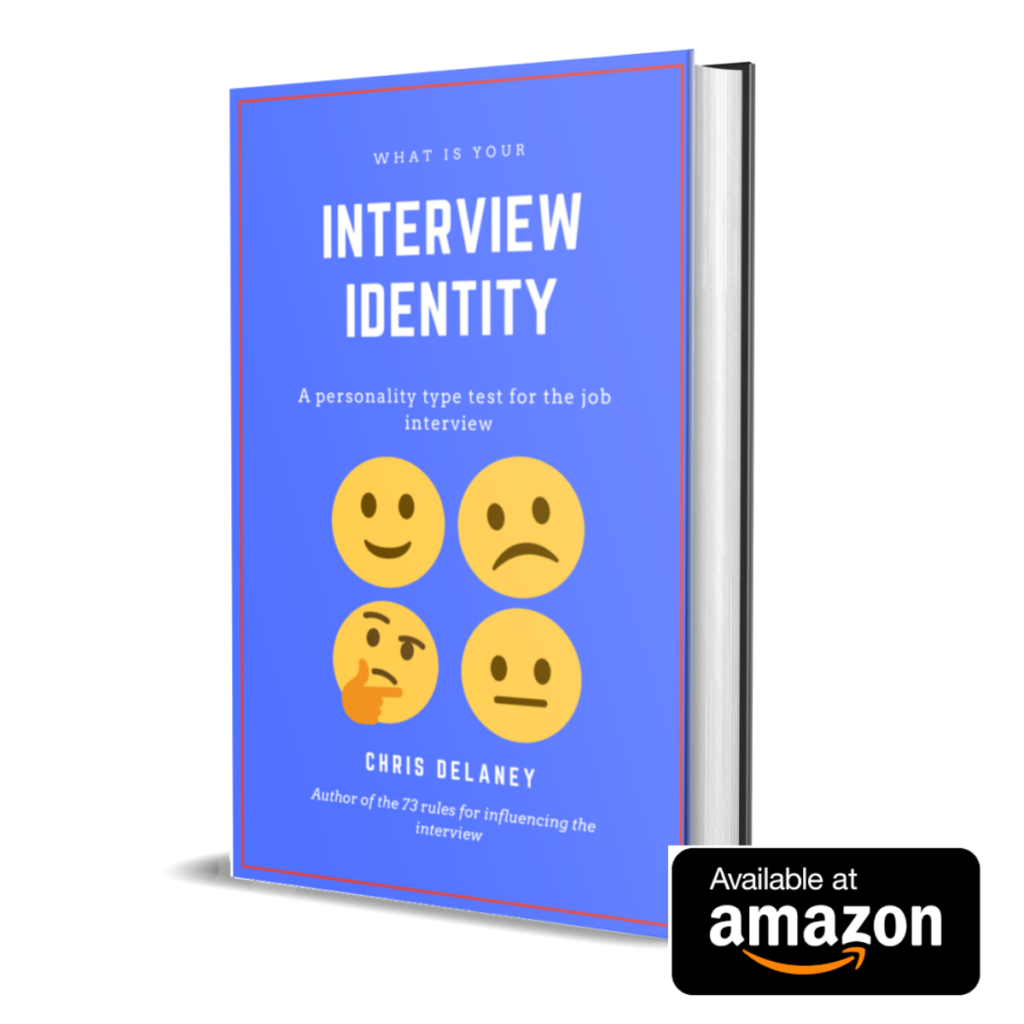
Pre-released at the end of 2021, the interview book ‘what is your interview identity, both paperback and hardback versions, were in top ten of Amazons new release books list.
The books explains the psychology of the recruitment process and how an employers perception of an applicant at the interview start creates a lasting impression that influences the scoring of the candidates job interview answers.
The ‘interview identity’ is the Myers Briggs of job interviews. The book also discusses the power of unconscious bias and explains the academic research findings of what creates a successful job interview.
Suitable for all job sectors, a must have for any career professional.
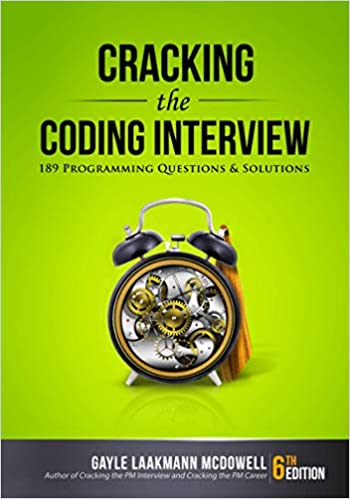
Job Interview Book – Cracking the Coding Interview
The programming sector, and the technology industry as a whole, is one of the biggest recruiters,
In tech job interviews you are asked very specific tech related job interview questions. To prepare for a programming job interview it is important to have technical interview answer prepared.
Cracking the code shares 189 programming interview questions and solutions to help any programming interviewee prepare for the job interview.
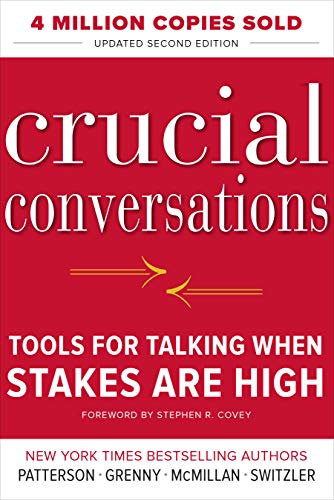
Job Interview Book – Crucial Conversations Tools for Talking When Stakes Are High
With over 4 million copies sold, the crucial conversation book is a wide read book.
Crucial conversations explains how to communicate in high stake situations. The book delves into the emotional reactions of individuals helps to influence and persuade.
The book explains the seven step model for crucial conversations; start with the heart, stay in dialogue, make it safe, don’t get hooked by emotions, agree mutual purpose, separate facts from the story and agree a clear action plan.
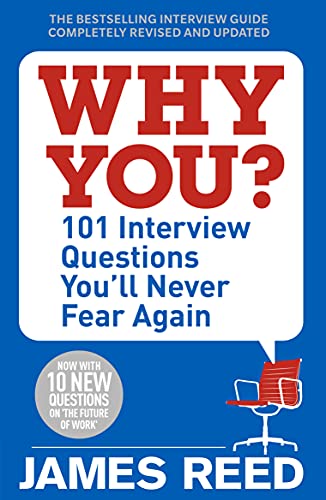
Job Interview Book – Why You 101 Job Interview Questions
The forth book in the list is why you – 101 interview questions that explains an approach to answering the various job interview questions from the classic ‘tell me about your weakness’ to the famous sales job interview question ‘sell me this pen’
A third of retail staff are under the age of 25 and over half are part-time employees. This role attracts both students, looking for a part-time income and full-time retail staff looking for a career in retail.
In the main, the larger retail organizations have an ongoing recruitment campaign and like to hire a diverse workforce.
Due to the time spend on recruitment, many employers deliver short informal interviews that are designed to check a applicants work-ethic, attitude and personal skills.
This article will list the commonly asked interview questions for a retail position, and explain the best way to answer each question.
How competitive is a Retail job interview?
Interview Specifics:
Can you demonstrate the relevant knowledge and experience to pass a Retail job interview?
Customer service skills
Communication skills
Numeracy and literacy
Reliability
Flexibility
Teamwork
Till/handling cash experience
Stock rotation knowledge
Sales techniques (for some roles)
Check the average pay for a Retail job role.
Retail job interview questions will vary from one retailer to the next. As an example a food retailer will ask about stock rotation and food hygiene awareness, whereas a clothing company will focus their interview questions on personal skills – being helpful, smart in appearance and communication skills.
One – identify the skills and experiences each retailer requires you to possess
Two – be a self-promoter by highlighting customer service skills, reliability and your work ethic
Three – communicate confidently. In retail communication and customer service is a key skill. The whole of the job interview is an assessment of how you come across to a potential customer.
Job Interview Questions and Answers for a Retail Position.
To pass a job interview for a retail position is relatively easy.
Employers don’t ask tricky interview questions, they are rarely ‘scary’ and in the main try to create a relaxed environment to help the interviewee to open up.
At the bottom line, the interviewers want to get to know the potential employee.
The barrier here then is the number of applications each employer receives, which is much higher then the number of job vacancies.
To pass a retail job interview, it is important to predict the interview questions and practice the delivery of the interview answers.
Mock interviews help to practice an interview in full
Re-writing interview answers helps with memory
Talking in slower pace (as interviewees then to speed up due to nervousness) helps the employer to record your experiences and skills
Below is a list of retail questions and an explanation of how to answer each question.
Retail Interview Question 1. Tell me a little bit about yourself?
In all retail job interviews, the hiring manager will ask a generic opening question:
“Tell me about yourself?”
“Do you have any retail experience?”
“Give me an overview of your relative experience?”
The idea with asking a generic interview question is for the interview panel to get to know the job applicant, while at the same time getting them to open up.
By talking about oneself often gives confidence to the candidate, which helps later in the recruitment process when the hiring manager will ask more specific questions.
Employers will make a hiring decision based on the interview answers each candidates give. For a retail job role, the employer using a applicants retail/customer service experience as well as their personality/confidence to create an opinion.
“I have worked in (retail/customer service) roles for ‘X’ number of years. I really enjoy the (state a positive challenge) aspect of the role.
One of my key skills is (add retail related skilled IE customer service, sales, problem-solving) an example of this is when I was working as a (job role) at (company). A customer (describe action) to help get a positive result I (describe actions). The outcome was (positive outcome)
People describe as (list qualities). In my last role I was known as the employee who would (add quality; arrive on time, help customers, go above and beyond).
I am currently (studying full-time/looking for a career in retail) and I applied for this position because of (reference a positive aspect about the company)”
Retail Interview Question 2. Why did you apply for a job with our company?
Retail managers know that there is a vast amount of retail job roles, all with varying pay and conditions, available for people to apply for.
With this in mind, a high number of hiring managers will ask the reason why a candidate is applying for their vacancy rather then another.
The reason for this interview question is due to staff retention. The longer a staff member/retail team work for one company the more skilled that team will become (as well as saving on recruitment cost).
Don’t answer the ‘why us’ question with any of the following reasons:
Financial
Near to my home
I just need a job
Don’t know
Instead create an interview answer that highlights how the company values, vision and culture appeal to you.
Interview Answer Template.
“When I started job searching I saw a high number of retail vacancies, but when I saw that your company was advertising I knew I had to apply.
What I like about your company is the fact that you (add a company value/vision). This is something I can relate to. I also am passionate about (add a passion that relates to the company value/vision).
I also like where the company is heading. When I was researching the organization I read how you are (add a recent quote from a media source) I think this is a great idea as more people are (give a future action related to the quote IE shopping online).
One of the main reasons I applied for the role, is because I shop at your company and I love (the products/the way customer are treated/the environment)”
Retail Interview Question 3. What does customer service mean to you?
Customer service is a fundamental part of any retail job role.
Retail employers always ask a customer service related interview question:
“Tell me about your customer service experience?”
“What would you do if a customer did X?”
“Give me an example of going above and beyond for a customer?”
An article on Salesforce talked about the 8 principles of customer service:
Teamwork
Listen and share
Friendly
Honest
Improved empathy
Deep product knowledge
Timeliness
Improving processes
One way to answer the customer service interview question is by stating what makes good customer service and then giving an example of delivering excellent customer.
Interview Answer Template.
“For me, customer service is the key part of my job role. Good customer service includes being a great listener and communicator, while being able to build rapport. It is also about being a time-sensitive problem solver and looking at a customer problem from their viewpoint, and most importantly its about helping to create loyal customers.
I have always had a natural ability to give great customer service, as I am a natural peoples person. An example of this was when I was (describe a situation), to help the customer I (add 3 steps: Listened to the issue, discussed options and used my personal skills to get a positive outcome)”
Retail Interview Questions 4. How would you handle a rude customer?
Helping a pleasant customer is easy, they ask for help, help is given and everyone is happy.
On the other hand, having to deal with an angry, rude or disruptive customer is much more difficult.
In fact, the whole reason that customer service is the hot topic in retail job interviews is because of the fact the employers need to hire retail staff that can respond professionally to any customer service situation.
An article on MindTools explains 5 steps to dealing with a rude customer:
Stay calm and don’t react
Don’t take it personally
Listen and apologise if needed
Stand firm
Solve the problem
Interview Answer Template.
“I have helped many rude customer in the past. I don’t get affected by a rude customer as I don’t take the rudeness personally. I know that many customer s act rude because they are frustrated and once they see that I am willing to help them resolve their issue, they will calm down, often applogise and become helpful.
An example of helping a rude customer is when I worked at (company name) and a customer was angry because of (state issue). First I stayed calm and listened to their complaint without interrupting. I then summarised their problem and asked what outcome they wanted. I then though about two options (describe options) and asked the customer a few questions to help them decide which option was best. By being calm, patient and by wanting to solve their problem I was able to get a customer, who initially was rude, to leave a positive comment on a store feedback card.”
Retail Interview Question 5. Do you work well within a team?
A retail store is a well oiled machine.
All the various cogs; shelf-stackers, cahiers, cleaners, security guards, customer service desk, buyers, warehouse staff, etc, etc work together to display products that customers want to buy.
The team collectively works well when all team members embrace being team.
Many retail company’s will create a team culture through teambuilding activities, team meetings and highlighting team achievements.
In a retail recruitment process, the hiring manager isn’t just looking for a skilled worker they are searching for a team player.
The best answer to give is to share an example of teamwork in action. When sharing a teamwork example it is important to explain the problem the team were facing before the candidates shares what actions they took to help the team achieves its goal.
Interview Answer Template.
“I really enjoy working within a team. I like that everyone helps and supports each other to achieve a common goal.
An example of me working within a team is when I worked at (organisation). The team had to (achieve an objective) but the problem was (describe a barrier the team faced).
The team didn’t know what we should do, so I suggested that everyone should share an idea. We all did, and that led to a natural discussion. I took the lead and asked my team mates for their opinions on the ideas and before long it was clear that we all wanted to try a particular suggestion. We the divided up the jobs, I was responsible for (task) and went to work. By the end of the (day/project/task) we had (positive outcome).”
Retail Interview Question 6. Do you have any questions for me?
Each hiring manager during all job interviews will ask each interviewee if they have any questions for the employer.
Knowing that the final ‘ask me’ question will be asked, a set of questions needs to be prepared.
Can you talk me through the training that you offer new staff members?
What are the busiest times of the year?
How would you describe an average day?
How would you describe the culture of the company?
How many staff work full time and part time?
This site uses the ‘LMI for All’ online data portal to access official government ‘big data’ sources. This powers the labour market data provided on this site.
A six month pilot, to test the benefits of a four day work week, has seen hundreds of businesses register their interest.
If a four day week becomes the norm, employers will want to know how employees will adopt to working less hours. It will be in the job interview where hiring managers ask about productivity in the hour-day week world.
In this article, we will list potential four-day week job interview questions and answers.
Less hours equals more productivity?
The 4 Day Week Global will see a reduction in the number of hours an employee with the hope of increasing production.
Three universities; Oxford, Cambridge and Boston college (US) plan to sign up around 30 companies during this new initiative. The idea is that less work equals less stress, and less stress increases productivity.
The trio of universities will collect data from the trial, including evaluations via an interview method, to check the advantages and disadvantages of working just 80% of the (current) working week.
Currently three official businesses have signed up to the trial, with the experiment needing a variety of job sectors to participate to test the impact of a reduction in working hours. MLB Seminars (a training company), Yo Telecom and Hutch Games (computer) are currently testing the four day week.
The data gained from the UK companies will be assessed along side data taken from similar experiments across the globe. It is predicted that different sectors will have to vary how they adapt the four-day week to meet the needs of their industry.
In a four day week trial in Iceland the results show how reducing working hours increased smarter working, with staff managing their time better, reducing time spent in meetings and improving internal communications.
Employee wellbeing had a significant improvement, with staff stating how they felt more positive and happy. Experiments has shown this before, where overworked staff working more hours are less productive then staff working the average number of hours per week.
The goal is to offer employees less hours with the same pay (rather then compressed hours in a four day week), not to decrease hours and pay. The concept is referred to as the 100:80:100 model. Employees receive 100% of pay for 80% in exchange for 100% productivity.
As AI becomes more embedded within organizations, a 20% cut in working hours could easily be accommodated with technology automating business as usual low skilled tasks. The pandemic has taught businesses time-saving lessons, as an example virtual project meetings has reduced the total number of travel hours, to and from the meeting, of the participants.
Looking at the wider picture, a four-day week can also support the green agenda. In 2019, Microsoft Japan’s trailed a three-day weekend that resulted in a recorded 40% productivity but also increased efficiencies, such as 23% electricity savings.
Employers look for productive staff
Each recruitment process is designed to predict the job performance of the interviewee, their productivity.
The evidence is clear, happy fulfilled and trained employees are more productive. Whereas a stressful working environment reduces each employees productivity.
From an employees perspective, the workers expect that employees create processes and procedures that help create a productive workforce. Herzberg’s Two-Factor Theory states that their are two categories for workplace motivation:
Motivation factors that give employees a sense of satisfaction
Work that has a purpose
Greater autonomy
Recognition
Hygiene factors that determine the basic level of stability and job security:
Pay
Job security
Working conditions
On the other hand, employers expect a level of output from a paid employee. In the job interview the job candidate, through their answers, makes a pledge of their skill set and work ethic which the hiring decision is based on.
As with all new initiatives that get launched, the organizations that take part in the trail will have a vested interest in the initiative and happy to work within the guidelines. As the initiative becomes common place, other organizations get on board rather then being seen to rock the boat.
The problem here is that the latter employers may need commitment from the interviewee, at the interview stage, that they can and will offer 100% productivity during a four-day week.
Four day week job interview questions
In the main, employers will ask four day week job interview questions that come under one of three categories:
Time management
Output
Wellbeing management
How will you maximize output while working a four day week?
Employers are looking to hear what tasks or last time activities can be reduced to increase productivity.
Job interview answers should cover time management processes, the use of automated technology/systems and task priority.
Job Interview Answer:
“Output is improved through the management of tasks. The time management matrix explains how tasks can be prioritised based on their urgency vs importance. Tasks that are highly urgent and important must be completed straight away, this could include (example).
One of the common task in our sector is (add task) which often takes up (number of hours per week) but can easily be automated through (system/procedure/software). Another common task is (second task and third task) which is required in several departments. I propose, to save time, that these tasks are job shared. With one department completing all (task one) and the other all (task two).
One the reasons why I always have a high level of productivity is due to my wellbeing management. The research shows how stressed employees have less production, whereas motivated staff are highly productive. Personally, I keep motivated by regularly (add activity)”
What ways can you think off that will help reduce time spent on non-productive tasks?
Each sector varies, but generally speaking their are a number of ways to reduce time.
When answering the time saving interview question, it is important not to use examples that make the candidate to be viewed as lazy IE ‘I would talk less’. Instead think more strategically, as an example having ‘task and finish’ team meetings or shared calendars that reduce planning time.
Job Interview Answer
“Thinking about our industry there are two areas that could be changed to reduce the amount of time spent on non-productive tasks. The first is (add specific situation). Time is wasted here because of (give reason), instead we could save time by (give solution).
The second area is (add specific situation). A number of hours are wasted because of the amount of people who do (add time wasting task) Instead if we were able to implement (solution) we could save a (give percentage) of time.”
An example of a solution to a time wasted tasks is in the recruitment sector, where many companies are now using AI bots to read job applications rather then leaving it to humans.
Give me an example of how you managed your stress levels during a busy period?
When giving a real life example of part of a job interview answer, it is important to create context by describing the situation – the why this was happening.
Then, specifically explain what actions were taken to create a positive outcome. Ideally, the example used must be relative to the position being applied for.
Job Interview Answer.
“A couple of years back, I was working at an organization named (company name). I was part of a team working on (a specific project). The project was highly important as (describe how the successful completion of the project would have a benefit to the employer).
The timeframe for the project was tight, we had to complete (task) within a (add timeframe). the reason this was difficult was (give specifics).
It was a very stressful time for everyone, but I was always able to manage my stress and stay motivated and productive.
To stay motivated and to have good wellbeing I (generic stress management technique). When on a tight deadline I always (stress management technique)which helps me to stay on track. When working in a stressful environment or when other colleagues are stressed I will (stress management technique).”
There has been an increase in learning mentoring roles as education providers employ supportive roles to help struggling students.
In the main, learning mentors work with children, but some positions include mentoring adults. Other vacancies are for specific areas IE young offenders, SEND pupils, etc.
Employers are looking for ‘skills’ as well as experience. When giving examples, applicants need to check if the new job role is mentoring groups and/or 1-2-1s.
This article will help mentors prepare and pass a learning mentor job interview.
How competitive is a Mentor job interview?
Interview Specifics:
Can you demonstrate the relevant knowledge and experience to pass a Mentor job interview?
Discussing pupils learning needs to create a plan of action
Creating strategies and supportive actions to help increase a pupils confidence level
Working in groups or 1-2-1 to help an underperforming pupil achieve realistic educational outcomes
Understanding safe-guarding practices
Have an awareness of learning styles and techniques
Monitor and report on a pupils progression
Great questioning and listening skills
Support with transition, including report writing
Check the average pay for a Mentor job role.
Job Interview Questions and Answers for a Mentor.
In addition to a structured job interview, many high-school mentoring recruitment process also include the delivery of a presentation. To prepare for your interview presentation click here: How to deliver a job interview presentation.
This article, though, will focus on the answers to behavioral job interview questions.
Behavioral job interview questions ask for examples of passed experience. This means that giving examples is the best way to answer the job interview question.
Mentoring Job Interview Question: Tell me about your experience as a mentor?
Not all employers require the successful job applicant to have direct mentoring experience.
Instead, most employers are looking for certain skills – the ability to mentor a (specific group).
Identify the job criteria – the skills and experiences required for the mentoring job position
Be a self-promoter – giving detailed descriptions of relevant skills
Communicate with confidence – engage the interview panel with tonality, expressions and gestures, while having clear diction and a nice pace
Example interview answer:
“I have worked as a (job role) for the past (number of years) where I was responsible for (list duties).
I have undertook (list relevant qualifications) which taught me the importance of (a particular knowledge base).
The reason I am so passionate about mentoring is because (reason IE supporting/helping) An example of this is when I was working at (company) where I was mentoring (cohort). to support the client (describe mentoring technique in detail) which resulted in (positive outcome).
To summaries, I have X number of years experience and I am highly passionate and skilled at mentoring others.”
Mentoring Job Interview Question: Give me an example of mentoring a student who was underperforming?
When answering specific ‘example’ questions it is important to give context by describing the situation.
Context allows a hiring manager to understand the difficulties and actions taken.
It is also key to explain any ‘basic’ everyday tasks. A large number of interviewees don’t state ‘obvious’ duties because it is a task they complete everyday.
But, because interviewers follow use a structured job interview process, candidates must state all essential job criteria to receive full marks.
Example interview answer:
“I was working with one mentee recently who was undeforming in (subject) due to (reason). Because of this (reason) the mentee was (describe state – quite, angry, demotivated).
Because I was aware of the situation I, prior, to the mentoring session (actions took to help make the mentee more relaxed, open and feeling safe. This could also include any research undertaken)
When I met the mentee I split the session into three stages: contracting, open questions and goals. It was important to contract because of (reason).
In the mentoring section, I asked, initially very open questions, including (add questions) to help the client open up. The conversation become more specific as we built trust and talked more in-depth about underperformance. We focused mainly on (add detail).
By the end of the mentoring session I signposted to (source) and encouraged goals, including (state goals)
The result of the planning and my communication style was (describe a positive outcome for the client)”
Mentoring Job Interview Question: Tell me about a safe-guarding issue you have had to deal with?
When applying for a mentoring role that works with children’s or vulnerable people, you will be asked a safe-guarding job interview question.
Employers need to check that a mentor knows the correct procedure when a young person discloses that they are in harm.
It is important in the safeguarding interview answer to highlight a level of knowledge of safeguarding.
Employers ask for a safeguarding example, to check how the principles have been used in a real situation.
Example interview answer:
“I was mentoring one mentee who disclosed a safeguarding issue. At first the disclosure was made in passing and the mentee, aware of what they have said, tried to deflect the statement by talking about other things.
This where my excellent listening skills come into their own. I also make lots of notes when I am mentoring someone to ensure that the information I have is accurate.
I was aware that the mentee was (embarrassed/upset/angry) and initially I used (open body language/soft tonality/additional questions) to (desired outcome).
I then asked a direct question about the disclosure, this resulted in the mentee (outcome). To gain more information I then asked specific follow up questions. At this stage it was clear that their was a risk of harm to the young person. I asked the mentee to remember at the beginning of the session where I had ‘contracted’ explaining what I have to do if there is a safeguarding concern.
In that company we had to follow a strict procedure when a concern was disclosed, which included 1) informing a line manager, 2) making a social service referral and 3) completing the paperwork.
The mentee was in fact happy to be getting support, but was scared about the process and what would happen long term. To support the mentee I (action – confirmed that I would be able to be in the interview with the social worker/talk to professionals on their behalf/gave an explanation of what would happen in the way of a case study.
The long-term outcome was (state details).”
Mentoring Job Interview Question: Give me an example of successfully mentoring a group?
In the main, mentoring is delivered on a 1-2-1 basis.
Often, though, mentors will deliver group mentoring workshops.
Delivering workshops takes an additional skill. Many employers, to test the delivery styles of applicants, will request for the interviewee to deliver a short interview presentation.
In addition to the presentation, there is often an interview question about group delivery.
The focus of the interview answer should be aimed at the session impact:
Was the trainer able to engage all pupils?
Did the session fulfil the training objectives?
Did the trainer think about individual learning styles?
Example interview answer:
“As well as having (X) number of years experience mentoring in 1-2-1 situations, I am also highly experience in the delivery of groupwork.
The barrier with group engagement is the number of participants. In a 1-2-1 mentoring session, it is easy to adapt the delivery style to encourage and support the mentee.
Whereas in a group setting, it is the planning of the activity which is key. When I plan an activity I first ask about the group – do any have support needs? What are their learning styles? have they volunteered to attend the session?
To plan the session in full, i think about the desired outcome and how I can embed visual, audio and kinesthetic learning styles. I also think about any objections or challenges the participants may have and think of ways to overcome this.
An example of this is working with introverted pupils. As I am experienced with this, I know to ask the group a question IE anyone can answer, and then to follow by asking individuals questions to help engage the whole class.
Last week I was working with one group to help them think about (career goals, improving exam results, motivation, etc). The group was made up of (age/gender/generic barriers). To engage the group I (told stories/created a game/presented facts/played a video).
I also set individual and team tasks, and walked around the room looking for anyone who would need support.
Because I knew that (group/person) had (describe barrier) I (state actions took) which resulted in (positive outcome).”
Mentoring Job Interview Question: Tell me about a time when you have successfully mentored someone to achieve their goals?
In short a mentor will help an mentee achieve their goals.
When giving an interview answer to a 1-2-1 mentoring experience question, it is important to state the required skills used while following a mentoring model such as GROW. These include:
Listening
Communication
Empathy
Creating accountability
Encouragement
Note taking
Safe guarding awareness
Example interview answer:
“I have many examples I could use. My favorite is when I was working at (company) and I was mentoring a client who wanted to achieve (goal).
The mentee, when I first met them, was (add barriers; quite, reserved, extravert, demotivated, scared) This was because of their (describe situation).
My first task was to establish rapport, I did this by (sharing stories, listening, finding commonality, not interrupting).
Once the mentee trusted me, which was reinforced by my ability to listen without interrupting, being patient and communicating of their level, I helped them establish their goals.
Initially their goal was ambiguous, which was one reason why they struggled to take action. By asking questions to gain a specific and measurable goal, the client was able to see the realism of achieving their objective.
We discussed option and I would often challenge their goal, thought process or suggestion to help them reflect on what they would need to do and achieve to feel successfully. This reflection technique was something the client hadn’t done before and the outcome was that they felt excited about their potential future.
The reason this was a real success, was due to my emotional intelligence. Because I was working with the client over a number of weeks, there were time when the client was feeling good and other times when they felt down. Having an agile approach allowed me to communicate in a way that suited the situation, increasing trust between myself and the mentee.
There were also times when we went off-topic and talked about hobbies and interest instead of the (goal), which was suitable at that time. And sometimes, when needed i would sign post to suitable agencies where the mentee could gain expert advice and support.
The outcome was that the mentee achieved (long term outcome) and short term felt (motivated/inspired/excited) helping them to take more action.“
Mentoring Job Interview Question: Do you have anything you would like to ask us?
Can you describe the duties in an average day?
What development opportunities can employees access?
Do you specialize in any particular mentoring areas?
Are you looking to expand the business?
How would you describe the culture of the company?
What, would you say, is the management style of the company?
How is the mentoring project funded? Do you see nay future risk to funding?
A high number of job candidates struggle to pass a group interview due to a lack of understanding of the group interview format.
In this article, you will learn the structure of a group interview, how interviewees are scored, and what a job candidate can do to stand out in the group interview to ensure an offer of a second interview round.
Group Interview Format
Unlike a structured job interview, where each applicant is asked the same number of interview questions that are then graded with the help of a scoring system, the group interview is an observation interview round.
Group interviews are often part of a full-day recruitment process, which includes:
A tour of the company
Technical test
Role plays
Structured panel job interview
Group exercise interview
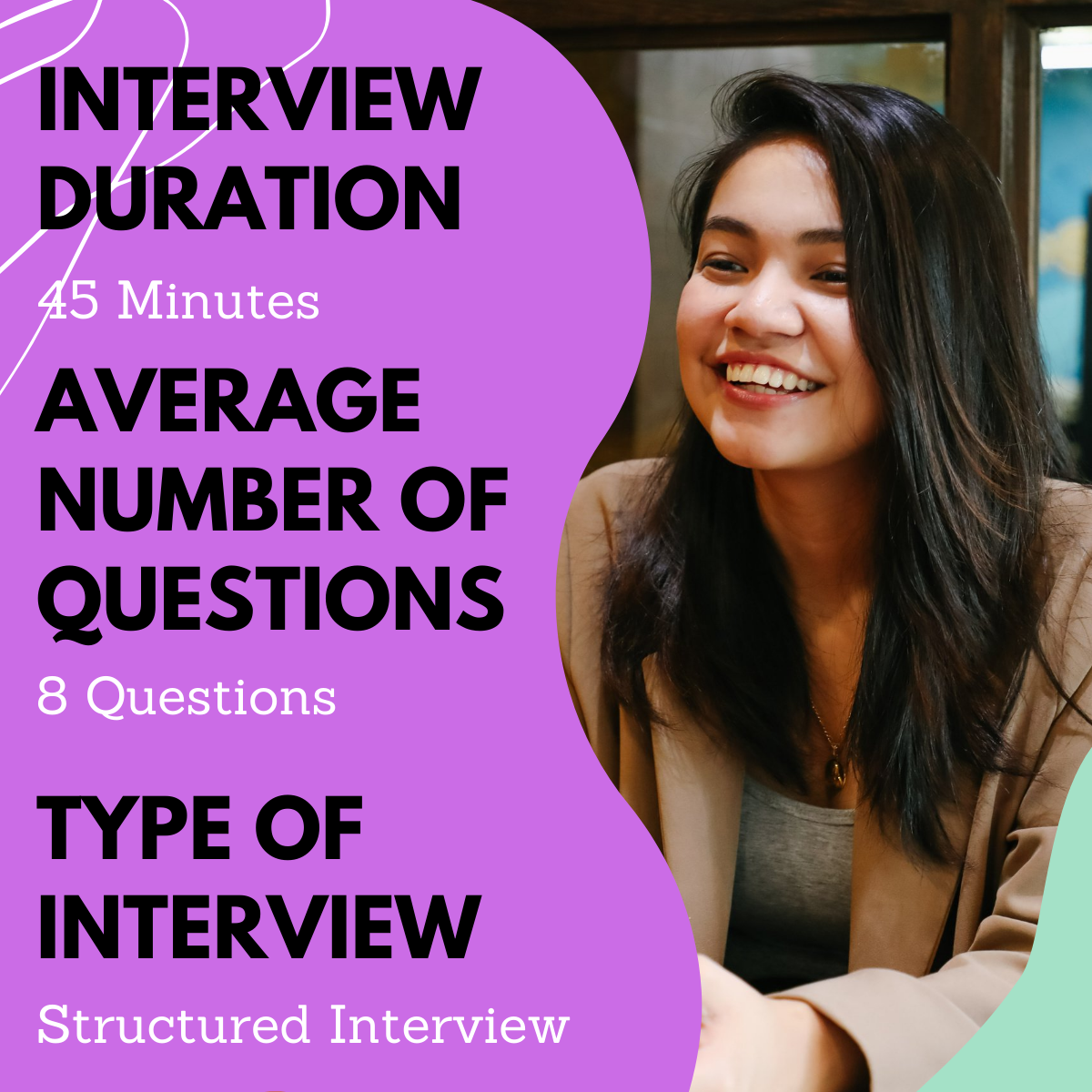
The group interview takes around 45 minutes to complete.
The employer will first put the interviewees into groups, before stating the task each group has to complete.
Often the task is a problem-solving task, in the form of physical exercise IE ‘make a bridge over a river using the objects’.
The task isn’t always relevant to the job sector because the task itself isn’t important.
What is important are the qualities of each applicant.
This is because the employer uses a group exercise to better understand how each job candidate acts when working collaboratively in a stressful situation.
Some employers increase the stress by giving a short time frame to complete a difficult task or will ask the groups to attempt a very difficult brain-teaser task.
After the group exercise time-frame has come to an end, the group may be asked to feedback.
The three stages of a group exercise are:
Introduction to the group activity
Group completing the set task
Feedback from the group
What is being assessed during a group interview exercise
Technical interviews are designed to test competencies and knowledge, whereas a group interview exercise is looking at a candidate’s personals qualities:
Communication
Leadership
Teamwork
Supportiveness
Listening
Temperament
Following processes (set out in the rules of exercise)
Creative thinking
People skills
In one group exercise for a large airline company, looking to recruit a number of customer service employees, the hiring managers ask that each candidate stands on a stage and deliver a short 60-second introduction speech.
The recruitment team stated that the rest of the applicants, the audience, to listen to the speaker and give a round of applause at the speech end.
Around 6 hiring managers stood around the room observing and taking notes. The hiring manager, though, wasn’t watching the speaker, instead, they observed the audience, making notes of who, instead of listening, was checking updates on their phone and which applicants had their full attention on the stage.
Anyone who was seen not to be fully listening to the speakers didn’t make it to the second job interview stage.
A second employer asked groups of applicants applying for a managerial position were asked to complete a physical brain teaser – dropping an egg from a height without the egg breaking, by using a range of potential random objects to reduce the like hood of the egg breaking once it hits the floor.
Three hiring managers observed the groups. With the position being a leadership role, many of the applicants wanted to stand out by taking the lead. One potential manager grabbed the instructions and started to assemble the equipment. Another directed the group participants to delegate roles. A third candidate, in their team, asked questions and encouraged people to become involved in the task.
Three candidates acted in three separate ways, all examples of various managerial styles, but which approach was best?
The three rules for a successful job interview are:
Identity the job criteria
Be a self-promoter
Communicate with confidence
Rule number one is key here. What is the culture of the organisation? What is the employer’s preferred management style? Which leadership style best fits the job sector?
How to pass a group interview
In the main, the group interview exercise looks at personal skills and qualities.
The aim is to complete a task, even though a group task is the required action, instead the objective is to observe how each applicant acts and interacts when given a potentially stressful task.
Employers observing group exercises like to see:
Leadership
Encouragement
Teamwork
To be seen as a highly valuable potential employee follow these three steps:
Take charge
Encourage involvement
Create a team approach
Take Charge of the Group Exercise
In the main, most people in a group interview won’t take the initiative.
Taking the initiative creates the ‘leadership’ position. being seen as the natural leader creates a subconscious high-status persona that results in other candidates referring to the ‘group leader’.
In all group exercises, the employer will state the exercise details and give a duration.
The specific details for the task will be written down and one of the group members will have to collect the instructions from one of the hiring managers. This is the first opportunity to take a leadership position, by being the person who stands up and collects the written instructions.
Once, with the instructions in hand, others will naturally look towards you.
Remembering that the whole group exercise process is being observed, read out the instructions to the group.
After reading out the instructions, summarize these and then ask an ‘encouragement’ question to encourage involvement from the rest of the group: “Has anyone had to complete the (task) before?” while looking at each member of the group in turn.
Next, suggest and guide the group by asking for suggestions on how they should approach the task. If the group has introverted members, specifically ask for their opinion.
If there are several good suggestions, recommend the group take a vote as the task needs to be completed within a short duration.
If there is only one idea (you should also have suggested an idea or approach) or once the vote has been completed, explain that everyone should have a role and ask: “Who would like to do X?” or “Who has the skills to do X?”
End, the planning phase of the group task by giving encouragement: “I think it was really good that we were able to share some ideas and pick roles. We have X time left so let’s go for it. I know we can be successful with this task.”
Encourage Involvement
Many of the group tasks during a recruitment event are difficult.
Purposefully difficult, because the employer is observing how candidates act during a stressful situation.
The difficulty of the tasks results in several of the group, getting ‘stuck’ or feeling ‘lost’. Be aware that the ‘lost’ feeling will happen, and look out for when this happens.
When a team member becomes lost, give encouragement. Ask: “(name) is everything ok, need a hand?”
You can also assist: “have you tried doing X?”
Also, offer praise to others: “great job (name), that’s really going to help.”
It is the leadership and teamwork skills that employers are looking for, not the completion of tasks.
By communicating, listening, encouraging, in short – leading the group, the hiring managers will be impressed with the skillset on show.
Create a Team Approach
There is a balance between being the leader and creating a team environment.
Being to directive could be seen as a negative (depending on the job role) by the hiring managers and some candidates sensing that the contrast between the candidate taking the initiative and themselves could make them look bad might start to challenge you.
The goal then is to create a sense of collaboration, teamwork.
If a candidate challenges the leadership role, encourage their ideas. Ask: “great, what’s your plan/idea?” or if they have relevant experience ask: “That really useful, what do you recommend?”
The goal here isn’t to stand out as the leader. By being the person who collects the instructions, reads them out, and ask the group for ideas and suggestion, the recruitment team will already have noticed you. Encouragement to others, throughout the task, only helps to reinforce the positive first impression.
The real goal, therefore, is to create a productive team, which is why it is suggested to ask for other peoples ideas, and thoughts.
Customer service manager job roles vary across a wide range of industries. Depending on the company the job title may differ:
Customer service manager
Customer care manager
Customer relationship manager
In all customer service managerial role the main duties are similar; providing a customer focused service to exceed standards that results in an increase in customer loyalty.
In recent years, the role has evolved into customer service in the virtual world as well as physical customers.
A large part of the job role is to:
Develop and implement customer service policies and procedures
Use data to measure customer satisfaction, needs and sales
Improve the overall customer journey
Increase online positive reviews
Manage a customer service team and/or collaborate with senior stakeholders
The job interview has a large focus on understanding the applicants approach and previous experience in excelling in improving customer service,
How competitive is a Customer Service Manager job interview?
Interview Specifics:
Can you demonstrate the relevant knowledge and experience to pass a Customer Service Manager job interview?
Create a customer service process and procedure for business as usual tasks
Lead on new customer service initiatives and project lead on customer service strategies
Investigate and solve customers’ problems, which can include online negative reviews
Authorise refunds or compensation to customers as required
Analyse customer data and statistics to be used in project planning
Develop customer relationship building activities
Write detailed reports
develop feedback or complaints procedures for customers to use
Staff recruitment and management
Check the average pay for a Customer Service Manager job role.
Job Interview Questions and Answers for a Customer Service Manager.
Generally speaking, customer service managers for medium sized organizations will be invited to one structured job interview.
Senior managers overseeing customer service at a strategic level are likely to attend an average of three job interviews including a structured job interview, a strength-based interview and an assessment.
This article will cover the commonly asked interview questions for a customer service manager in a structured job interview.
Tell me about your experience in customer service management?
The initial job interview question is designed to check suitability – does the applicant meet the job criteria?
Opening questions are also generic, to help the interviewee to speak with a view that they will be more relaxed when asked specific job criteria questions later in the interview process.
A savvy candidate can use the opening question to help create intrigue by stating their unique selling points.
Interview Answer Template
“I am highly skilled in customer service management for roles. For the past (number of years) I have been responsible for (add job-related duty). This included (A, B, and C – give detail).
I possess a qualification in (add sector-related qualification) which taught me the importance of (sector-related model or theory), an example of using this in day-to-day tasks is when (add example).
My main strengths include (add unique selling point). To conclude, I am a skilled customer service manager with over X number of years experience, qualified to X level.”
Give me an example of how you would implement a customer service policy?
As one of the main job duties of a customer service manager, explaining the process what implementing a customer service policy is one of the key job interview questions.
The ‘policy’ question must be answered by using the interview answer model – ME (Model and Example).
The model and example interview formula is highly powerful when it comes to technical job interview questions.
By stating the model, in a step-by-step process, all elements of setting up a customer service policy will be discussed analytically, ensuring that all the job criteria on the interview scorecard is referenced.
The power of emotions is the reason why a logical answer alone isn’t enough. Once a step-by-step process has been explained, a real-life example must follow.
Interview Answer Template
“Policy creation and implementation is one of my key strengths. The five steps for creating a policy are, 1. identify the need for the policy, 2. gather data to support the creation of the policy, 3. involve stakeholders and draft policy, 4. gain approval for senior managers, 5. implement policy.
An example of creating and implementing a policy is when I worked at X company. At the time (explain barrier/problem). To help define the policy I (searched for data) which helped to create a policy that embedded (a particular requirement). Also, I worked with (stakeholder) as they had a vested interest in the policy outcome. After the policy was approved by (manager/board) I created an implementation plan which included (actions with reasons).”
Describe your managerial style?
There are various management and leadership styles. In the main, most managers have a natural preference for one or two management styles.
Often employers are looking to hire managers who possess the management style that fits within the culture of their organisation.
A safe way to answer the management style question is by explaining how you choose your management style based on the situation.
Interview Answer Template
“Situational leadership theory explains there are four key leadership styles; directing, coaching, supporting, and delegating. All managers have a natural tendency to prefer one style due to their temperament.
What an experienced customer service manager, such as I am, must do is choose the most suitable leadership style for each individual situation.
As an example, my natural preference is (name a leadership style). This is ideal when (state situation) but isn’t as useful in (second situation). In this situation, I would use (second leadership style).
I think one of the reasons for my successful career as a customer service manager, is my ability to manage tasks by reflecting on the situation, the project timeframe, and the skills of my team.”
How do you review customer standards within an organisation?
New customer service policies, processes, and strategic plans must be based on data.
Employers will check that a customer service manager makes logical decisions to create change through the analysis of data.
Customer service data can be gained from very sources:
Surveys
The number of customer complaints
Monitoring social media
Online reviews
Increase or redcutaion in footfall/sales
The customer service answer is best answered using the STAR method.
The STAR method uses an example to show the candidate’s level of competencies.
STAR stands for Situation, Task, Actions, and Results.
Interview Answer Template
Situation – start the interview answer (the example) by describing in a few lines the situation that the company was facing.
“While working as a customer service manager at (company name) we analysed data that compared (a good vs bad customer service outcome)
Task – The task part of the STAR method should state the specific required task. The task is different from the situation (many interviewees miss the task section of the STAR method). The situation is the big picture, whereas the task is the specific plan the team/employee was required to complete
The data showed how we needed to (improve customer service outcomes). To achieve this, I was responsible for (describe task)
Action – Each stage of the STAR job interview method is more specific then the previous one. In the action section, the interviewee needs to explain what is was the did to help bring around a positive outcome.
The action segment is the crux of the job interview answer. The employer isn’t interested in what the team did or a generic cover-all description. Instead, the hiring manager wants data that they can cross-reference against the job criteria.
Specific information can be measured.
To ensure that the best action was achieved I first spent some time planning. There were two possible actions I could take, the first was X and the second Y. The advantage of doing X was (add detail) but the dis-advantage was (add detail). Whereas the disadvantage for Y was (give detail), put the pro’s included (give detail)
I choose (X or Y) because (reason). To start, I first (describe initial actions) as this (add outcome from initial actions). Next, I (describe actions) which helped achieve (outcome). Throughout the task I reviewed my actions to ensure that the task would be completed to the highest quality. Finally, I (add action).
Result – To end the STAR interview formula, the interviewee must state the result or outcome from the action described.
The result should be a positive outcome that helped achieved a particular goal.
My planning, reviewing and my ability to (describe a positive trait) ensured that we were able to (positive outcome) which had a massive effect on (part of the business)
Give an example of helping an underperforming employee to be more successful?
A large part of a customer service manager job role is the managing of staff.
Most questions, relating to performance, are framed as a ‘support’ question.
It is important to talk about a process for managing underperforming staff and to give an example. Again, this question is best answered using the ME – model and example formula.
Interview Answer Template
Not all underperforming staff members underperform for the same reason. As an example if a staff member was previously one of the best performing employees and only recently started to underperform, this maybe an indication that something may have effected that persons motivation or stress.
Compare that employee to a staff member who has underperformed no matter part of the business they are working with.
Generally speaking, if an employee has started to underperform whereas the rest of team is performing well, indicating that the underperforming employee needs support tor motivating I following the three stages that most HR teams embed in their policies: review, training, disciplinary,
The initial stage is bringing the underperformance to the team members awareness, asking, in a 1-2-1 what support they need from myself? This is an informal discussion, that can lead to some actions being agreed.
If performance doesn’t improve, the next meeting is formal with an action plan being created. The action plan can include training, mentoring, work shadowing and a list of priorities action for the employ. The idea is that following the plan will naturally improve performance. The main discussion should challenge the employee to help understand the reason behind the underperformance.
Finally, if performance still hasn’t improved over the duration set out in the action plan, then a more formal meeting will be had that involves the HR team. In short, as a manager i would try to do what I can to support an employee until it is required for HR to get involved.
Do You Have Any Questions for the Interview Panel?
What areas is the business looking to expand into?
What development opportunities are available to new staff members?
What is the company’s biggest barrier to achieving its KPIs?
Who would you say is the company’s biggest competitor?
How would you describe the culture of the company?
On 28th Oct 2021, Mark Zuckerberg announced the rebrand of Facebook to Meta, signifying to the world the importance of their investment into the Metaverse.
The Metaverse will be a crucial element in the future of hiring staff, requiring career professionals to understand what a Metaverse job interview will look like.
The Metaverse will be an interconnected online experience that merges work and life across a wide range of platforms, from VR headsets to AR implementations.
The Metaverse won’t just look like a virtual reality computer game where everyone communicates via their avatar, instead, it will be a mix of a physical and virtual world, with its own economy and users will be able to take their avatars and goods throughout the metaverse.
This video is an example of how the online and real-life workspace could interact.
Is the Metaverse a fad?
Skeptics say that the Metaverse could be a fad, and that Zuckerberg launched Meta as a ploy to divert attention from other issues.
No matter what the reasons were for Facebook to change to Meta, those who are looking at what is happening in the tech world know the Metaverse is coming and coming soon.
Facebook won’t own the Metaverse, instead, it will be open-source, just as one single website doesn’t own the internet.
Many large tech giants; Microsoft, Apple, and large gaming companies are investing tens of billions of pounds into the Metaverse. In a recent CBSNews article, they highlighted how tech companies have been working on virtual reality tech for several years:
Google Cardboard might be the most successful VR project in history
In 2015 Microsoft announced Holoens mixed reality glasses
During Zuckbergs Meta launch, he explained how the Metaverse could open up the global job market: “..giving people access to jobs no matter where they live..”
Verdict looked into the future of AR and VR, saying: “This could be just the beginning. While the AR market was worth a fairly restrained $7bn in 2020, Global Data estimates that it will generate revenues of $152bn by 2030.”
The article goes on to explain how workplaces will and are evolving into the virtual world: “One of the biggest trends in the AR and VR space in 2022 will be the use of immersive technology and VR in the workplace”
In an article on Reworked, they talk about the potential of VR in onboarding new staff: “VR has huge potential for the digital workplace as a training tool for remote workers and onboarding new employees”
This is because avatars will be able to mimic facial expressions, gestures, and body language.
It is the development of avatars that can mimic a hiring manager while testing the applicant’s competencies that will see a move to recruitment in the Metaverse.
While discussing online staff training, the Reworked article explains: “These VR modules can use video recordings or animations to simulate tense scenarios for managers to practice their handling and ability to navigate through the issue successfully.” This same tech could easily be adapted for an assessment job interview.
RCP mag, talking about Facebook and Microsoft, two tech giants who are keen to have a big presence in this future territory, said: “(Meta and Microsoft) just announced that they are partnering to integrate Microsoft Teams with Workplace by Meta (formerly Facebook Workplace), which will allow Teams users to live-stream video into Workplace groups, and to view, comment and react to meetings in real-time without having to switch between apps.”
Virtual Reality in Recruitment
In a recent article, Employment King said: “The metaverse will bring enormous opportunity to individuals who want to work from homes and employers will be able to test how the employee would work remotely (and in the metaverse) and collaboratively on projects.”
Virtual reality recruitment and training is already here.
Deutsche Bahn, the Berlin-based mobility and logistics company, in 2015 needed to hire 10,000 new employees. To help with recruitment, they would take VR headsets to assessment days and career fairs, allowing candidates to virtually observe a train electrician and engineer doing their job. The result was a massive increase in applications.
A Forbes article talking about AR and VR trends explained how Walmart used tech to train 17,000 staff in compliance and customer service. While going on to discuss the US Army’s deal with Microsoft to use Hololense technology in military training.
Metaverse Recruitment
Recsite design, in July 2021, discussed the increase in VR recruitment: “According to a study carried out by the Employment Law Advisory Services, 43% of companies that employ VR use it to help introduce new members to their existing teams.”
The British Armed Forces saw a 66% rise in applications after using a Samsung Gear VR headset to let candidates experience driving a tank.
Recruitment is as much about the applicant finding a suitable employer, as it is about an employer finding a suitable applicant.
The Metaverse will help applicants and employers find their match.
It is highly likely that future job fairs will be held virtually. Initially, in-person job fairs will use VR tech to allow future employees to view what it would be like to work at the organization by having them view the workplace with a VR set.
The natural evolution will be a live screen, via a VR set, of the workplace. Before long, the candidates will be meeting current employees, take part in a workplace walk around to better understand the company culture, and try out company benefits such as ‘cinema rooms’ or ‘skill training’ sessions all via the Metaverse.
Job Interviews Conducted in the Metaverse
It is predicted that staff recruitment, staff training, and staff onboarding will be some of the most commonly used functions, for employers, during the early days of the Metaverse.
Candidates, in the metaverse, will be able to ‘show off’ their competencies. Interviewees avatars can manipulate objects, create images, write and interact with other avatars.
Being able to physically move around (in the Metaverse job interview), applicants will demonstrate their skill set, from a retail candidate dealing with a simulated customer complaint to a surgeon demonstrating an operation in real-time.
Sounds farfetched? VR for training surgeons has been around for many years: “In 2009, a Halifax-based professor of neurosurgery, Dr. David Clarke, performed the first-ever virtual reality (VR)-based simulated surgery to remove a brain tumour”
Many recruitment processes, for high-skilled positions, have an assessment stage. Now, VR will take this one step further to help a hiring manager predict the job performance of a candidate through human and AI observation and interaction.
Scenario-based simulation exercises will test an interviewee’s skills and competencies, reducing any job interview deceit, white lies, or extensions of the truth, as increasing levels of complexity will be tested throughout the assessment, checking the level of each candidate’s abilities and knowledge.
Part of the recruitment process will be observed and assessed by humans, but as AVIs – Asynchronous Video Interview continue to be ever more popular with employers, AI bots will continue to play a large part in the hiring of new staff, reducing time and money employers spend on staff recruitment.
The 5 Stages of a Metaverse Job Interview
Much research is showing an increase in the number of stages of interviews for a high-skilled position, and the increasing use of artificial intelligence in the recruitment process.
The result of AI robot interveiwers, and the required interview stages to check the candidate’s suitability, will create a blended AI and human recruitment process in the Metaverse.
Metaverse Interview Stage 1
The initial interview stage is likely to be a short screening interview via an AVI – Asynchronous Video Interview AI bot.
Job applicants will enter the companies metaverse recruitment room and be given a short introduction to the AVI.
The AVI will last for around 15 minutes, and job candidates will be able to choose their own date and time to conduct the interview – ideal for career professionals applying from countries with different time zones.
The AVI will ask 3 job interview questions to check suitability. The questions will vary, but in the main, they will focus on the essential criteria for the job role.
During the interview, the AVI will ask each question in turn. Currently, interviewees have 60 seconds to digest the question before recording their interview answer which has a limited time capacity of 2 minutes.
As AVI technology advances, it is highly likely that the candidates will answer the interview question in real-time without a time limit attached to their answer.
Staff retention is a big issue for many employers, as younger generations don’t consider a job for life and are more likely to job-hop at a moment’s notice. The great resignation is evidence of this new attitude.
To improve staff retention, employers will focus part of the recruitment process on selling the benefits of the organisation to increase demand for the position, allowing the employer to increase the number of first-choice applicants accepting the position.
Stage two of the Metaverse interview will be a virtual walkaround of the organisation. The virtual walkaround will be miles away from a simple VR walk-through of an office. Instead, interviewees will be able to visit, in live-time, the employer’s Metaverse workplace.
The walk-through could consist of visiting work-stations, observing meetings, attending auditoriums, lecture halls, and checking out the company benefits: relaxation rooms to de-stress after a hard day in the office, or a creative space for generating ideas. Companies will also have game rooms and specialist areas of increasing skills such as a brainteaser room or access to hundreds of volumes of industry-related books, academic research papers, and company history.
The main focus of the walk-around will be to showcase the company culture and its values. Employers, by highlighting how they conduct business as usual, their vision, and current projects, can attract career professionals with a similar attitude, helping to create high-performing teams.
Metaverse Interview Stage 3
From an employer’s perspective, the recruitment process is designed to predict the potential job performance of each applicant, resulting in the hiring of the (potentially) best performing interviewee.
Currently, assessment centers use standardized tasks that gather relevant information about an applicant’s capabilities.
In the Metaverse the assessment stage of the interview will go one step further. Imagine, in the near future that a high proportion of work-related tasks are completed partly or fully within the Metaverse.
AI will be able to replicate a previous project in the Metaverse, including the personalities and potential reactions of team members. Interviewees will then be asked to complete the task which is assessed on two levels. Level skills and competencies, and level 2 how the applicant would fit (or not) within the current team.
Employers will be able to observe the interviewee’s actions, but also compare the outcome from the tasks with the actual outcome from the original completion of the task in real-life. It is this comparison that can help a candidate to stand out.
Tasks that will be assessed will be the main duty for the job role, and could include:
Project planning meeting for a project manager
An operation for a doctor
Customer service scenareo for a retail assistant
A high risk situation for an air traffic controller
The delivery of a lesson for a teacher
In the future, large employers won’t hire for a particular role. Instead, global companies will have a constant recruitment program, via the Metaverse, to search for and hire exceptional career professionals.
For these exceptional professionals, job roles will be created for them.
In the assessment stage of the recruitment process, the assessment of a task will increase in difficulty to test an applicant’s ability allowing the human resource team to find the right role for each successful applicant.
Assessment centers will test for:
Creative problem-solving
Leadership
Communication
Stress indicators
Values
Temperament
Industry knowledge
Strengths vs weaknesses
Attitude and work ethic
Metaverse Interview Stage 4
The first three stages of the Metaverse job interview will be designed to reduce the number of applicants who are put forward for a human delivered structured job interview.
A structured job interview, research shows, is currently the best predictor of an applicant’s job performance. This is because each candidate is asked the same interview questions in the same order with answers being marked against a specific scoring system on the interview scorecard.
The human interview will also be conducted in the Metaverse, as the Metaverse will be part of day-to-day life.
Some interviews will be conducted by the employer’s hologram or their avatar, depending on the job sector.
Interviewers are quite likely to receive an ’employability suitability’ report prior to the interview based on the previous rounds of interveiwers, created by AI big data program.
Applicants will be asked 8-10 job interview questions by a member of the human resource department – a trained interviewer.
Why did you choose that particular avatar and what does it say about you?
How do you decide what tasks to complete in the Metaverse and which duties to complete in the phyiscal work palce?
Give me an example of collaberating in the Metaverse?
What percenatge of your working week do you expcect to spend in the Metaverse?
How do you monitor your motivation and stress levels?
Give me an example of how you priotise Metaverse tasks?
How do you keep work orgnaised when working in the Metaverse?
What Metaverse ‘skills’ do you have?
Metaverse Interview Stage 5
The final round of job interviews will be only available to 5 successful candidates.
To be offered the position, the final job interview round will be conducted by the applicant’s future line manager – an expert in the job role/industry.
The interview questions will be focused on the business as usual tasks and the candidate’s sector knowledge.
Interview questions will include:
What do you expect the daily tasks to look like?
What is your approach to (task)?
Describe the theory for (task/process)?
Give me an example of doing (task)
If (problem) happned what would you do?
How you would you handle (X) situation)?
What would you prioritise first (X) or (Y) and why?
Give me an example of collaberating with stakholders?
The job interview process is evolving.
Over the past 12 months, there has been a significant increase in AVI – Asynchronous Video Interview and ATS – Application Tracking Systems with over 98% of the top fortune 500 companies using recruitment automated software.
And where large companies lead, small to medium size businesses follow.
Progress in creating recruitment tech that can be used in the Metaverse as well as applications for completing work-related tasks virtually is happening all the time.
It is clear then that the future of job interviews will involve the use of AR and VR technology.
Job Interview Coach and Author of ‘what is your interview identity’
Chris Delaney
Chris Delaney is one of the leading job interview coaches in the country, helping career professionals to successfully pass job interviews. Delaney is the author of several job interview reference books including ‘what is your interview identity’
The recruitment process is changing due to issues such as the great resignation and the global job market.
Since the start of the pandemic, career professionals have been reflecting on how their employers have treated them.
The great resignation is an economic trend that started in the United States which saw a large number of employees resign from their job roles.
With a high number of vacancies on the increase:2.4% of job roles were vacant in quarter 1 of 2021, career professionals are feeling confident when it comes to job-hopping.
Depending on the employer, businesses are being affected in various ways.
For small to medium-sized companies, the advice is to shorten the hiring processes as the number one choice applicant gets bored and quits the application when it is long and slow.
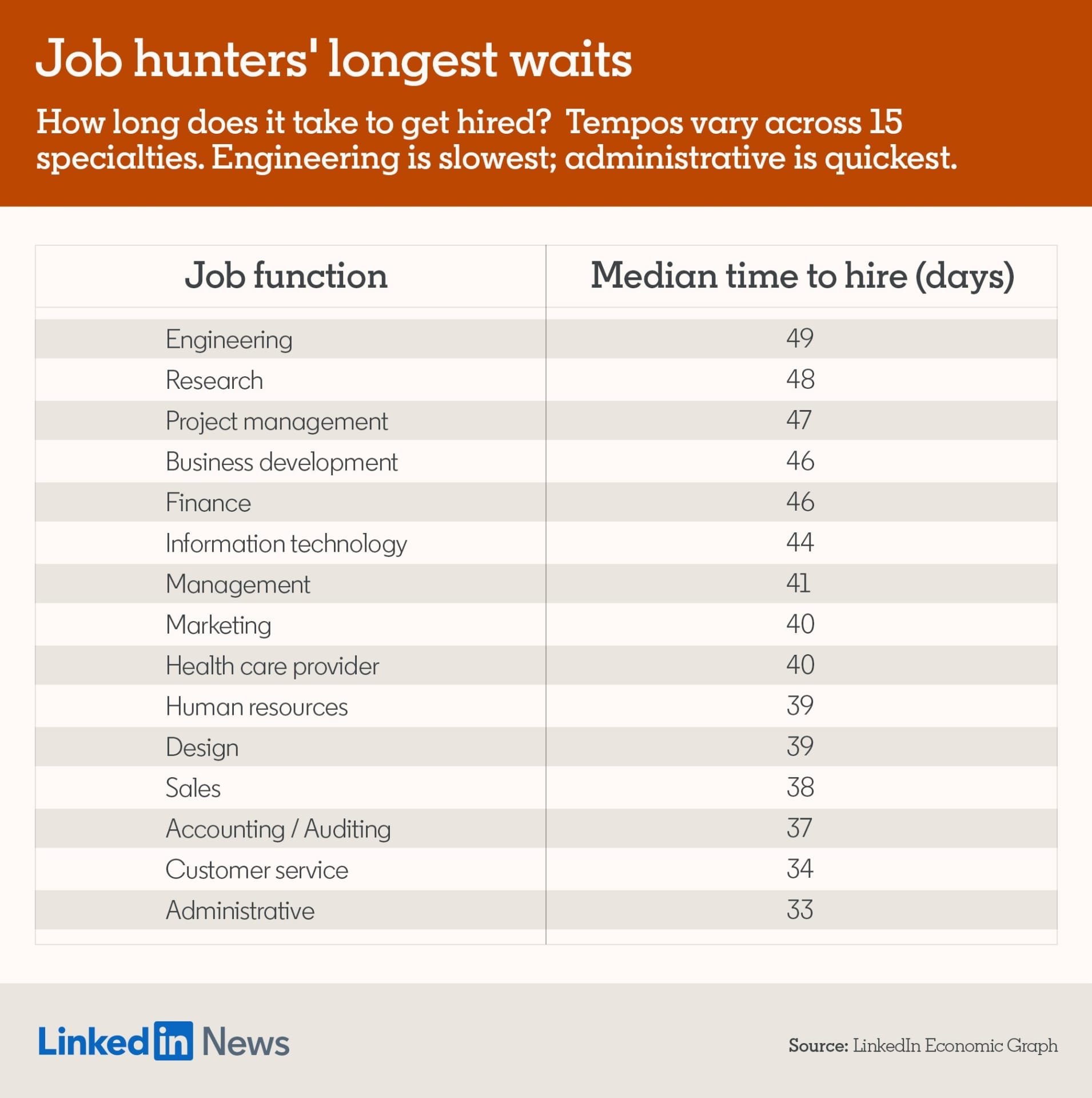
This ‘quit and jump’ strategy is a big problem when it comes to filling a position. Indeed state that the average number of days a job is live is 30 days and other sources indicate it is more like 42 days, which has led to employers having to sweeten the deal by increasing salary and company benefits.
Global brands are on the opposite scale with businesses receiving a record number of applications for an advertised role that has led to the increase in automated recruitment processes.
One reason for this is the global job market. With advances in technology and remote working becoming the norm for employees, career professionals living in one country can apply for a position in a second country.
Technology is set to change the workplace with tech giants like Mark Zuckerberg investing in the metaverse – a digital environment where multiple people can interact in a 3D world, which could lead to a future where many jobs take place in the virtual world, from the comfort of your won home.
In an article on Microsoft, they stated how they received over 7 million visitors to the career section of their website.
As global brands see a year-on-year increase in the number of applications they receive for each job vacancy, many of them are turning to automated recruitment options such as asynchronous video interviewing and application tracking system software.
The great resignation and the global job market have resulted in employers testing new job interview processes.
Top 5 Job Interview Processes
Below is an outline of the various and most common job interview stages an applicant may have to attend to land their dream job.
Preperation is key to a successful job interview. To prepare, career professionals must understand the various steps in the recruitment process.
Asynchronous Video Screening Interview
Global brands, big businesses, and high-paying employers are receiving record numbers of applications.
The extremely high volume of applicants is simply too much for a human to contemplate. Rather than hiring additional human resource staff to read and interview each career professional who has shown interest in the vacancy, organisations have turned to technology.
AVI – asynchronous video interviews are used as a screening process.
The AVI interviewed won’t be scheduled on a particular date and time. Instead, the applicant can choose a time most suitable for themselves (as the interviewer is an AI programme, not a human).
Each AVS lasts for around 15 minutes.
During the 15 minutes the interviewee has time to prepare themselves; check the voice and video systems are working correctly, take a practice interview test, before being interviewed by the AI programme.
The actual interview takes around 10 minutes, with an average of three job interview questions being asked.
The interview question will appear on the screen and the candidate will have one minute to prepare for their answer.
After the minute is up, the video recording takes place. During the recording, the interviewee has only two minutes (on average) to answer the interview question, before the recording stops, in readiness for the second or third interview question.
As the 2 minutes are coming to an end the AVI will let the interviewee know that there are 30 or 10 seconds left to go.
Employees, more than ever before, job hop, resign out of the blue, and are approached online by recruiters and employers if a suitable vacancy is available.
Global problems such as the bank crisis and Covid19 have shown how a business one year is a success, but the next year is making redundancies.
No job is safe.
Employers, to help recruit the most suitable and ideally long-lasting employees are turning towards a new way of recruiting based on the values of the organisation.
The ‘values’ job interview is designed to hire staff members who are likely to 1) go above and beyond for the company and 2) improve staff retention as the job interview asks questions about the applicant’s own values before cross-referencing their answers against the values of the company.
In the main, the interview questions will be about the company values:
Can you name the 7 company values?
Which of our values would you say in most important to you?
When working in a team what is your main priority?
What does success sound like to you?
What motivates you to get out of bed on a Monday morning?
How do you know when you have done a good job?
How would you (value) when working on a project?
Research is required for a values job interview. Without an awareness of the employer’s company values it is unlikely that any of the job interview answers will state enough relevance to gain a high-scoring mark.
A number of employers are embedding strength-based job interviews into their recruitment processes.
Similar to the ‘values’ job interview, the strength-based job interview is looking at suitability from the perspective of the ‘company fit’.
Each strength-based job interview question is about the employee’s preference – the way they prefer to work, their natural motivators and are crossed reference against the company culture.
There is an obvious cross-over with company culture and values which is why a values job interview and a strength-based one are similar.
In the main, but not always, the questions are asked about preference:
Do you prefer to work independently or as part of a team?
What is more importnat to you starting or finishing a project?
Do you like variety or routine?
How do you work best, when you are woking on one importnat task or when you have to multitask?
Choose a statement that best suits you: I prefer creativity or I prefer following processes and procedures?
When do you excel when being told what to do or when telling other people how to do things?
The final two job interviews that will be discussed are both from the structured job interview family.
Both the behavioral and situational job interviews are well-known and well-used recruitment tactics.
Previously, employers, especially in small to medium-sized organisations where the interviewer is the potential line manager, not a trained HR interviewer, the interview panel asked a mixture of behavioral and situational job interview questions.
More recently, employers are understanding the importance of how they frame a job interview question, as the frame can influence the type of answer an applicant gives.
This understanding has led to organisations using a specific structured job interview: Behavioural or situational. Amazon, as an example, is known for asking behavioral job interview questions and even going as far as referencing this on their career page.
“Behavioral job interview questions are questions framed in the past tense. The idea being, that past behaviors predict future actions – a zebra cant change it stripes”
Chris Delaney author of What is your interview identity
Behavioral job interview questions sound like this:
Tell me about a time when you were faced with a problem that had a number of possible solutions?
When have you learnt from a mistake?
Describe a time when you took the lead?
Tell me about a time that you collaberated with others?
Have you ever gone above and beyond?
Situational Job Interview Questions
Situational job interview questions are future-based scenarios.
Behavioral job interview questions are ideal when an employer is recruiting a highly experienced and skilled employee, someone, who must demonstrate their work experience.
On the other hand, many roles are suitable to a qualified individual without the need for several years experience:
Graduate positions
College jobs
Internships
Newly created roles/job sectors (as no one will have direct experience) created through the advancement of technology, politics, and globalisation
Situational job interview questions sound like this:
What would you do if you were working on a project and (X) happened?
If you were hired as a team member what would your first priority be?
How would you go about solving (X) problem?
How would you motivate your team?
What do you forsee the problems to be?
Other Types of Job Interviews
Technical Job Interview
Technical interviews assess the candidate’s technical ability to complete a certain technical task.
Some technical interview questions look at skills required for the technical role: problem solving or numerical reasoning, with some questions being in the form of a brain teaser.
Common in engineering, science, and IT roles.
Group Job Interview
Team to group interview tasks are common during full-day assessments.
As part of the recruitment process interviewees will be put in groups to complete a simple task.
Several interveiwers will observe the groups and mark each person on their communication, leadership, and teamwork skills.
The task normally lasts around 30 minutes.
Role Play Interview
The use of actors and/or hiring managers acting a part and situation that the interviewee has to deal with while being observed and marked by additional interveiwers is very common in leadership and high-paid positions.
The idea is for the employer to see in real-life (or as near to as possible) how the applicant will react in the (common) situation.
The person playing the part/situation will often be having a problem or being disruptive, and it is for the interviewee to show their professionalism and skill set to find a solution to the problem.
The recruitment process is changing.
There will be an increase in automated job interviews and resume/CV selection.
Large employers will continue to see an increase in the number of applications per vacancy.
Competition (for many roles) will be global.
Technology will continue to change the jobs on offer.
Many employers will use multiple stages of interviews to help recruit a high-performing team.
Hiring managers will ask more interview questions around company values and culture.
Employers will continue to adopt the structured job interview process as it has been proven to be the best indicator of a candidates job performance.
It is highly likely that recruitment will be completed in the metaverse or as part of a virtual reality interview process.
A large number of organisations are choosing job applicants not just based on their experience and knowledge, but also on their personal values.
More importantly, employers use ‘values’ interviews to review if the candidate’s values, their behaviors, and their likelihood to fit within the company culture.
Both, strength-based and values job interviews are often part of a longer recruitment process. Either used at the start or end of a 3-4 stage hiring process the idea behind the values interview is to help avoid recruiting an employee who may be, at worst, disruptive or simply not a good fit within the team.
How to prepare for a Values job interview
Value interview questions, in the main, are asking – do you embody the company values?
More specifically, the vales job interview questions ask – how do you embed the company values into the day-to-day operations?
There are two approaches to asking value interview questions:
An obvious first step to prepare for the values interview is research.
Any organisations adopting this job interview strategy will showcase the company values on their website.
Some businesses will have a dedicated values page (often an indication that values questions will be asked at some point direction the hiring process) or on the ‘about us’ page.
Once armed with the company values, the career professional must understand their own values. As each interview value question will be about how the applicant’s values match the employers.
Values are the drivers of motivation – you are motivated to action because of your values.
An example of value motivation is working overtime. One employee will work overtime because they value money (the additional pay for the extra hours) whereas a second employee may value customer satisfaction (the overtime results in a completion of a task on time that makes the customer happy).
Career professionals all value different things. There are no good or bad, right or wrong values, instead, it is (often) an unconscious trait that motivates that person.
Values can include:
Quality
Quantity
Finance
A job well done
Being quicker/better/more knowledgebale than others
Praise
Fame
Caring for others
Independence
Collaberation
The end result/finishing a task
Professionalisum
Trust
The bigger picture or specfic detail
Processes and procedures
Values are often viewed in the behaviors of colleagues and the language they use within the workplace:
Detailed value: “I like to cross the Ts and dot the Is”
End result: “Lets fisish what we started”
People: “Look how happy they are with (product)”
Finance: “One more sale and I will have made my bonus”
Praise: “I know my (manager) wil like that I did this”
Carer professionals can identify their own values by asking:
What five things are important to me in my job?
Which is more important A or B? (ask this for all 5 values)
What motivates me in the workpalce?
What demotiavtes me?
What makes me the most fulfilled?
Which sectors use value interviews?
There has been an increase in the use of value job interviews, as more employers are taking steps to hire long-lasting employees.
By hiring a career professional whose values are in line with the organisations values (and their vision) the new employee is likely to be happy, and therefore stay, with the employer.
The following industries are adopting the values job interview:
Healthcare
Sales
Education
Animal care
Science
Finance
Job Interview Structure
As mentioned, there are two types of value job interviews – direct value questions, and embedded questions.
A direct value job interview is when the employer asks questions based on their company values.
Direct value interview questions can include:
Can you name the company values?
Which of the company values most resinates with you?
What are your personal values and how do they relate to the company values?
Other direct questions ask about the implementation of the value into business-as-usual tasks:
An example of this is when an employer values quality. The interview question may be: “How would you ensure the quality of (product/service) while increasing the number of outcomes?”
Or, as a second example, an employer who values integrity, could ask: “Describe a situation where you have demonstrated integrity?”
The hiring manager in a direct values job interview will ask one question for each of their list of company values.
Indirect job interview questions
Embedded value interview questions are hard to detect.
Hiring managers ask standard job interview questions:
“Tell me about how you would fit this role?”
“How do you make a decision?”
“How do you manage conflicting deadlines?”
“Tell me about a time you have made a mistake?”
“What would you do if a client gave an unrealisitic timeframe?”
On the face of it, the questions seem to be one of the most commonly asked job interview questions. The difference is, the employer is making note of the job applicant’s values, preferences and motivations.
The framing of job interview questions
Clues to what an employer is looking for, what will score high, is leaked by the structure of the interview question.
An employer who asks: “Have you ever gone the extra mile to satisfy a customer?” is quite likely to value customer satisfaction.
Whereas an employer asking: “how would you say no to an unrealistic customer demand without running the customer relationship?” may be more quality or process-focused.
Employers who ask: “Are you willing to work overtime?” would only ask the question if they require flexibility in their workforce.
Value job interviews often last for around 30 minutes and are conducted by a trained HR practitioner.
Remember value questions can be, and often are, embedded within a behavioral or situational structured job interview.
Chris Delaney
Chris Delaney is one of the leading job interview coaches in the country, helping career professionals to successfully pass job interviews. Delaney is the author of several job interview reference books including ‘what is your interview identity’
Data has highlighted how today’s workforce isn’t scared of job-hopping, leading to employers having to constantly recruit new staff.
An increase in advertising the same job roles, time and time again, has resulted in a shortening of the recruitment process with hiring managers looking to streamline procedures, but some employers still enforce a 4-6 stage job interview process.
Employees are willing to quit their jobs
In a recent article on MRI Network, talking about the cost of a slow recruitment process, shared staggering HR statistics: “25 percent of people quit their jobs in 2021; 65 percent are currently seeking out new opportunities.”
A Gallop post, sharing statistics from a report, back-up’s the job-hopping data: “21% of millennials say they’ve changed jobs within the past year, which is more than three times the number of non-millennials who report the same.”
In the same post, it goes on to explain how 50% of millennials believe they will switch employers within a 12-month period.
The job sector the advertised job role is in, as well as the demand for a career professionals skill-set, experience, and qualifications, impacts the likelihood of an employer recruiting a long-lasting suitable employee. The MRI Network article explains: “In any market, first-choice candidates always tend to disappear quickly, as they have multiple options to pursue.”
First-choice applicants are interviewees who can communicate their competencies confidently, creating a strong ‘interview identity.’
Long vs short recruitment processes
Even with a need to hire staff quickly to fill the gaps left by job-hoppers, some employers embed long recruitment processes.
On a list of HR facts in a Zoom Shift HR Stats article, they explain how: “60% of applicants quit filling out application forms due to complexity or length. (SHRM)”
The MRI article talking about ‘slow hiring’ says: “These days, employers need to act quickly and decisively, particularly when candidates are currently employed or need to relocate.”
Recruitment processes vary by sector. A detailed study, by Linkedin, of over 400,000 confirmed hires between 2020-2021 shows the duration of hiring times:
The graph shows how industries that value ‘precision’ have a longer recruitment process. But why? The Linkedin article explains: “Companies in the tech industry tend to value precision — sometimes false precision — over speed…. can mean putting candidates through endless technical interviews, assessing deep textbook knowledge that’s far beyond what jobs may require.”
Demand drives change
Some organisations have a higher number of applicants than others.
If a high number of career professionals seek to work at a particular company, that organisation can have a longer recruitment process without the worry of missing out on first-choice applicants.
In a Glassdoor article they explain: “On average, each corporate job opening attracts 250 résumés. Of these candidates, four to six will be called for an interview and only one will be offered a job.”
A recent press releasehighlighted the high number of applicants for global brands: “1 million people applied for a job at Amazon as part of Career Day 2021”
An advice article about getting a job at Google on the Independent shared eye-opening Google recruitment stats: “Google receives more than three million applications a year and hires just 7,000 people”
The automated job process
The extreme number of job applicants has resulted in HR teams utilizing artificial intelligence robots to screen applicants and to act as job interviewers.
An HR research report from 2020 started: “a third (of HR teams) – 33% anticipate high or very high use of AI in two years.” Whereas other information shows how the pandemic has already created a faster move towards the use of asynchronous video interviews.
Algorithms have a cost-saving advantage over humans, as the AI bot is able to scan a higher number of applications per day than a human HR staff member.
Chris Delaney is one of the leading job interview coaches in the country, helping career professionals to successfully pass job interviews. Delaney is the author of several job interview reference books including ‘what is your interview identity’