Special Report – Interview Manipulation and Infleunce

Special Report – Interview Manipulation and Influence


For a limited time only, you can download a special report on interview manipulation and influence, these dark techniques taken from interview persuasion will give you the tools and techniques to beat the competition and to win more job offers.

What to do next? Click this link

Special Report- Interview Manipulation and Influence

If you enjoyed reading this article you will also enjoy reading:

The 73 Rules of Interview Influence

The 73 Rules of Interview Influence – Job Interveiw book

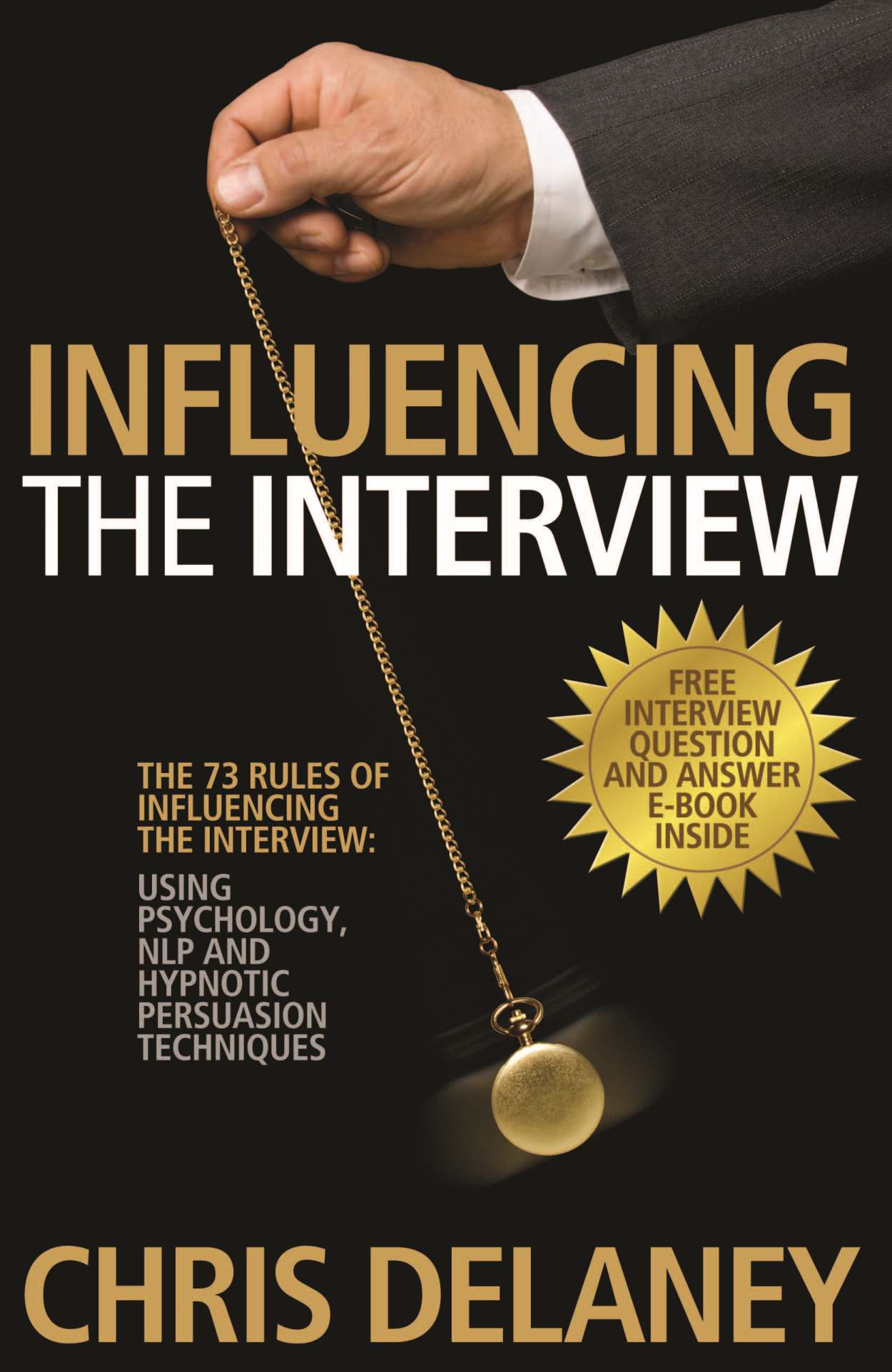
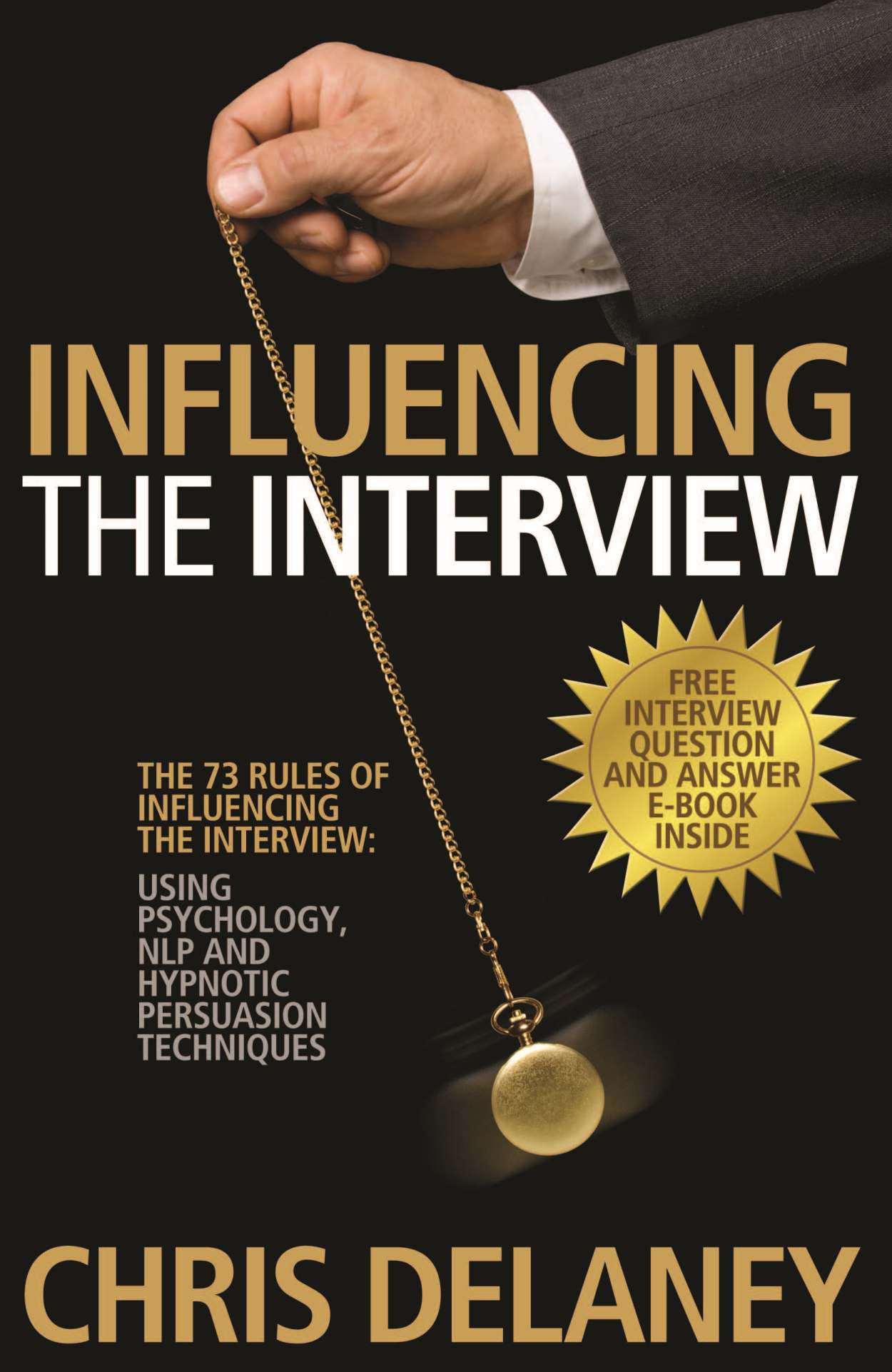
Employment king is releasing a new book The 73 Rules for Influencing the Interview using Psychology, NLP and Hypnotic Persuasion Techniques. If you want to stand out in the job interview, if you want the employer to see you as pure gold, you will want to buy this book. Influencing the interview will give you the tools to beat even the most fierce competition.

  • Rule No.1 Blow Out The Competition With a Secret Sales Pitch

Have an end game in mind from the beginning, create a strategy and use your unique selling point to crush the competition


  • Rule No.2 Three Steps to Annihilation 

Use the psychology of sales to annihilate the competition by becoming a desirable commodity


  • Rule No.3 Stand Next to Stupid and Look Smart

To look more attractive stand next to the ugly person in the room, to look taller stand next to a short person, to appear smart stand next to someone stupid, as our mind is influence by comparison


  • Rule No.4 Get Inside The Interviewer’s Head

Understand employers’ desires and offer it to them on a plate, become an object of aspiration, by the time you have finished, the interviewer will be fighting hard to control their impulse to offer you the job on the spot


  • Rule No.5 Become a Valuable Asset

Money makes the world go round, highlight your value and the interviewer will have a longing to recruit you, as high value is always associated with quality

Can you master interview persuasion?

  • Rule No.6 Alien Manipulation

Manipulation is employed by a seduction artist to sleep with the opposite sex; this technique is easily tweaked to manipulate the employers will


  • Rule No.7 Discovering the Power of Values

Values and beliefs have started wars, genocides and put man on the moon – match the employer’s values and beliefs and become unstoppable


  • Rule No.8 Make Your Interview Passionate  

A passionate speech can influence thousands of people, mobilising a new workforce or persuading individuals to take arms against their oppressors. Be passionate and believe in your argument, influence the employer with passionate expression


  • Rule No.9 MI5 Agent Technique

MI5 agents use rapport, influence and manipulation to infiltrate the enemy; they become an expert in the disguise and character identity, convincing the enemy that they are someone they are not


  • Rule No.10 Cheat the Interview

Never lie obviously, give generalised feedback to questions and let the interviewer make their own opinion. Say your answers with confidence and quote researched information like it is your own opinion, as long as it highlights your expertise


  • Rule No.11 Learn the Secret Language of Interviews

A secret language is used in sector specific interviews, learn this hidden communication and appropriately utilise terminology. With just a few memorised sentences verbalised in this foreign tongue you can appear fluent in this strange language


  • Rule No.12 Secret Detective

To solve the case you need to dissect the crime scene and research the suspects, identifying key details in the investigation. In the interview knowledge is power; your research will help you locate the winning interview formula

 Under the psychology of sales in job interviews

  • Rule No.13 Undersell Yourself at Your Peril  

Dry and dull interviews will not do you any favours, make the conversation light, fun and intriguing, using this opportunity to highlight all your relevant transferable skills – you must make yourself sound like a well rounded package


  • Rule No.14 Wear a Condom

Stay safe! Being caught in a tricky situation can break or make the interview, seduce the employer by playing it safe until they are under your control, once manipulated you can lead and direct the interview


  • Rule No.15 Not Cocky But Confident

Act how you want to be seen, make this impression last and in time you will naturally adopt this character unconsciously


  • Rule No.16 Pain and Pleasure

Choices and decisions are made through the motivational influence of pain and pleasure (the carrot and stick) by controlling your own pain and pleasure influences you can delete interview fears and access interview confidence


  • Rule No.17 Limit the Limiting Beliefs

A person’s belief system will change the direction of their life from failure to success, in an interview your belief system alone will be the difference to a job offer or an interview failure


  • Rule No.18 Steal Confidence From Others

Can you really be accused of thievery when you’re only stealing mental information and systems from others? This technique will open new doors for you, just don’t get caught doing it!

 Interview manipulation is only seconds away

  • Rule No.19 Give Your Voice a Boost

Have you ever attended a meeting when all you wanted to do was fall asleep as the speakers/chair/your co-workers were so boring – their voices monotone droning on. Entertain your interviewer with your voice


  • Rule No.20 Show Your Nerves, Confidently  

Too much confidence means you’re too cocky, but if you’re too nervous then you’re no use to any employer. Win job interviews with a mix of confidence and nervousness; learn when you should sound nervous and when you should project confidence


  • Rule No.21 Playing With the Devil

Negative self talk will kill your interview, don’t listen to the devil in your head or it will be the death of you, eradicate negative self talk and feel a new growth in confidence

 For a full breakdown of each rule click here: Influence in Interviews

  • Rule No.22 Destroy Painful Interview Memories

Our subconscious mind teaches us how to act in situations through learning from our past experiences. But when these experiences are negative your subconscious will attempt to keep you away from similar experiences, to overcome the fear of interviews you need to destroy any attached negative memories


  • Rule No.23 Fast Interview Phobia Removal Technique

A person can have a real fear of spiders, heights and even job interviews as with all phobias these can be overcome but this often takes years of therapy. NLP offers us a way to rid your phobia quickly


  • Rule No.24 Destructive Nightmares

Anxiousness controls you and will destroy your spirit, keeping you awake the night before the interview. An instant sleep technique will relax you, calm you down and offer you the best chance on the day of the interview


  • Rule No.25 Don’t Let Your Handshake Show Your True Emotions

You are trying to impress people with your appearance, communication skills and body language, don’t let your moist hands let you down; this simple technique will change the interviewer’s first impression of you

 Persuade any Interviewer with these 73 techniques

  • Rule No.26 Disarm the Interviewer with Your Handshake

The interviewer is always trying to figure out the real you, a neutral handshake won’t give too much away which will intrigue the employer, but an overpowering handshake shows dominance – which is best for you?


  • Rule No.27 The God Voice Technique

A feeble voice portrays weakness, answer interview questions with power and confidence; find your God voice  


  • Rule No.28 Master Memory Model

Impress the interviewer with your memory capacity.  Increase your power of influence by being able to recall an abundance of information, facts and figures


  • Rule No.29 Influence with Posture

Your body speaks volumes; with a little training you can use your posture to gain acceptance, to build rapport and to illustrate authority  

  • Rule No.30 The Secret Power of Your Unconscious

Why wait for the employer to speak before you start to influence the interviewer, a master influencer will be able to read the non verbal cues giving them the edge over other applicants and dominate the interviewer

 Dominate your next interview

  • Rule No.31 Read the Interviewer Like a Book

Without knowing it the interviewer will give away their feelings and thoughts through their body language, use this silent communication to control the interviewer


  • Rule No.32 Look Away and Miss the Hidden Clues the Eyes Give Away

The eyes are the windows to the interviewer’s soul, hidden in them are the clues as to what we are thinking, go one step further and use the eyes to mind read the interviewer giving you a real advantage over other less committed interviewees


  • Rule No.33 Use Distracting Words at Your Peril

Words have power; the language you use can give you an edge, creating instant rapport and likeability or creating disinterest and confusion, leading to a breakdown in communication and likability


  • Rule No.34 Build Likeability through Commonality 

People like people who are like them, to influence your interviewer focus on commonality and build on this growing friendship as we find it hard to say no to someone we like


  • Rule No.35 Energise the Interviewer

The difference between Extrovert or Introvert interviewers is how they acquire their energy, by mastering how to influence this personality trait you will increase the spirit of the interview

 Use hypnotic persuasion in job interviews

  • Rule No.36 Influence the Interviewers Decision Making Process

The interviewer’s role is to make a decision – to choose the best candidate. By influencing the interviewer’s decision-making process you can, at the extreme persuade the interviewer to employ you  


  • Rule No.37 Disguise the Information You Give the Employer

We process information differently depending on our personality type, once you master how your interviewer will filter your information you can use this knowledge to infiltrate the employer’s thought process  


  • Rule No.38 Deliver Your Answers the Way They Will Be Best Understood

Interview stress kills the interview, the interviewer after interviewing all day will feel pressured, tired and on the edge of annoyance – be sure not to fall into the trap of stressing the interviewer by wrongly presenting the structure of your interview


  • Rule No.39 Persuade Through Personality

We are all different which means to be successful in all interviews you need to change your approach to influence each individual interviewer. A one way approach will be the death of your interview persuasion technique


  • Rule No.40 Predict The Interview Questions

The power to predict interview questions allows you to prepare your answers with detail and precision, with the final result having a greater impact then your counterpart’s efforts


  • Rule No.41 Get The Experts To Give You The Answers

Don’t do the leg work yourself ask the experts for the answers, use their power answers to emphasize your expertise and to pass interviews with confidence

 Double your chances of interview success

  • Rule No.42 Become a Website Detective

Only a fool doesn’t understand the power of knowledge, with research you will be able to uncover the company secrets that will guarantee you an offer in employment


  • Rule No.43 Structuring Your Interview Answers Will Increase the Acceptability of the Interviewer  

Most interviewees don’t understand the real structure of the interview process; they listen to a question and give a quick answer praying for the interview to be over. To be successful you need to understand how to structure your interview answer, the structure will create the basis for influencing


  • Rule No.44 Repetition Increases Skill

Practice makes perfect, without practice you will be compelled to rush the interview and to fail. With practice comes an increase in skill and an increase in confidence – a winning formula for an interview


  • Rule No.45 Conceal Your True Purpose in a Mock Interview

Repetition is the key to mastering any skill, increase your interview skills and practice your persuasion techniques by using a real interview as a rehearsal, testing your manipulation with your true purpose concealed


  • Rule No.46 Create a Persuasion Loop

The end of the interview is more likely to be remembered then the start, use this section to reiterate your unique selling points  

 Persuade and influenceany job interviewer

  • Rule No.47 Interactive and Energetic Presentations Create Intrigue

A presentation gives you the opportunity to manipulate the interview as you will have an uninterrupted focus; create intrigue, highlight your expertise and add hypnotic language patterns throughout – this will only work with practice       

  • Rule No.48 Get Others to Do The Hard Work – Get the Receptionist To Sell you to the Boss

We believe others, especially when they have no interest in the outcome or invested interest. Through the psychology of social proof; get an outsider to sell you to the interviewer and receive a boost through a positive character reference


  • Rule No.49 Turn Other Interviewees into Nervous Wrecks

Control the opposition, make them like you and then destroy them using mental mind tricks without them even knowing what damage you have caused


  • Rule No.50 Increase Likeness by Using Names

Remembering names increase likeness and likeness creates rapport – with a friendship in a bag you can influence the interviewer through the psychology of “liking” and people find it hard to say no to people they like


  • Rule No.51 Catch Big Fish with Big Hooks

Understand the interviewer’s requirements and use this as bait, offer the interviewer what they want, add a little extra and they will be hooked

 Master influential language in interviews

  • Rule No.52 Gain the Interviewers Agreement

Nodding at the interviewers key points will increase rapport, once in rapport you can encourage agreement by nodding while explaining your key selling points which will influence the interviewer to agree with you


  • Rule No.53 Infect the Interview

Likeability and rapport will affect the interview outcome, once you learn how to increase rapport you will affect the interviewers view of you at the bare minimum with an increase of likeness and at the utmost creating a passionate connection


  • Rule No.54 Take the Interviewer on a Journey of Discovery

Be the author of the interview, take control by pacing the interviewer and use rapport to direct and lead the interviewer on a new journey


  • Rule No.55 Interrogate the Competition

Everyone has a weakness, a fault, their own Achilles heel; it may be insecurity, procrastination or even an obsessive compulsive disorder, discover the limitations of the competition and exploit this


  • Rule No.56 Create an Aura of Power

A group interview is one way for the employer to quickly disqualify those that they feel are lacking in the essential criteria required for the position. To stand out in a group interview you need to create an aura of power while making the other interviewees seem weak and helpless


  • Rule No.57 Motivate With Pain, Motivate With Pleasure

People are motivated through pain or pleasure, discover your interviewer’s motivational trait and discover their weakness   

 Increase your interview chances – make a bigger impression

  • Rule No.58 When You Don’t Agree with the Employer’s Point of View Change the Direction of the Conversation

A negative discussion started by the interviewer reflects badly on you through association; learn to direct any conversation, any negative comment to a positive topic of your choice  


  • Rule No.59 Gain Compliance By Getting the Employer to Agree With Everything You Say

To gain interviewer’s compliance, convince the interviewer to let their guard down, once they are open you can attack – manipulating as you see fit


  • Rule No.60 Only Change the Employer’s Opinion if the Employer Has Negative Thoughts Towards You

When an employer takes a dislike to you, you need to manipulate the employer to first gain attraction, second to increase intrigue and thirdly for the interviewer to see you as commodity as precious as pure gold


  • Rule No.61 Turn the Interviewer into a ‘Yes’ Man

Tag lines are used to gain compliance, they are highly powerful and need to be used only at certain points during the interview, when used you can encourage agreement and at the extreme the employer will comply with everything you tell them


  • Rule No.62 Demand The Employer To Give You The Job

Make demands by secretly hiding them in conversation, this will bypass the conscious mind turning your interviewer into a puppet controlled by you


  • Rule No.63 Suggest to the Employer Not to Offer You the Job

Mess with the interviewer’s mind, use reverse psychology – suggest that they don’t offer you a job which will compel them to offer you the position, the interviewer won’t understand why they are so compelled to hire you  


  • Rule No.64 Conceal Your Intentions by Simulating Choice

Suggest choice but don’t offer any, the interviewer will believe they have options but in reality they will have none


  • Rule No.65 Make the Puppet Dance

Control the interviewer, put your words in their mouth and make them think and act the way you want them to, at the bare minimum you will lead the employer, when used with proficiency you will be in command


  • Rule No.66 Use Social Proof to Influence – get others to highlight your strengths

People are sheep who will follow others and believe what they are told without any proof, sway the interviewer by quoting your past employer’s high appreciation of you


  • Rule No.67 Create a Fantasy  

Hidden meanings are understood unconsciously through stories and metaphors; create intrigue, anticipation and the interviewer will want to know more, this technique can help create a strong identity  


  • Rule No.68 An Argument Will Only Show Your Weakness

Negative put-downs can rupture the whole interview process and will make you look weak; handling negativity masterfully will not only save your skin but put the power back in your hands


  • Rule No.69 Turn Around the Tide of Power; Interview the Interviewer

The power in an interview is unbalanced, take control, switch around the balance of power and gain authority – be careful this technique can back fire if you over exert your new found power


  • Rule No.70 Master the Art of Performance

Don’t rely on the interviewer to remember you, create an unforgettable performance and like all shows leave the audience wanting more


  • Rule No.71 Offer A Diamond With One Hand, Take It Away With The Other

Scarcity increases want, as we all want what we can’t have. Close the deal by offering them everything they want and more, and then just as quick take it all away


  • Rule No.72 End as You Started with Manipulation Mind

To finalise your impact on the interview, secure an emotional attachment with the employer – don’t grow too comfortable at the end of the interview as your weaknesses may finally be uncovered


  • Rule No.73 Look For Your Own Weakness and Stamp It Out

Pre-empt the employer, discover your own weakness and evolve into the final product through personal feedback. Become a master of interviews and an influencer of interviewers
make every interviewer eat out of your hand

If you enjoyed reading this article you will also enjoy reading:

Influencing the Job Interview 6 Principles of Persuasion

Influencing the Job Interview using the 6 Principles of Persuasion by Dr. Robert Cialdini


As a leader in the laws of influencing and persuasion Dr. Robert Cialdini’s book The Psychology of Influence is an insightful read on the principals of influencing and persuasion techniques. We have taken what Dr Cialdini researched in his book and made it relevant to the job interview to help you win more job offers achieving your career success.


The six principles of influence can be used in a job interview to get more job offers, be warned though, as discussed in the book “influencing the interview” some of these techniques can be dark and dangerous, but they will increase your chances of securing you a 6 figure job offer.


First Principle: COMMITMENT


People like to follow through on their commitments; we all strive for consistency and when we commit verbally or in writing to something, we won’t want to back out of this commitment. Which is why pick artist, master persuaders and powerful business leaders use the principle of commitment to persuade and influence.


To win job offers you first need to gain the employers commitment, if they commit to employing you during the interview they won’t want to change their mind. This principle is powerful in job interviews, because if you influence the employer to say Yes to your questions there unlikely to back out, which means you will want to set up a yes set with a hidden command.


A yes set has been used in ‘sale’ pitches for years, for this to work you need to say several truisms – facts that can only be answered with a “yes.” Such as “you reading this document…” as you can’t deny that you were reading this document. After stating 2-3 truisms you can add a ‘lead’ – a lead is the thing you want the employer to say Yes to, such as “you’re looking to recruit someone with my experience?”


Hypnotherapist use this technique all the time to take clients into a trance “as you are sat on the chair (yes) breathing in and out (yes)… you are starting to feel sleepy (lead)


In a job interview you could create a yes set with “you recently won a new contract (yes) with several demanding targets to achieve (yes) which means you’re looking to recruit someone with my experience… (lead)


Don’t kill the interview by waiting to be asked a question. An interview isn’t a set of questions and answers, an interview is a conversation and throughout a conversation both parties will ask and answer questions.While you’re questioning the employer you can keep gaining commitment, building commitment on top of commitment by using the rest of the techniques in this article, designed to influence your next job interview.


Second Principle: RECIPROCATION


People feel indebted to others who do/give something to them. Supermarkets use this rule constantly; it is rare to walk throughout a supermarket without their being a free giveaway sample of cheese, meat or alcohol. This great scam works through the rule of reciprocation, as customers are more likely to buy a product because they have been given a free sample.


Do something ‘nice’ for the employer – an unselfish gesture and they will want to return the favour. Depending on your industry you could use this influential principle by offering the employer a day’s free work. For this to work you don’t need to wait for the job interview, apply for positions on spec (which is why the technique only works for certain industries)  and offer the employer £50 for you to work for them for free for a day – that’s right you pay the employer to work for them for free. With the condition that if they like your work ethic they have to offer you a job but if they feel you won’t fit in with their organization they keep the £50.


This technique works because people who will offer up a day’s free work are generally good workers and because you have offered the employer a free day’s work, the employer will feel more compelled to offer you a job position.


Wimpy quite candidates are never offered jobs. In the job interview you have to play this technique a little differently as it is hard to offer the employer a free sample of your work during the interview itself. To overcome this you can offer the employer information, knowledge and ideas. In the Influencing the Interview book we talk about adding value to the organisation by using your industry knowledge (Authority principle) to add value to what the employer is discussing.


As an example the employer may be discussing a new piece of expensive software that they will be investing in, you can give away your knowledge for free “that piece of software is really good but is very expensive to run, a new product used in the USA is being realised in the UK next month, basically it does the same job for half the price. After the interview I can e-mail you a link to the product website so you can decide for yourself.” 


What you are doing here is saving the company money before they employ you, with the interviewer thinking if you will give this gem away for free, what will I get when I employ you? And because you gave away some valuable information that will assist the company the interviewer will more compelled to do something ‘nice’ for you and offer you the job.


Third Principle: SCARCITY


We all want what we can’t have; while in a recession the employer has the upper hand, they know hundreds of people will apply for each advertised position, in other words they have the pick of the crop. The good news is, out of all the hundreds of candidates that applied for the position, only around 6 will be interviewed – this is the interviewer telling you that they are interested.


Next you need to make yourself scarce, unique or valuable. You need to think about the value you can bring to the organization, what do you possess that others don’t? How will you increase the company profits? How will employing you add value to their organization? And more importantly if they don’t employ you what will they miss out on, especially if you become the employers competition as an employee at a competitive company.


Don’t have an interview hart-attack, speak up and get your selling point across to the employer, if you don’t tell them they won’t know. Once the employer is hooked, once they see you as pure gold and as the employer is ready to offer you a job, let them know how employers from other competitive organizations have already offered you a position and the company is troubling you for an answer –  result: the interviewer will feel compelled to win you over before they miss out.


Forth Principle: AUTHORITY


People listen, trust and follow experts; who would you want to operate on you, a newly qualified doctor or an expert specializing in your operation? A no-brainier! Even on a more basic level you may be out buying some new decking for a home DIY project. While in the local DIY shop your examining two different decking products, when the shop assistant comes along and tells you about the pro’s and con’s of each product and then finally recommends product A – which product would you choose? Most of us will go with the expert’s recommendation – what they don’t know is that the shop assistant has only worked their two weeks. Authority can also be increased by a verity of external aspects including your voice tone and  the clothes you wear. If the shop assistant is dressed as DIY person, you are more likely to take their advice.


You don’t have to be an authority to persuade, as you can influence people by coming across as an expert. In the job interview you have to be seen as an expert in your industry, as this will increase your value (scarcity principle) and will give you the upper hand in the interview. Also people believe experts and won’t always question your general statements, if they believe you are an authority on the subject. You can learn to come across as an expert in your job sector in just a few days, which we discuss in the influencing the interview book.


Knowledge is the key to power; the more you learn about your industry the more you will sound like an expert. Continue to increase your knowledge by reading articles on your industries sector skills website, question people on industry forums and by working in a career you love – this way you will enjoy learning and evolving in this job role. Finally with all this expertise in your head, share it with the employer, explain how this knowledge of yours will benefit the organization, how you can increase productivity, how you will win new contracts and save on overheads – show the employer how you will put your knowledge into practice (Reciprocation principle)


Fifth Principle: LIKING


People find it hard to say no to people they like; you hear it all the time when people gain job interviews or are even offered positions because they were recommended by a friend who already works at that particular company.  This works because the new employee is associated to the friend recommending them; the employer thinks worker A is good so his friend must be good to or he wouldn’t recommend her. In reality this generalization isn’t always true, but the power behind the principle of liking can affect the employers mind.


During the job interview you can increase liking by finding common ground; you both support the same football team, you both went to the same school, you both play badminton or attend church on a regular basis. It doesn’t matter how you find common ground, just find it as this will first help the employer to remember you and will increase your rapport. It has also been proven that attractive people are offered more jobs which mean’s you need to make an effort with your appearance before every interview.


Don’t become an interview enemy. You can increase rapport, increasing the employer liking you by mirroring the employers body movements in a suitable way. To do this pace the employers posture – sit how they are sitting, as they move (as an example slightly leading forward) copy them (you slightly lean forward) and once in full rapport, you can lead your employer; as you move they will unconsciously mirror your body movements. To initially gain rapport you can influence someone by complementing them, people love to be told nice things about themselves and if you ‘like’ them, they will like you.


Sixth Principle: SOCIAL PROOF


People are sheep; most people follow others, especially when their uncertain about a course of action – to feel comfortable we will go with the crowd. In a job interview you cant get a hundred people to tell the employer to hire you because of your expertise, if you could you would easily gain more job offers as interviewers often feel uncertain with the decision of who to employee.


In a group interview you can use your expertise (Authority principle) and rapport (Liking principle) to create an aura of power around you. By highlighting your expertise to the group while increasing your liking from others, you will create an identity for yourself “s/he will definitely be offered one of the positions…” this can identity can easily spread throughout the group and to the employers “we need to interview him/her, have you heard what everyone has been saying…”


In a one to one interview you have to create social proof in a different way, to do this quote past employers throughout your interview praising yourself for past successes and I would add it is easier to praise yourself when you’re using a quote.


Employers want to be told who to employ, if you can stand out by showing your expertise, the value you can add to the organisation and top this by getting others to say “your great” through quotes or even from other interviewees, you will increase your job offers.


Authors use this same technique all the time, look on the back of any good book and you will see a testimonial, and what is a testimonial it’s social proof – others are telling you to buy this book.


The 73 rules for Influencing the Interview using Psychology, NLP and Hypnotic Persuasion Techniques.


If you enjoyed reading this article you will also enjoy reading:

Influencing the Interview

Influencing the Interview


.Now Available at Amazon


Times are hard for job hunters with on average over 300 applicants applying for each individual position. Job hunters have it even harder with competition for jobs coming from across the globe, due to the worldwide recession. To win job offers in these competitive times, you need to stand out in job interviews, you need to add value to the employer and you need to learn how to influence the interview.

Employment king is releasing a new powerful book designed to blow away your interview competition, but be warned some of these techniques are dark and dangerous. The 73 Rules of Influencing the Interview – using NLP, Psychology and Hypnotic Persuasion Techniques has been designed to give you the upper hand in your next job interview.

Techniques range from using the dark arts of sales psychology, to turning other interviewees into nervous wrecks. You will learn how Mind Read the employers and how to manipulate by using hypnotic language to persuade the interviewer to offer you a job.


Influencing The Interview is due for release on 13th July 2012

Pre-order a copy today 


Pre Order your copy if Influencing the Interview today by clicking this link BUY NOW and we will e-mail you with your free gift and post the paper book: Influencing the Interview to your address after the first print run in July. Be the first to influence job interviews using NLP, Psychology and Hypnotic Persuasion Techniques and win a job offer in these competitive times.

  • International sales will incur any additional cost for overseas postage cost


How to be Confident in an Interview

How to be Confident in an Interview


Job interviews fall in to the top ten categories for situations that intimidate you, make you nervous and situations that knock the confidence out of you.  Why? Because we have to sell ourselves to the employer, for many this is a new and highly intimidating time. For your job interview to go well you have to make you the product stand out from the other interviewees, to do this you need to ooze confidence.

These 5 tips will help you boost your confidence before your next interview giving you the winning edge over other interviewees.

  • Buy new interview clothes, we all feel better and more confident when were wearing something new and smart. Once dressed stand in front of the mirror and look at and note everything that looks good about you


  • Before your real interview, attend a fake job interview for a job you don’t want, use this experience to improve your interview skills. Look back and write a list of everything that went well for you and record a second list of what you can do to improve your chance of a job offer


  • Make a list with three headings; Skills, Qualities and Experiences. Under each heading record as many skills, qualities and experiences you possess that are required by the new employer. These are your key selling points that you need to discuss throughout the job interview


  • Complete an interview visualisation; imagine attending the job interview and everything goes as planned, you know the answers to the questions, you build rapport with the interview, you feel relaxed, calm and incomplete control. Go one step further and imagine you have been offered the job, see yourself working in this new organization, the boss appreciates your work ethic, your new colleagues respond well to your professionalism – imagine this is the job you have always wanted. This technique is used by professional athletes before Olympic events.


  • Before you step through the interview door, take 10 deep breaths, as this will allow you to relax. Once calm imagine you are a confident person, stand how a confident you would stand, hold your head up high and push your chest out a little and walk in, as a confident you would walk – own the interview


These 5 easy to complete techniques can make a real difference with your interview success as interviewers only want to employee confident employees. If you’re still worried about being a bag of nerves at your next job interview, you can boost your confidence while reducing your negative self esteem in just one day by learning how to be as confident as a comedian.


If you enjoyed reading this article you will also enjoy reading:
Can You Answer Interview Questions?

Can You Answer Interview Questions?

To win job offers, you can’t just rely on your experience and skills, the trick to winning offers of employment is by your ability to answer interview questions. Below you will find ten interview questions and an explanation of how to answer them. To ensure you pass your next job interview Employment King have gone to the employers and asked them what they require as a successful answer.

Tell me about yourself

For this question give a brief introduction about yourself, think of a good opening line, be really positive talk about previous positions and any significant achievements – ensure what you talk about is relevant to the job you are applying for.

What are your strengths?

This is one of the most common questions you will be asked. Give an answer relevant to the skills and qualities relevant to the position you are applying to. The interviewer is trying to find if your strengths match the job. For example, if you are applying for a job where accuracy is an important issue, one of your strengths could be that you have an eye for detail.  It may useful to find different words to describe similar attributes and qualities in order to avoid repetition.

If your interview skills are lacking, you will want to book a session with an Interview Coach

What are your weaknesses?

Again, another commonly asked question.  A frequent mistake to make when answering this question is to say something negative like “I can sometimes let things get on top of me”. Be positive and sell yourself with every interview question, turn a negative into a positive. For example, “In the past I felt I needed to improve my typing skills, because I wanted to be the best I can so I have recently enrolled on a typing course”. This will show that you can identify your weaknesses but at the same time, you are willing to improve. Most importantly: do not mention a weakness that is any way related to the job you are being interviewed for! This might sound obvious but it is a common mistake!

What do you enjoy doing outside of work?

This is sometimes asked as an opening question to get you talking and to calm your nerves, a lot of people answer “Socialising with friends” “Playing on my computer” “Taking my family on day trips”. Whilst these are valid and honest answers they do not really bring anything to the table that is special, that makes you stand out.

If you can say that you volunteer you will be guaranteed to impress! Although this should be truthful! You can apply to volunteer in any area you like, ideally in a position relevant to the job you are applying for. Volunteering is seen as a positive activity by all employers, you only need to volunteer once or twice a month and when you can answer this question  with “Currently I’m volunteering for Oxfam, I really get al lot out of helping others…” you can see that there are few who wouldn’t be impressed with that answer.

Why did you leave you last job?

A dreaded question for many! When answering this question never give a negative answer.  “I did not get on with my manager” or “The management did not run the business well” will show you in a negative light and reduce your chance of a job offer. Answer the question positively, emphasising that you have been looking for a career progression. Start by telling the interviewer what you gained from your last job “I enjoyed my last job, I quickly learned how to multi-task…”

If you were made redundant, let the interviewer know, this is not a negative.

Where do you see yourself in 4-5 years time?

Tell the interviewer how you want to progress through their company, a manager does not want to be re-advertising and interviewing in a year’s time, do not infer that you may want to leave after a certain amount of time. “I am really keen to learn how your company operates; I can see myself attending any available training and using this knowledge and my own drive and ambition to work my way up the company.” It may be useful to see if there are any formal progression tracks or training programmes.

Why do you want to work here?

An interviewer knows you are applying for other jobs, you may be offered a job with this employer, start employment and then leave for another job offer. An interviewer would never say this affects who they pick (and a large amount of companies using a scoring system to stop this from happening). But would you offer someone a job if you thought that they weren’t fully committed to your company? Show the interviewer how enthusiastic you are about the job, industry and their company. “Your company has such a good reputation and I know you have the ‘Investors in People’ award and this impresses me. I have been following your company for the last couple of years and I have seen how you have grown and I feel I would like to be a part of this.”

Have you got any questions for me?

Most interviewers ask this question and generally towards the end of the interview. Remember to prepare for this, as asking questions will be a great end to an excellent interview. Ask about company expansion, the team you will work with and anything to do with new contracts and personal development/training.

learn more about passing job interviews, learn the secrets of employment

If you enjoyed reading this article you will also enjoy reading:

Types of Interview?

How Many Types of Job Interview Can You Think Off?


As many of you will already know, there are many different types and styles of job interviews.  You need to understand why employers use different interviews to help you prepare for them. The explanation of each below is to give you an overview of the different ‘types’ of interviews, if you are invited to one of these different ‘types’ of interviews you will now know more about them and will feel more confident about attending them


  • Screening Interview

A screening interview is a brief interview used by employers to quickly and efficiently eliminate unsuitable or unqualified interviewees. This is usually carried out over the telephone and tends to focus on confirming and clarifying that you have to essential minimum requirements needed for the job you are applying for (Essential requirements will be found in the Job spec of the application pack).  Employers use this to save time and money during the interview process.

  • Speculative On the spot Interview

As we said above if you apply for a job speculatively by walking into a business, you have to be prepared to have an On the Spot Interview. This interview will be informal and unstructured as the interview/manager would have not prepared any questions and again wants to see if you have the minimum requirements for the job you are applying for before offering you a full interview.

  • Telephone/webcam interview

You are likely to have a telephone interview for all jobs that requires you to use the telephone as the main job duty. Telephone and webcam interviews can be used when the interviewee cannot attend an initial interview (Perhaps due to the job role being overseas) This type of interview again is used to save recruitment costs and in order to decide which candidates they want to interview face to face.

  • Face to Face Interview

This is the most common interview; the interview can sometimes be informal as only one person is involved. The interviewer will often have a series of prepared questions designed to find out if you have the skills, qualities and knowledge for the position you are applying for. Often the manager or HR representative will carry out this interview.

  • Panel interviews

In this type of interview you will be questioned by several people making up the panel. The actual number of interviewers can vary depending on the company (some companies use two person panel interviews because the manager has not interviewed before) On the panel they may have an expert/manager who knows the job you are applying for and will coordinate the interview and questions. Or the panel (normally when this is a panel of 2 or 3) will co-ordinate the questions between them. Ensure you look at each member of the panel and involve them during the interview.

  • Follow Up Interview

This often happens when you are applying with large companies who have a big recruitment drive on. Only a small number of interviewees will be asked to attend a follow up interview. If you are one of them then this is a great sign -it shows you that an employer is very interested in you!

This extract was taken from The Secrets of Employment

  • Group Interview

This is an informal interview with a large number of other interviewees often for customer service based roles. You will be asked discuss a topic or complete a problem solving exercise. A group interview can last anywhere from two hours to a whole day. Interviewers will be watching for your contribution and your role within the group. Consider what skills they would like to see from you. As a natural leader you may be great at organising and getting the task in hand done but you might need to be aware of using your listening skills and allowing others to talk.

  •  The Sequential Interview

Sequential interviews are where an applicant is interviewed in stages. You may have to complete certain tests including Literacy and Numeracy. You may be asked to attend interviews with several people, with each interviewer asking questions relating to a different aspect of the job role.

As you can see there are several interviews that you may be asked to attend, as long as you are prepared and understand the job you are applying for you will do well. As all the questions/exercises/test you are asked to complete will be relevant to the job you are applying for.

If you want to learn more about passing interviews using interview and NLP techniques download The Secrets of Employment Now

If you enjoyed reading this article you will also enjoy reading:

I Keep Failing Job Interviews

Do you keep failing job interviews?


Einstein once said “The definition of insanity is doing the same thing over and over again and expecting different results” This is true for many job hunters who continuously fail job interviews, they continue to make the same mistakes in every job interview.

Employment King has teamed up with leading employers to discover What type of job interviewees continuously fail job interviews and our research has found that 10 types of job interviewees will always be refused job offers from all job interviews. Read this article and make sure you don’t fall into any of these 10 categories.

If you want to win more job offers through passing  job interviews, download this mini interview guide for FREE and don’t fall into one of these 10 categories; 10 people who will never pass a job interview.

What to do next? Click the link below for your free PDF Mini Interview Guide

Are you one of these 10 people who will never pass a job interview

If you have a job interview coming up and you feel scared and nervous, what can you do? I agree some job interviewers can ask some Tricky Questions which means you need to know Killer Answers to each interview question Tricky Questions, Killer Answers

If you enjoyed reading this article you will also enjoy reading:

Ten Stupid Ways to Fail Your Job Interview

Ten Stupid Ways to Fail Your Job Interview

After weeks of job hunting and searching through thousands of job vacancies, editing your CV for each individual job and writing targeted covering letters you finally land the all-important interview for your dream job. Don’t mess up your job interview by making these 10 stupid mistakes that will ensure you fail your job interview.

1. Farting During the Interview

We all get nervous during job interviews including celebrities and even the wife of ex-presidents. Hilary Clinton during an interview didn’t realise how sensitive her microphone was when she accidentally farted during her TV interview – we don’t know if this embarrassing mistake was due to a bad diet or bad nerves

2. Telling Big Fat Lies

Job hunters often stretch the truth during job interviews to gain the upper hand over other job applicants, but Callie Armstrong took it one step too far when she lied at about being Jewish and being able to speak Hebrew! It paid off though as she was not only offered a job but a year later married one of the Jewish graduates from the school where she secured work, which meant she had to convert to Judaism. But when did she tell the groom about the lie, before or after the wedding?

3. Agreeing with everything the interview says even the Lie’s on your CV

Jen from the IT Crowd got stuck after lying on her CV about her IT skills and was offered the IT management job. Explaining later during to the interviewer “I’ve got a lot of experience with the computer…thing, you know e-mails…, sending e-mails, receiving e-mails,…deleting e-mails, I could go on…”

4. Using an Over Creative Video CV

You need your CV or Resume to stand out from the crowd, but Barny from How I Met Your Mother took this a little to far as you see him flying airplanes, driving monster trucks and parachuting off cliffs to the soundtrack “I’m so Awesome”

5. Arriving to the Job Interview with a Cockatoo on Your Shoulder

Some job hunters really don’t understand the importance of the first impression, especially one guy who attended a job interview with a cockatoo on his shoulder. Robert Half completed a recent survey on outstanding interview mistakes and outrageous interview blunders

6. Wearing your PJ’s to the Interview

According to a recent survey of more than 670 HR managers, many job hunters don’t understand the importance of wearing smart attire during the interview, with some interviewees arriving at the interview dressed in their nightwear, thankfully this was PJs and slippers and not boxer shorts and socks


7. Giving Joke Answers to Serious Questions

Some interviewers want to stand out from the crowd, instead of asking about your experience, qualifications or what can you bring to the organisation? They will ask dumb questions such as “if you were a cookie what cookie would you be?” don’t get caught out by thinking this is a joke question responding with a joke answer such as a “A smart cookie” read more about dumb interview questions and answers on the link below

8. Not Thinking About your Interview Answers

I love hearing funny responses to interview questions, some interviewees are so nervous during the Q&A section of the interview that they respond to interview questions with the first thought that pops into their head; one guy was asked “why do you want to work here” and responded with “because I fancy the girl in reception” another applicant in a sales interview was asked how he would handle a difficult client? He told the interviewer he had the perfect solution – wrestle his clients to the ground instead of trying to work out any differences.

9. Don’t Go To an Interview Drunk

No matter what you do wrong to prepare for an interview don’t go out drinking until 5 in the morning before your job interview as “the speakman” can confirm that no matter how many cups of coffee you drink you will still feel absolutely hammered. This unlucky guy not only had to attend a face to face interview while drunk, but had to complete a number of IQ and maths test that lasted all day. With an oncoming hangover, the interviewee was secretly hoping he would fail each stage of the interview process so he could grab a quick taxi home and straight to bed, but luckily or unluckily he passed each stage of the interview process even though his breath smelt of kebab and his stomach felt like it was ready to explode

10. Don’t get Arrested During the Job Interview

One sure way to guarantee you don’t receive a job offer during a job interview is when you get arrested for murder between answering questions. An unnamed girl accused of murdering two young men, was wanted by police who could not locate her, but they knew that the girl had a job interview due and waited for the girl to attend the job interview before arresting her – to the surprise of the interviewees

You can fail your job interview in many stupid ways with most popular way being, interviewees not practicing the interview questions. You can now learn the Killer Answers to Tricky Questions.

If you enjoyed reading this article you will also enjoy reading:
How to Prepare your Interview Answers

How to Prepare your Interview Answers


To pass more job interviews you need to start preparing which means a little work before your job interview will go along way. By following this quick procedure will help you gain more job offers making more money.


  • First think about the position you are applying for and ask yourself “what skills and qualities does the employer require me to have?” and make a big list. You now have a list of the employer’s essential criteria.


Record your list of essential criteria here

 ____________________________________________________________

_____________________________________________________________

______________________________________________________________


  • Next take each skill or quality and break down, as an example “Communication Skills – how do you communicate?” –  e-mail, face to face, telephone, fax, body language, sign language, etc. make this list as big as possible, there are no wrong answers be creative add anything you associate to communication (or your essential criteria)


Communication e-mail, face to face


  • Now you have a giant list of criteria and a breakdown of those particular criteria you can now move onto the third stage – paragraphs. All you need to do here is put the breakdown of the criteria into a paragraph (and this doesn’t need to perfect yet)


 Let’s use the communication example – remember at this stage the paragraph doesn’t need to read well as we are still in the ideas stage. “I communicate with everyday, over the phone and face to face. When talking over the phone I use my voice tone to build rapport and ask regular questions to ensure the other person is taking onboard what I am saying. When talking to people face to face, I use my body language to increase likeness and watch the other people’s body language and face gestures to check they agree with what I am saying”


You are probably thinking of several different sentences you can use for the essential criteria required for your job position.


  • The final stage is to add real life examples to your explanation, using real life examples show’s the employer two things; one you understand what their essential criteria is  and more importantly you have implemented in previous roles (which is often taken for you can do that part of the job)


Your real life examples need to be related to the position you are applying for. In sales jobs communication skills and rapport building are key essential criteria, so you can edit your above profile using real life sales (or any position) experience


“In my previous sales position I was always on the monthly top 10 sales executive’s board often at the top, this is because I understand the importance of communicating with people over the phone. I would often use my voice tone to build rapport with customers and ask customers questions throughout the sales pitch to ensure they were listening to me…..”


I would add that you need to re-write your interview answer 3 times to ensure it really sell’s you


Finally after each interview have a think about which answer worked well and which answers need improving as passing interviews means you need to understand how to sell yourself through well formed interview answers.


If you want to pass more interviews read Tricky Questions, Killer Answers by Employment King


If you enjoyed reading this article you will also enjoy reading: