
70 quick job interview tips

The recruitment process is a highly competitive process with hundreds, sometimes thousands, of applicants applying for each vacancy. Having an edge is key, and every little improvement can help you land that all-important job offer.

Here is a list of 70 easy-to-implement changes to help you succeed in the job interview.

The tips will include advice on structured job interviews, video interviews, preparation, and answering questions.
Top Tips

  1. Understand the structured job interview process (how job applicants are scored during the interview) as this will help you in terms of how you answer questions
  2. Detailed and relevant answers score higher than short and snappy replies
  3. Using examples in an interview answer helps employers understand your value, knowledge, and experience
  4. Speaking confidently creates authority – this includes pace, pauses, volume, and tonality
  5. Fully understand the essential job criteria (job duties, skills, qualities required) and reference three of these per interview answer
  6. Be a self-promoter; talk up your experiences, use power words, and explain actions you took in tasks
  7. Rhythmic breathing helps to relax you
  8. If you sit confidently, you will feel confident due to the mind-body cycle
  9. Practice saying your interview answers out loud, as this technique helps improve memory more than just writing down your answers
  10. Ask questions to clarify what the employer is asking,g as this will help you to give the most relevant answers
Pre-interview preparation

  1. Research the organisations values, vision, and mission, and this will highlight the employers way of working
  2. Use Google Maps on the day of the interview as this will help you avoid traffic jams
  3. Bring an umbrella, there is nothing worse than turning up to the interview wet
  4. Carry pocket-sized wet wipes to clean your shoes before you arrive at the interview
  5. Carry out mock interviews to practice answering questions
  6. Write down your ten unique selling points to boost your confidence and to be used during the interview
  7. For video interviews, check your down/upload speed on your internet
  8. Re-read your CV/application as employers will ask questions based on what you wrote
  9. Check the interview panel’s LinkedIn profile as this helps you feel like you know them, which makes it easier to talk to the interviewers
  10. Familiarity creates confidence; get to know the company. Visit the premises, check out the website, and read news articles to get a feel for the company

Evolve the mind book on Amazon

Virtual job interviews

  1. Ensure you have a clear background
  2. Test your lighting – a light above the head often works best, but this depends on the darkness/brightness of the room
  3. Ensure you won’t be interrupted, a sign on the door works best
  4. Test the microphone/headset – and double-check your mic isn’t on mute (we have all done this)
  5. Place the camera so it shows the stomach to the top of your head – this allows the interviewer to see your face, and gestures
  6. Check if there is any construction or other noisy activities happening on the day of the interview
  7. For some online interviews, you will need to pre-register
  8. Put animals in a different room. I have seen cats jump on people’s laps during online interviews
  9. Reduce your vocal pace during a virtual interview to ensure you are understood
  10. Look towards the camera not the screen as this creates virtual eye contact

Interview arrival

  1. Arrive in plenty of time, in some large organisations you may have to walk up flights of stairs to a second reception area
  2. Ensure you have all required documents (ID, qualifications, DBS, etc)
  3. Bring a copy of the interview invitation to show to the receptionist
  4. Be polite on arrival, even if you are stressed through running late as there have been many cases of the person at reception being part of the interview panel
  5. While in the waiting area, sit with a confident and professional posture to help improve your first impression
  6. Use the waiting time to re-read your CV/interview preparation notes
  7. Ensure you relax your body (through breathing/positive posture) as the mind/body cycle can help you feel calm
  8. When you meet the interviewer, give a confident handshake while maintaining strong eye contact
  9. Smile and ask questions to help create rapport
  10. Give compliments to create likeability (people like people who like them)

Interview Answers

  1. Start answers with a confirmation statement; “Yes I have lots of experience in this area…” as a confirmation statement encourages the interview panel to listen to the rest of your answer
  2. For technical questions, as well as giving an example, explain the theory relating to the question (project management process, stakeholder matrix, engineering reasoning, etc) Stating a theory highlights a high level of knowledge
  3. Always, always, where possible give an example
  4. When giving an example 1) state the situation 2) discuss actions you took and the reason why 3) share the positive outcome and/or lessons learnt
  5. Relate answers to the organisations vision and mission; “…I know that your company is interested in expanding into X, I have been through this process in a previous company where I was….”
  6. Use positive power words/language throughout the interview
  7. Nod along when an employer is talking about their company/projects to build rapport and likeability
  8. Be aware of the structure of your interview answer. Waffle turns people off, and a lack of an easy to digest sequence losses peoples interest
  9. Ask (on some questions), does that answer your question or is there anything else you would like to know
  10. At the end of each answer, summaries what you have discussed; “in summary…”

Be seen as an authority

  1. What you wear says a lot about. Dress powerfully, be seen as powerful
  2. Quote industry experts creates authority via association
  3. State data, percentages, quotes, ask this makes information easy to digest
  4. Smiling, eye contact, gestures, mirroring, and mimicking language creates high levels of rapport
  5. Discuss reasons behind decisions to highlight high levels of knowledge “…there were two options, option would have X, and option two would have Y, I choose option two because….”
  6. Build on what an employers states. As an example if they mention about expanding into a new industry discuss the pros and pitfalls, and when possible give advice
  7. Praise employers for recently business successes. Hiring mangers subconsciously associate positive feelings with the person they are communicating with
  8. Reframe perceived problems. As an example if the employer states they want to expand into a new competitive market, and they make reference to the difficulties on this venture, give them a new frame of reference; “yes it can be difficult, but with my experience of entering new markets I can make the process much easier by…”
  9. Prior to job searching, write articles for industry websites as this help you to be seen as an industry expert
  10. Give detailed interview answers. Within one answer give several examples to show your breadth of experience

Post job interview

  1. Reflect on your interview answers. Which answers worked well, which got lost, which answers could be improved
  2. Write down any new examples, improved answers, or engaging ‘lines’ that hit the mark
  3. If you have an interview coach book an interview review coaching session to continue to improve your interview answers
  4. Continue to job search until you have a job offer(s)
  5. For any gaps in your knowledge, undertake some research
  6. Think about your non-verbal’s, did your body language, gestures, and facial expressions have a positive impact?
  7. Reflect on your tonality, volume, pace. Did these reinforce the words you used?
  8. On a scale of 1-1,0 how confident were you? Could your confidence level improve?
  9. Write down any of the unexpected or tricky interview questions
  10. Ask yourself if you actually want this job role (sometimes an interview tells us this isn’t the company I want to work for)


Interview Coaching

Need help? Book an interview coaching session.

Virtual job interview coaching can help you achieve your career dreams:

  • Double your salary when you master selling yourself in the job interview
  • Enjoy the interview process with increased confidence
  • Choose the employer of your choice with multiple job offers

Who Gets Hired?

With tax increases, cuts backs, and a freeze in recruitment drives, finding a new job is becoming more difficult.

The light at the end of the doomy tunnel is the truth that there are still jobs being advertised.

The number of vacancies has decreased: “Overall vacancies declined to 736,000 over the period from March to May 2025.” Source: Economics observatory, which means competition for each job role is high.

With more people applying for fewer vacancies, who will get hired?

Some say ‘the best person for the role’ will be offered the position, but who is the best person?

The person with the most experience?

The candidate with the highest qualification?

The applicant with a persuasive personality?

Experience, qualifications, or a persuasive personality alone are never enough to guarantee a job offer.

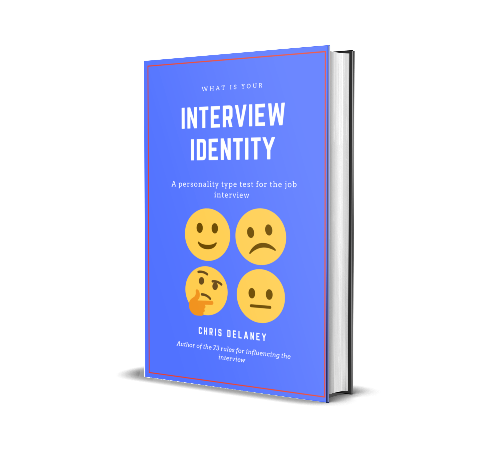
The Interview prediction grid explains how it’s a mixture of perceived experience/qualifications X confident (persuasive) communication that creates a successful interviewee (source: Interview Identity)

Understanding the Rules for a Successful Job Interview

Relevance is king in a job interview.

The biggest mistake experienced career professionals make is discussing experiences that are low on the organisation’s hierarchy of criteria for the advertised position.

For each company, and for each role within the organisation, there is a hierarchy of experiences, skills, knowledge, and qualities that are required for the position being advertised.

Speaking generically, in a structured job interview, each of the hierarchy of criteria will be asked in one of the job interview questions.

If the company values stakeholder management, they may ask, “Give me an example of influencing multiple stakeholders to actively engage them in a multiagency project”.

For a lower-skilled job, where ‘teamwork’ is valued highly, the question may be “Can you share a time you worked successfully within a team?”

Being able to foresee the hierarchy of criteria, therefore predict the interview questions, allows a savvy applicant to rehearse their interview answers.

In a structured job interview, a scoring system is used, where applicants’ answers are graded by being cross-referenced against a list of criteria and/or example answers.

The scoring system is often 1(low) to 4 (high). The interviewee with the highest score, the person who references more of the essential criteria, is offered the role.

Job criteria can be easy to predict. For some roles, finance, as an example, mathematics, and financial knowledge, will be on the hierarchy of criteria.

The company values, mission, and vision will also give clues to how the organisation operates, which links directly to their operational styles.

As an example, the company may be proactive or reactive, innovative or process-driven, and they may be a large corporation or a small family business.

The wording of the interview question also gives clues to the hierarchy of criteria. “Give me an example of influencing multiple stakeholders to actively engage them in a multiagency project,” compared to “give me an example of successfully working with multiple stakeholders.”

Even though the questions are similar, the word “influencing” is key here. The interviewee may discuss stakeholder theory, such as the stakeholder matrix, to explain the reason behind their actions, helping to acquire a higher scoring interview answer.

The key to a successful job interview is only discussing relevant information in your interview answer.

Language influences

Self-promotion is not only key for a successful job interview, but it is also expected.

Research has proven that detailed (relevant) interview answers score higher than simple and short replies.

What is important when selling yourself is the promotional language that is used. Words have power.

Synonyms are important here; imagine your answers use the word ‘good’ to describe your work ethic.

At an emotional level, how does the word ‘good’ feel? If ‘good’ was replaced with ‘strong’, ‘excellent’, ‘outstanding’, ‘brilliant’, or even ‘exceptional’, would this feel better?

Remember, employers often have a ‘gut’ feeling about an applicant, which influences how they score their answers.

A big barrier, often caused by interview anxiety, is the lack of detail given during an interview answer. It’s common for candidates to answer behavioural interview questions (give me an example of…) by saying  “yes this is something I have a lot of experience in” or something similar in length. The answer may confirm the required experience, but doesn’t actually say anything.

How much experience? What level of knowledge? What active role did you have? Do you have the underpinning knowledge for this task?

Employers need to know the breadth of an applicant’s experience and knowledge. A strong way to answer behavioural interview questions is with the ‘theory X experience’  interview answer formula.

First, the interviewee discusses the theory behind the job criteria (explaining the stakeholder matrix theory) and then gives a real-life example.

All examples should state the situation (what was being asked of them), actions taken (be specific here), and the positive outcome of the actions taken.

Employers will only know how good you are if you tell them

Evolve the mind book on Amazon

Confident communication is the icing on the interview answer

People like to hire confident professionals.

We like and admire confidence in others.

Confident communication is powerful in a job interview. If answers are self-promoting and relevant to the job criteria, speaking like a professional orator will add those vital extra points on the interview scorecard.

Public speakers know the value of confident communication and use the following techniques to be viewed as strong speakers:

Pause after each sentence and paragraph – the pause allows the interview panel to catch up (they will be busy scribbling down notes) and shows confidence as nervous people speak quickly without a break, losing the interest of the audience

Reduce filler words (urms and arghs) – filler words are the way your brain fills silences, as anxious people hate silences. But filler words are viewed as an annoying habit, and remove the vital pause that allows the interviewer to listen intently to the applicant’s interview answer

Non-verbal’s are key – smiling, eye contact, and positive gestures add volume to the words spoken. People always use non-verbal’s, even nervous interviewees, but their non-verbal’s highlight fear and weakness (looking away, head down, cold and damp handshake, pulling at imaginary threads)

Rhetoric devices – the use of rhetorical devices embedded into interview answers is an advanced technique. The best orators throughout history use rhetorical devices, as they help residents their story to an audience, influencing them at a subconscious level.

Common rhetorical devices:

  • Logos: Appeals to logic and reason, using evidence, statistics, and facts to support an argument. 
  • Pathos: Appeals to emotion, using strong language, vivid imagery, and stories to connect with the audience on an emotional level. 
  • Ethos: Appeals to credibility and authority, establishing the speaker or writer as knowledgeable and trustworthy. 
  • Metaphor: A figure of speech that compares two unlike things without using “like” or “as”. 
  • Simile: A figure of speech that compares two things using “like” or “as”. 
  • Hyperbole: Exaggerated statements not meant to be taken literally. 
  • Alliteration: The repetition of the same sounds or syllables at the beginning of words. 
  • Anaphora: The repetition of a word or phrase at the beginning of successive clauses. 
  • Anadiplosis: The repetition of the last word or phrase of a clause at the beginning of the next. 
  • Antithesis: The contrast of opposing ideas in parallel form. 
  • Rhetorical question: A question that does not require an answer, used to make a point. 

Use the right words to make a big statement


Interview Coaching

Need help? Book an interview coaching session.

Virtual job interview coaching can help you achieve your career dreams:

  • Double your salary when you master selling yourself in the job interview
  • Enjoy the interview process with increased confidence
  • Choose the employer of your choice with multiple job offers

Getting Motivated for a Job Interview

Career progression is only possible by overcoming the hurdle that is the job interview.

Why does the job interview seem such a barrier? Surely, a 45 minute 1-2-1 talking about one’s own workplace achievements must be easy?  

Three psychological traps are the reason why most people fear the recruitment process.

  1. Humans hate the unknown

For many, job interviews are rare. Career professionals, research shows, only tend to apply for a new role every 3-5 years.

Even during this brief period of active searching, most job seekers only attend 2-3 job interviews.

Comfort comes from routine, and nervousness from the unknown. Attending a job interview activates the flight or fight response, in most cases its ‘flight’ rather than ‘fight’.

Unknown processes, unknown interviewers, unknown interview questions, so many unknowns that the mind reacts like it would to any threat – flight or fight.

2. The spotlight is blinding

Only a small group of people like being in the spotlight.

Most career professionals hate the thought of the focus being fully on them. In the job interview, the spotlight is fully on the job applicant, and shining bright. The interview panel, often 2-3 managers and HR personnel, spends the whole of the job interview fully focused on the interviewee:

Questions are asked, answers are queried, and eyes are focused fully on the applicant.

The number one fear in the world is ‘being the centre of attention’ And the interview is public speaking to a small group of strangers, all eyes are on you.

3. Worthy or worthless

At a psychological level, humans need to feel that they belong. This is because we evolved as a species that survives as a tight-knit group. Tribes survived longer than individuals when we roamed the earth as hunter-gatherers.

At some level humans still have this need to belong and hate the thought of being rejected. In the job interview we naturally think that we are not worthy for the role: others may be better, maybe I’m not as good as I thought I was, have I been faking my ability to do my role?

Will I get rejected if I apply for the advertised position?

This limiting belief of not being good enough claws away at our self-esteem, often resulting in interview answers that lack substance, detail, and enough self-promotion to generate a job offer.

With all the negativity, most people believe its easier to give up (not apply for the job) on job searching rather than going through the pain of having to attend a process that will uncover their weaknesses, resulting in a big rejection – a job decline letter, making them feel worthless.


Master Motivation, Master Job Advancement

The truth is, job motivation is easy to encourage. When motivated and confident, the job application becomes a clear communicator who can talk the talk and walk the walk. They can sell themselves, build rapport, and enjoy the job interview process.

When it comes down to it, the job interview is only a 45-minute process, 5-10 minutes of this is the employer talking about their organisation (to sell the job role/organisation to the applicant). The first interview question is always an open question that is easy to answer, and the final question is normally ‘do you have any questions for us?’

So, out of 45 minutes, it’s really about 30 minutes of the ‘tough’ interview questions.

Tough? Not really, these days the interview questions are based on the job role, ‘do you have experience of doing (task)?’

This makes it easy to predict the interview questions, allowing the career professional to prepare and practice their interview answers.

Practice creates motivation.

It is well documented that familiarity makes a task easier. By practising job interviews with an interview coach, interview AI videos, even by attending public speaking workshops, talking more about yourself, or by practicing the interview questions and answers on your own increases motivation because the process of question/answer becomes familiar.

Speaking improves communication. Sounds silly, I know, but the more someone practices communication, the better their oration skill become. This is key in a job interview as every answer needs to be clear, concise, and to be understood by the interview panel.

Often overlooked, confident communication is powerful in a job interview as helping another person see your version of a story, not their perception, helps you to sell your unique selling point.


In the job interview, there is an additional step to gaining a job offer.

Answering questions confidently isn’t enough to guarantee a successful interview outcome. What is needed is self-promotion. As referred to earlier, the need to avoid rejection is powerful. If a job applicant has low self-esteem, they need to turn this emotion around into something more powerful and useful.

Confidence and motivation are key to interview success. Employers use a structured job interview process where each job interview question is asked to all applicants and answers a scored depending on how they meet the job criteria. An interview answer that ticks all the boxes scores high, whereas an answer or example that seems irrelevant or lacks specifics will always score low.

To self-promote, the candidate must understand the organization, their vision, and the day-to-day duties. This needs detailing: is the organization process-driven or innovative?  What specific tasks does the role entail?  Is the goal quality, financial, or something else? The more an interviewee understands the brief of the role, the more they can detail how they meet the specific criteria in their interview answers, resulting in a high-scoring application.

To pass a job interview

Get motivated by a strong self-belief that you will succeed

Get familiar with job interviews (through practice)

Get confident in answering interview questions

Get skilled at selling yourself

Get knowledgeable about the job role you are applying for


Evolve the mind book on Amazon

Interview Coaching

Need help? Book an interview coaching session.

Virtual job interview coaching can help you achieve your career dreams:

  • Double your salary when you master selling yourself in the job interview
  • Enjoy the interview process with increased confidence
  • Choose the employer of your choice with multiple job offers

How the Book Thinking, Fast and Slow Can Be Applied in a Job Interview

The book Thinking, Fast and Slow by Daniel Kahneman explores two primary modes of thinking that shape human judgment and decision-making.

An overview of the key theories and concepts:

1. System 1 and System 2 Thinking

  • System 1 is the fast, automatic, and intuitive way of thinking. It’s fast, effortless, and often operates below our conscious awareness. This system is responsible for making quick judgments and decisions based on heuristics or mental shortcuts. It’s also highly influenced by emotions and experience.
  • System 2, on the other hand, is slower, more deliberate, and requires conscious effort. It’s responsible for more complex reasoning, logic, and decision-making that requires effortful thought. System 2 thinking comes into play when we need to solve puzzles, make thoughtful decisions, or engage in tasks that require focus and concentration.

The book argues that while System 1 is efficient and often effective, it can also lead to biases and errors in judgment because it relies on heuristics (mental shortcuts) that can be flawed. System 2, although slower and more resource-intensive, is better for making reasoned decisions.

The central theme of Thinking, Fast and Slow is that our thinking is a blend of intuitive, automatic judgments (System 1) and deliberate, effortful reasoning (System 2).

Kahneman emphasizes how understanding the interplay between these systems can improve decision-making and help people become more aware of the biases that affect their choices.

His work highlights the importance of recognizing these biases in both personal and professional life and encourages more reflective, slower thinking to mitigate errors.

How the Book Thinking, Fast and Slow Can Be Applied in a Job Interview

Job interviews are high-stakes events where candidates are assessed on their skills, experience, and ability to fit within an organization.

However, the decision-making process in an interview is influenced not just by the qualifications of the candidates, and their interview answers, but also by cognitive biases and the ways in which both the interviewer and the candidate process information.

Daniel Kahneman’s Thinking, Fast and Slow provides key insights into the mental processes behind these judgments. By understanding these concepts, candidates and interviewers alike can improve their decision-making and interview performance.

Here’s how the theories from Thinking, Fast and Slow can be applied during a job interview:

System 1 and System 2 Thinking in the Interview Process

System 1 (Fast Thinking): This is the intuitive, automatic, and subconscious system. In an interview, both the interviewer and the candidate might rely on System 1 to make snap judgments. Interviewers may form quick impressions of candidates based on initial cues such as appearance, tone of voice, or body language. Candidates might respond instinctively to questions without fully thinking through their answers. While these instinctive impressions can be helpful for gauging chemistry or comfort, they can also lead to mistakes. A candidate who appears nervous might be unfairly judged as unqualified, or a strong first impression might cloud an interviewer’s judgment later on.

System 2 (Slow Thinking): This system involves more deliberate, analytical, and effortful thought. When interviewers engage System 2 thinking, they are more likely to focus on the content of the candidate’s answers, the relevance of their experience, and their critical thinking skills. As a candidate, it’s essential to engage System 2 to think carefully about each question, avoiding knee-jerk responses and taking a moment to consider the best way to convey your strengths.

Tip for Candidates: When answering questions, try to slow down and resist the urge to immediately answer from instinct. Take a few seconds to think through your response logically to avoid relying too heavily on your first instinct.

Tip for Interviewers: Be mindful of your initial impressions. To combat the bias of System 1, take notes and refer to specific examples or skills mentioned in the interview, instead of letting the initial impression guide the entire evaluation.


Heuristics and Biases

Kahneman highlights that people often rely on mental shortcuts, known as heuristics, when making decisions. These heuristics are not always rational and can lead to biased decisions. In a job interview, several heuristics can come into play:

  • Anchoring Effect: Interviewers may be influenced by an early piece of information, such as a candidate’s educational background or an initial response. For example, if a candidate mentions having graduated from a prestigious university early in the interview, this could anchor the interviewer’s perception of their capabilities, regardless of the candidate’s actual performance.
  • Availability Heuristic: If an interviewer has recently hired a candidate with a particular skill set, they may overweight the importance of that skill in future hiring decisions, even if other candidates are more qualified.
  • Representativeness Heuristic: Interviewers may judge a candidate based on how closely their traits match those of an “ideal” employee, which could lead them to overlook the diversity of skills that other candidates bring to the table.

Tip for Candidates: Be aware that interviewers may be unconsciously influenced by these heuristics. Don’t assume that a single detail or part of your resume is what’s driving the interviewer’s decision. It’s important to highlight a range of your skills and achievements throughout the interview to avoid being pigeonholed by a single characteristic.

Tip for Interviewers: Counteract heuristics using a structured interview and a consistent evaluation framework. Focus on specific skills and accomplishments, rather than first impressions or stereotypes.


Prospect Theory and Risk Aversion

Prospect Theory, as outlined by Kahneman, suggests that people are loss averse—they feel the pain of losses more acutely than the pleasure of gains. This can influence how both candidates and interviewers approach the interview process.

  • For the Candidate: If a candidate is asked to discuss a previous failure, they may be reluctant to admit mistakes because they fear the “loss” of their chance at the job. However, framing failures as learning experiences and showing how they led to growth can demonstrate resilience and maturity.
  • For the Interviewer: Interviewers might also display risk aversion. If they’re unsure about a candidate, they may be more likely to reject them out of fear that the potential “loss” (hiring the wrong person) outweighs the potential “gain” (finding a great hire). This could lead interviewers to rely on safer, more familiar choices.

Tip for Candidates: Emphasize your learning process from past mistakes and show how overcoming challenges makes you more capable. Acknowledge that setbacks are a natural part of growth.

Tip for Interviewers: Focus on a candidate’s ability to learn and adapt rather than simply looking for perfection. Acknowledge that taking calculated risks can lead to rewarding hires.

Loss Aversion and the Interviewer’s Decision-Making

Loss aversion also plays a role in how interviewers make decisions. They may tend to overvalue candidates who seem to fit the mold perfectly and hesitate to hire someone who doesn’t fit exactly into the desired profile. This bias can cause interviewers to focus on avoiding losses rather than gaining the best possible hire.

Tip for Interviewers: Focus on the potential benefits of a candidate’s unique strengths, even if they don’t meet every single criterion. Resist the urge to dismiss candidates because of minor mismatches.

Cognitive Ease and Cognitive Strain

Kahneman’s idea of cognitive ease and cognitive strain can influence both the interviewee’s performance and the interviewer’s judgment.

  • For the Candidate: If you’re able to present your qualifications in a clear, straightforward manner, it will create cognitive ease for the interviewer, allowing them to process your information quickly and form a favorable judgment. On the other hand, if your answers are convoluted or difficult to follow, it can create cognitive strain and may lead to a less favorable impression.
  • For the Interviewer: If the interviewer experiences cognitive ease when speaking with a candidate—if the conversation flows smoothly—they might form a positive impression of the candidate’s competence and fit. However, cognitive strain might cause the interviewer to become more critical or overly cautious in their decision-making.

Tip for Candidates: Be clear and concise in your answers, and organize your thoughts before speaking. This will help reduce cognitive strain for the interviewer and improve the clarity of your responses.

Tip for Interviewers: Try to remain aware of the ease or difficulty in understanding a candidate’s responses. Recognize that cognitive strain can sometimes be a result of the interview format, and not necessarily the candidate’s qualifications.


Evolve the mind book on Amazon

The Planning Fallacy and Interview Preparation

The Planning Fallacy refers to the tendency to underestimate the time and resources required to complete a task. For candidates, this might manifest in overconfidence when preparing for an interview, believing that they don’t need to spend much time practicing or researching the company. Conversely, interviewers might underestimate how long the interview process will take, leading to rushed decisions or incomplete evaluations.

Tip for Candidates: Avoid the planning fallacy by adequately preparing for the interview—research the company, practice your responses, and anticipate potential questions. Proper preparation will help you avoid underestimating the challenges of the interview process.

Tip for Interviewers: Allow enough time in the interview schedule to fully evaluate the candidate’s fit. Rushed decisions are often poor decisions.

Conclusion

Incorporating insights from Kahneman’s Thinking, Fast and Slow into job interviews can help both candidates and interviewers make more informed, less biased decisions.

Candidates should be aware of how cognitive biases and heuristics can influence their performance and strive to engage in more deliberate, System 2 thinking. Interviewers, on the other hand, should recognize their own biases and take steps to create a fairer, more thoughtful evaluation process. By understanding and applying these theories, both parties can improve their chances of a successful, rational outcome

Need help? Book an interview coaching session.

How to answer Elon Musk’s favorite job interview question

The biggest question for a job hunter is ‘what interview questions will I be asked?’

The worlds richest person, Elon Musk, shared one of his hiring tactics during his talk at the World Government Summit in 2017.

In this speech, the Tesla CEO, explained how he always asks this one question during a job interview.

Unfortunately for Musk, sharing job interview questions prior to the job interview allows candidates to create high marking answers.

But the worlds most successful businessman uses his secret interview questions to detect deceit.

What Musk look’s for in a potential employee is  “evidence of exceptional ability.” “If there’s a track record of exceptional achievement, then it’s likely that that will continue into the future,” Says Musk.

The question Musk uses is a behavioral interview question. Behavioral interview questions ask questions based on past behaviors. Promoters of this recruitment process believe that a zebra cant change it stripes – how an employee has previously behaved indicates their future job performance.

What interview question does Musk ask to challenge applicants?

“Tell me about some of the most difficult problems you worked on and how you solved them.”

The question seems pretty straight forward. So why is it so special?

This question can help interviewers spot liars. Part of the interview process is checking the accuracy of an applicants claims on their application form. If a career professional claims they can do X, the interviewers job is to clarify if the statement is true.

Musk explains his reasoning during an interview with Auto Bild “And of course you want to make sure if there was some significant accomplishment, were they really responsible, or was someone else more responsible?

To score high on this job interview question applicants need to give detailed answers “Usually, someone who really had to struggle with a problem, they really understand [the details], and they don’t forget.”

Detailed answers also have a high word per answer ratio which research show’s increase the scores given by an employer.

How to answer the ‘tell me about some of the most difficult problems you worked on and how you solved them?’ interview question.

The ideal answer is part of a 4 point structure process:

  1. Problem and the negative effect
  2. Creative problem solving
  3. Steps taken
  4. Positive outcome

Problem and the negative effect

Example answers are in essence a story telling technique.

Stories work best when they are emotional, and people are more emotional when listening to stories that they resonate with.

With this in mind, the interviewee should, initially, start their story by evoking pain. Charity adverts do this all the time. The advert starts with a film about someone suffering, the audience observing the suffering feel the pain they are seeing.

It’s the same within a job interview. Instead of just stating the problem, as most candidates do, give detail – this was what Musk encourages during job interviews.

Explain the projected outcome if the situation got out of hand. If no-one dealt with the problem or found a workable solution, what would the negative outcome be?

Ideally, the real-life story will have an emotional effect on the employer, especially if the situation is industry-related – the employer may have also been threatened by a similar situation.

Creative problem solving

Most interviewees, during the answering of behavioral interview questions, skip the creative problem-solving process required to take action. Techniques like the STAR model miss out on this fundamental part of an interview answer.

An applicant’s level of knowledge and expertise can shine out here, as an explanation of the employee’s thought process is being explained. By dissecting why one solution was discussed and dismissed over another, shows a level of competencies, as the applicant shows they didn’t need to learn from a mistake as their current level of understanding was enough to make an informed professional decision.

This is why Musk explained that: “Usually, someone who really had to struggle with a problem, they really understand [the details], and they don’t forget.”

Steps taken

The crux of the interview answer is to showcase the applicants ability to take action.

Here, without adding irrelevant detail or steps, explain the actions the interviewee took to solve the problem being discussed. Ideally, split this into 3 parts “to solve the issue I did A, B and C…”

Positive outcome

Returning to the charity advert example, the steps they want the customer to take is, often, to give a donation. The advert ends showing a positive outcome; the once suffering individual is now happily living a positive life – the customers feel good.

It’s the same in the interview; you explain the suffering of the situation, the required actions, and end with a positive solution.

During the job interview answer, state the outcome the company received from the actions the applicant took. Like the charity advert or like the end of a good story, this should evoke a positive feeling. In fact, if your solution to a problem was unexpected or creative this whole process can create the feeling of desire, increasing the applicant’s chances of landing a job offer.

Job Interview Advice

Successful Language for a Job Interview

The focus on job interview language is underrated.

In the main, career professionals to prepare for a job interview will direct their time and energy on predicting the job interview questions. This is very wise, and valuable, as research suggests that knowing the job criteria, and therefore having a good idea of what questions will be asked, is one of the key elements for a successful interview outcome.

In fact, there are 3 rules for a successful job interview;

  • Identifying the job criteria
  • Being a self-promoter
  • Communicating with confidence

With a list of questions most applicants, prior to the interview, will create a number of scenarios to use as examples during the interview. Again good practice.

But, what most candidates fail to do is to reflect on the language they can utilise to highlight a high level of knowledge and experience.

In addition, language helps to build rapport, frames what information is taken in and creates emotion.

Career professionals understand how individual words, phrases and sentences influence and persuade, in short successful interviewees are skilled communicators.

Words that influence

How a sentence is phrased influences how an employer views an applicant.

Generally speaking applicants with a track record of interview failures use weak-sounding phrases. On the surface, the chosen words seem suitable for the interview question, but each sentence has an emotional attachment. At a basic level, the emotional equals desire or unsuitability.

Imagine, an employer asks a question to better understand the candidate’s related experience. 3 interviewees answer with 3 separate replies:

  • I am experienced in (job role)…
  • With 15 years of industry experience as a (job role)…
  • An industry professional with over 15 years experience specialising as a (job role)

Each answer states the same message – experience in (job role) but the structure of each answer creates a different image of the applicant – the level of expertise they possess.

This is because individual words have different emotional attachments. Fine, good, excellent, excel, all have a similar meaning but feel different.

The take away here is to choose words and the interview answer formula that allows an employer to view your skill set and experience in the best light.

Don’t be disingenuous

Rule 2 for a successful job interview outcome is being a self-promoter.

Much research shows how self-promoting in a job interview will increase the allocated scores for each job interview answer, as the ‘promotion’ easily allows an employer to cross reference the data within the job interview answer against the criteria for the advertised position.

Self-promotion doesn’t have to be an exaggeration,

In fact, stay away from comments that, on the surface, sound like a positive interview answer, but in fact are disingenuous.

Questions that ask about mistakes, failures or work ethic are designed to understand a candidate’s attitude in the workplace; how they deal with failures and mistakes.

Saying:

  • ‘I have never made a mistake’
  • ‘I always put 110% into every task I undertake’
  • ‘I am the best at everything’

sounds weak and stupid. Employers would prefer to hear the ‘mistake’ and what this error taught you.

When self-promoting, talk up your strengths and successes, ensuring the answer clearly states actions you took in team projects, while staying away from throwaway comments such as the 3 examples above.

Never apologise

Decisive interviewees come across as confident and hirable.

Opening an interview question with a ‘confidence statement’ reassures the hiring manager that the candidate has the required skill/experience being discussed as part of the interview question.

A confidence statement is an opening line that confirms you have/know the required criteria:

  • In all my roles I (add criteria IE worked as part of a team)…
  • This was a common situation in my last role…
  • This is a passion of mine…
  • X situation is something I have experience in throughout my whole career…
  • I’m very experienced in this, an example of this would be…

Rule 3 for a successful job interview is confident communication. Removing filler words and hesitations, along with a good pace allow the communication to be understood by the employer.

Nervous, fast-talkers, often fail interviews, not because they don’t meet the required job criteria but due to the speed of their communication – the employer doesn’t have time to analyse everything that has been said in such a short timeframe.

A common interview slip up is the ‘apology’ Nervous interviewees will sometimes apologies when they need to clarify the desired answer – ‘Sorry I don’t know what you mean’

Apology statements sound weak.

When asked a generic interview question never presume to know what the employer is trying to gauge from the interview question, instead ask for specifics; ‘would you like to know about X or Y?’ or even ask the employer to repeat the interview question – but do this assertively.

Increase duration, increase scores

There is a distinct link between the number of words per reply and high scoring interview answers.

The more an applicant talks, especially when using varied language, the more likely they are to mention the required criteria to hit a high scoring answer.

High scoring answers aren’t based on duration alone, as the topic being discussed has to be relevant to the job role.

When, ideally relaxed, and chatty, an applicant will often use several examples, quote industry-related models, while structuring the answer with an opening, body and summary. Some applicants, skilled at answering tricky interview questions, will also discuss the pros and cons of sector models showing a high level of understanding, therefore a high level of industry knowledge.

Embedding varied language, including positive emotional words, into a long interview answer results in keeping the employer engaged and interested.

Furthermore, highly confident applicants will create a conversation embedding their own questions into the interview answer. This dialogue creates rapport and changes the employer’s opinion of an applicant.

Be a ‘can’ not a ‘cannot’ person

Interview language is often the frame created by a statement given.

Much research shows how using positive language increase likeability. The framing of any reply, at a basic level, creates a positive or negative emotional response.

If asked a strength-based interview question: ‘do you prefer to work within a team or on your own initiative?’ any answer should highlight your preference – you prefer to work as part of a group or as an individual.

But how the answer is framed creates a different emotional response. Some applicants will use a negative frame ;

  • ‘I’m never worked on my own…’
  • ‘You get more done working on your own, rather the relying on others..’
  • ‘Isn’t this a ‘team’ position?…’

Framing alters what information is noticed by the interviewer. A positive frame creates a positive focus, whereas any ‘negative’ framed answers can cause concern as the employer associate negatively with the applicant.

What research tells us is that the language embedded within a job interview answers influences, positively or negatively, the interviewer’s decision-making process. By making a few alterations; the framing of the reply, the removal of weak phrases, and focusing on positive words can help an applicant be viewed as hireable.

Job Interview Advice

3 Persuasion Techniques to use in a Job Interview

The goal of a job interview, from the applicansts perpsective, is to persuade the employer to hire them for the advertised position.

To be hired, each candidate will show their level of competencies through their chosen interview answer structure, with the common option being the use of an ‘example’.

At a basic level, giving examples to highlight a required skill is one method to influence the interviewer, but more cunning candidates use a number of persuasion techniques to increase the likelihood of being offered the job role.

Interview persuasion techniques isn’t a type of ‘dark art,’ instead, psychologists have completed experiments to understand why some career professionals are more successful in a job interview then others?

Some people have a natural ability to influence; their persona, communication style and their interview answer(s) convince employers that they are a sure-bet.

Using evidence based-research, we have created a list of simple techniques that can be used to persuade the employer.

Message Framing Theory

The frame of the job interview answer changes a persons viewpoint.

Framing is persuasive as it influences how the mind sorts and organises information. The world is interpreted, differently for each individual person, depending on their own filters created through their own experiences, beliefs and values.

Meaning, two people seeing the same thing can attach different meanings to it. In the job interview, a late applicant, due to a faulty car can be viewed by one employer as ‘lazy’ – lateness = laziness, or by a second interviewer as ‘unlucky’ as they also have ‘car troubles’ so have empathy with the applicant.

Framing helps to influence the filters used to give meaning to things. As an example, if I was to talk about rivers and then asked about ‘banks’ the frame of the conversation would influence how the ambiguous word ‘bank’ is understood – as a riverbank.

Whereas, if I started a conversation about money and asked about banks, the meaning of the word ‘banks’ would be viewed differently to that of a riverbank.

In the job interview framing affects how an applicants answer is perceived.

A glass half full or half empty has the same quantity of water, but one frame is perceived to be negative and the other positive.

In fact, the way the glass is framed has an emotional response to a person hearing the chosen statement.

Imagine being in a job interview and after explaining that you worked for X organisation, the employer responds by asking ‘You worked at X? Isn’t everyone lazy over there?”

This negative stereotype creates an emotional association between you and the employers opinion of the ‘lazy’ organisation.

In this example, a ‘re-frame’ is required to break the association and to create a new, positive, emotional response “Yes, they are, that’s why I am applying for a position here, your reputation tells me that you appreciate hard work, good ethics and quality – the 3 things I personally value.”

The use of positive emotional words, compared with negative ones, throughout the job interview, can instill a positive image of an applicant, just as the glass half full metaphor feels more optimistic.

Research shows how the more positive words used during a job interview correlates directly with high scoring answers.

The interview answer, therefore, in the main should be frame a positive perspective, not focusing on negativity.

Encourage the employer to hire another candidate

People have a deep need to feel free to make a choice.

The interview, depending on an applicant’s interview identity, results in candidates attempting, sometimes quite obviously, to persuade the employer to hire themselves over other suitable interviewees.

Because humans value free choice, being forced, or feeling that you have no choice, creates resistance.

A review of 22000 people over 42 psychology studies found that the ‘but you are free‘ technique can increase the chances of someone saying yes by 50%.

The idea is simple, to reassure an individual that they have free choice.

In the experiments, asking for donations or take a survey, all gained an increase in participation if the ‘but you are free’ technique was used.

As an example, a charity collector may ask for a recommended donation of £5, and then add ‘but you are free to donate whatever you would like’ which would increase the donations received.

Or a surveyor would ask ‘can you complete our top-standards survey?’ and add, ‘but obviously you don’t have to feel obliged to complete it’

In the job interview framing the answer as if you will be hired for the position and then stating ‘but you are free ‘ can increase the likelihood of an employer saying yes to hiring you.

Imagine being asked ‘what can you bring to the team’ interview question.

Embedded into the interview answer can be ‘…if you hired me, but obviously you have a free choice, I would….A, B and C’

Rational Persuasion

In the main, persuasion experts talk about influencing people through the emotional part of their brain the limbic system.

But logic influences.

Presenting data, facts and using rational counter-arguments, research shows, helps to support a positive outcome in HR decision making.

The logical approach is easy to utilise within the job interview.

When asked a question many applicants revert to an example answer. The example is a powerful influencer, as storytelling talks to the emotional brain, where snap decisions are made.

The analytical process, created through the structured job interview, allows for and uses logical decision making.

Imagine, as an interviewer, you have asked a question and presumed the applicant will give another ‘example’ answer, but instead, the interviewee highlights their level of knowledge and experience by presenting evidence in terms of a target sheet, a data set, statistics or a written reference.

This proof of expertise, rather then a suggestion created within an example answer, can be more persuasive as it is harder to argue against facts then it is the possible fictional example answer.

Successful career professionals don’t simply prepare for their job interview by finding examples to the predicted job interview questions. Instead, expert interviewees focus on the frame of their answer, use purposely chosen positive words and make their persuasion feel like a free choice.

Job Interview Advice

How Varying Language Improves Interview Outcomes

The focus, in a job interview, has always been on the content of the job interview answer.

Content is important, as the description given within a job interview answer determines the score the interviewer(s) allocate to each job interview answer.

In short, an employer will cross-reference the elements discussed by the applicant to the job criteria on the interview scorecard.

Generalising, the more criteria reference within the job interview answer, the higher the score an applicant will receive.

This makes logical sense. It’s the same as scoring a boxing match; the more punches a boxer gets on an appointment the more points they receive. The best boxer, or interviewee, wins.

Research is showing how the referencing of job criteria, alone, isn’t enough to create high scoring job interview answers.

What is also key to a successful interview outcome is the language, or the varying language, used throughout the whole recruitment process.

Language creates an emotional response in others, changing how an employer views an applicant, therefore affecting the scores allocated in the job interview.

Interview language. 

Highly confident interviewees have a natural tendency to utilise strong assertive communication, whereas low confident candidates fall back on weaker language. 

‘Try,’ as an example, presumes failure, whereas ‘will’ presupposes action will be taken. This small change in language, consciously choosing an appropriate verb, creates a different reaction – how they view a candidate, from the employer.

Substitute passive words;

‘Try’ to ‘will’

‘Think’ to ‘know’ 

‘Could’ to ‘Always’

‘I believe’ to ‘I’m confident’ (or ‘convinced’)

Read the following two interview answers and compare the impression gained of the two interveiwees from the language used.

“I believe I am a good fit for the team and would always try to meet my targets. In my previous position I worked on a similar task and I always achieved my KPIs.”

“I’m convinced I am a good fit for the team and I will meet my targets. In my previous position I worked on a similar task and I always achieved my KPIs.”

Weak communication.

Other language barriers come in the form of unnecessary communication.

Anxious applicants are known to add additional ‘weak’ words to job interview answers that simply aren’t required. Any low scoring words need to be removed from job interview answers.  

Say more with less.

When planning to give a detailed interview answer, candidate are advised to pick only strength words that will ensure they standout from the group.

Delete the following unnecessary sentences/words during a job interview;

‘In my opinion..’  

‘Did my best..’

‘Maybe..’ 

‘Only..’

‘Sorry..’

Any filler words.

Filler words.

An example of unnecessary communication is ‘filler words.’ Filler words are subconsciously used by nervous interviewees to fill the gaps between sentences while delivering an interview answer.

Common filler words are sounds ‘er’ ‘um’ ‘ah’ but can also include the words ‘so’ ‘like’ ‘well’ ‘you-know’. This constant interruption, created by filler words, distracts the employer from the value of the applicant’s interview answer, resulting in a lower-scoring outcome. 

Um, well, yes I do have experience, but, er, like it’s relevant but…”

To reduce filler words applicants can replace the ‘filler word’ with silence in the form of a pause.

As filler words are used naturally while a candidate is thinking of what to say, the applicant during this time can count to 3 in their head to divert their attention. The focus on counting is a conscious process that removes the unconscious process of using filler words. 

Another technique, prior to the interview, is to practice the delivery of answering interview questions by making a mark for each filler word used. The process of recognising the number of filler words used, which is often more than expected, creates an awareness that helps to reduce this subconscious habit. 

High scoring language. 

Varied language is a key element to high scoring answers.

Finding new ways to say common words can create the desired variety to improve interview language. As an example, the words begin, start, commence, and initiate are all synonyms of one another.

As referenced earlier, words have different emotions attached to them. If asked about a particular skill, an interviewee might state they’re ‘good’ at the skill, but the words ‘great’, ‘excel’ or ‘highly skilled’ all answer the question positively, but each word has a different emotional association. Word choice, therefore, elicits a different emotional trigger from the interviewer. 

Pronouns, ideally, need to be mixed. Singular pronouns (I) help to reference personal actions in team activities, whereas plural pronouns, which research shows are in coloration with high scoring interview answers, are used by confident candidates to help build inclusion and rapport, as ‘we’ is viewed as being ‘friendlier’. 

Positive emotional terms, embedded throughout the job interview, again improve interview scoring as the words used have an emotional attachment and help applicants to communicate persuasively. 

Positive emotional terms:

Joy

Happy

Gratitude

Pride

Interest

Amusement

Excited

Hope

Kind

Negative emotional terms:

Fear

Sad

Angry

Disgust

Rage

Loneliness

Annoyed

Nonverbal communication.

A common misunderstanding of hiring decisions, is that the content of the interview answer is the most significant part when it comes to scoring an answer.

As we have discussed in previous articles, prejudices, unconscious bias, the interviewer’s behaviour and the applicant’s level of confidence create ‘filters’ that answers are viewed through. 

Studies show how nonverbal behaviour influences the interview. For example, research has shown that smiling increases attraction and likeability.

Confident communication, eye contact and posture also help to shape the appraisal of an applicant. 

Research into micro facial expressions shows how a fleeting expression can be read by an observer, even though the expression only lasted milliseconds. Therefore, faked happiness isn’t believed as an applicant’s microexpression, as an example, showed fear before the fake smile is applied. 

There are 7 basic human emotions; anger, contempt, disgust, fear, happiness, sadness and surprise, each with its own unique characteristics. Each expression, which is an expression of an emotion, is involuntary and outside of the awareness of the individual. 

Facial expressions can also elicit different meanings depending on the schema of the interviewer. A smile could be seen as sarcastic or joyous. 

Generally speaking, though, the following nonverbal cues will increase rapport with an employer, improving the interview scoring:

  • Initiating interaction to show confidence.
  • Giving your full attention to the employer – being externally focused.
  • Smiling and laughing.
  • Strong eye contact.
  • Gesturing to reinforce verbal communication. 
  • Taking up space with your body as this creates authority. 
  • Confident firm handshake. 
  • Head held high shows self-assurance. 

Job Interview Advice

How to plan for a care assistant job interview

care assisatnt job interview

Care assistant employers, when interviewing applicants, look at candidates’ work ethic and personal skills.

A desire to help people is key, but employers also look for communication skills, empathy, patience, calm when in a stressful situation and an employee who can follow directions accurately.

Care assistants can work in a care home or in the community, supporting vulnerable people living in their own homes. The interview questions asked in a care assistant job interview will be based on the applicant’s temperament as well as their ability to perform caring duties which can include;

  • supporting people with their physical needs
  • completing household tasks – washing, cleaning and cooking
  • monitoring health and communicating with nurses

To prepare for a care assistant structured job interview, applicants can answer many interview questions by relating to real-life experiences, from helping their own family members to volunteering in a caring role.

Care Assistant Job Interview Questions and Answers

Below is a list of the most commonly asked care assistant job interview questions and a detailed breakdown of how to answer the question.

Do you having any caring experience?

Normally an opening question, applicants can easily answer this question using a common interview formula; stating duration, qualification and selling point.

The interview answer starts by reassuring the interviewer by stating the duration in the industry “I have over 10 years experience as a care assistant…” For applicants new to the industry this answer can be slightly tweaked “In all my previous roles I have had to support and help vulnerable people…”

Applicants can continue by giving additional detail about a previous position “…while working at X company my key caring duties included (add duties)..”

Next, candidates can explain their level of qualification (only suitable for applicants with an industry qualification) “….In 2010 I gained a caring assistant Btec Level 3 diploma, during he course I leant (add sector theories and models)…”

End with a unique selling point. This could include a care assistant skill or a personality trait “…I’ve applied for this role because I am passionate about caring for vulnerable adults…”

What support do you expect a vulnerable person requires?

Answers to this interview question need to be relevant. If working with the elderly, explain what support an elderly person requires. If working with an ex-addict, discuss the barriers they face.

When answering the ‘vulnerable’ question, answers can be split between a logical and an example answer.

Initially start the interview answer by listing what support an average (vulnerable group) requires. Listing all common support needs shows an awareness and here an applicant is likely to hit the required criteria the interviewees are marked against.

Next, use a story to highlight sector related experience “While working as an X, I worked closely with Y (vulnerable person). It was clear that the client required Z (support needs), so I (explain the action you took)….”

When providing personal care how would you maintain a person’s dignity and respect?

This question is key to a successful job interview outcome. Employers in the care industry are looking to hire empathetic professionals.

The reply to this answer can be broken down into the 3 Cs:

Confirmation – state how a person’s dignity and respect are at the uppermost importance

Communication – explain how your communication is designed to be respectful. An example of this would be asking a vulnerable person who had been in the bathroom for a long duration ‘if they need any assistance’ rather than asking ‘whats up, you have been ages?’

Clarity – many vulnerable people are very independent. Having someone ‘do everything’ for them can be demoralizing. Explain when working with a new vulnerable person you, through a rapport-building conversation, will clarify what support the client requires and what they need the care assistant to support them with.

Give an example of being in an emergency situation?

During the lifetime of a care assistant, they will come across many emergency situations from an elderly person having a heart attack to a vulnerable person attempting to commit suicide.

Example job interview questions require storytelling First, it is important to pick an example that is relevant to the job role the applicant is applying for. This is because the employer will have a list of job criteria that they score each job interview answer against. The highest scoring interview questions result in that applicant being offered the advertised position.

When answering the interview question with an example give context by explaining the situation and vulnerable persons’ background. This makes the interview answer relevant and easy to understand.

It is important, when explaining the steps the applicant took, to explain how they remain calm and professional throughout the emergency situation, even going as far as explaining how they had prepared for this, or similar, situation.

Next, discuss the policies and processes the candidate followed; informing social services, family members, managers. If they had to take notes or update systems.

How would you support a person who suffered from X?

Some interviewees feel that this interview question is a curveball, but in fact it isn’t.

If asked a specific technical question it is because this X is the employer’s bread and butter. Here, the candidate needs to show their level of knowledge and experience.

Explain, initially, the competency level “I have worked with X client for the previous 10 years” “in all my previous roles I have supported service users suffering from X” “I cared for my mother for 20 years who had X”

Next, show knowledge by discussing X in detail: “a symptom of X is…” “What care assistants have to be aware of is ….” “A side effect of X is…”

To end the interview question, spell out the actions required to support a person with X and how this positively implements on the vulnerable person life and wellbeing.

How do you feel about working flexibly?

Care assistants don’t have time off. That, obviously, is an exaggeration, but the truth is care workers (or the care team) are required 24 hrs a day 352 days a year.

Employers, therefore, need to hire care assistants who are willing to work bank holidays, over the Christmas period and during different shifts.

Some career professionals prefer the variety of working different shifts, is this is you make this clear in the job interview. Experienced care assistants can also reference how they have previously worked varying shift patterns, and how for them time is irrelevant, as they enjoy the work of a care assistant so much.

Why are you drawn to this area of work?

Question around the reason for applying for a position within an organization or industry come down to one thing – passion.

Employers know that if they hire a team of passionate employees with a strong work ethic that they will be highly productive. This is especially true in the care sector, where workers will go above and beyond to support their charges.

Not only does this interview question need to be answered with the right language, but the non-verbal communication of an applicant must also emphasise the passion of the words.

Stories relating to how an applicant has cared for a parent work well, as does explaining how for you working in the care sector is more important than a higher-paid none caring job role.

Highlighting ones values (everyone should have a decent life) also reinforces the passion of the applicant.

But hopefully, as you are applying for a caring role, this interview answer comes easy to you.

Is there anything else you would like to know?

At the interview end, the employers will ask each applicant if they have any questions about the job role or company.

Questions to ask an employer in the care sector can include:

  • What different vulnerable groups does the organisation work with?
  • Is there any specific training to support staff when working with a certain vulnerable group?
  • How is the organisation funded?
  • What is the size of the oranisation?
  • Do you invest in staff development?

Job Interview Advice

Interview Question Formulas

To be seen possessing a high level of knowledge and experience, interviewees utilise interview formulas when answering interview questions. The interview formula allows applicants to have a structural approach to the job interview. 

Having a structure to fall back on not only increases confidence, as the structure creates an order for the applicant to follow, but also presents the candidates competencies clearly to the employer, increasing the likelihood of a high scoring interview answer. 

The formulas can be adapted to job roles across all sectors, and only requires the applicant to embed their own knowledge and experience to each formula. 

Model and example (ME)

Referencing industry relevant theories and models in the interview answer highlights a level of knowledge, as the model is explained as a step-by-step process, before experience is shown through giving a real life example of using the model in a work situation. 

This formula is powerful as it adds content to interview answers that may lack substance. The two parts complement each other as they repeat the same process but in two different ways logical (explaining the model and emotional (via storytelling) 

Suitable for the following types of interview questions:

  • ‘How do you assess risk?’
  • ‘How do you collaborate with stakeholders?’
  • ‘How do you manage your time?’

Example answer: 

“When X I use the Y model (explain model in a step by step process) an example of this is when I (add example; situation, action, outcome)”

Experience, Qualification, Selling Point (EQS)

Stating the duration working in a sector improves perceived competencies as the association between time-served and knowledge is closely linked. Reinforcing sector knowledge by describing industry related qualifications backs-up the time-served/knowledge link. But as many interviewees will have a similar background, applicants need to stand out by highlighting an unknown unique selling point – explaining what they can bring to the team. 

Suitable for the following types of interview questions:

  • ‘What is your experience in this sector?’
  • ‘Why should I hire you?’
  • ‘What can you bring to the role?’

Example answer:

“With over X years in the sector and a qualification in Y, I have worked as a Z (add various roles). In that time I have been able to (add unique selling point)”

Problem, Actions, Outcome (PAO)

Behavioral interview questions are designed to predict job performance based on an applicant’s previous actions. Therefore, candidates must ensure they explain the circumstances of the situations they will describe as this offers context to the employer, allowing the interviewer to better understand why certain actions were undertaken.  The interview answer needs to end with an outcome, which could include lessons learnt, a new approach or an increase in profits. 

Suitable for the following types of interview questions:

  • ‘Give me an example of…’
  • ‘When have you ever…’
  • ‘What experience do you have in…’ 

Example answer:

“When working at X, Y happened (add specific problem) which could have resulted in Z. To solve this problem I (add specific actions) which resulted in (add positive outcome)” 

Barriers, Solution, Projected Outcome (BSPo)

For future scenario interview answers it is important for an applicant to show how they understand the threat of the potential situation – the barriers this problem would create, as this shows industry insight. Stating the specific actions that need to be taken shows expertise and competencies, and stating how these actions would have a positive intent can highlight the added value the applicant can bring to the team. 

Suitable for the following types of interview questions:

  • ‘What would you do if…’
  • ‘How would you approach..’
  • ‘If you were working on X project, what would you need to consider?’

Example answer:

“If this situation was to happen, my concerns would be A (add potential barriers). To take action I would B (add specific actions). The outcome of this would be C (state positive outcome including the benefits to the company) 

Pro and Con (PC)

The frame of some interview questions can be seen as a trap, with an interviewer asking for an opinion. If the opinion given by an applicant is one that resonates with the employer the interview answer will score high, but if the opposite is true the answer will be marked low.

In this situation, applicants can hedge their bets by answering all options in all ways, ensuring one of the elements of the interview answer will resonate.

Suitable for the following types of interview questions:

  • ‘What is more important X or Y?’
  • ‘What is your opinion about X?’
  • ‘Are you A or B?’

Example answer:

“What I like about X is (add pro’s) but you also have to consider (add Con’s)”

For the multiple-choice answer, applicants can repeat the formula for the second part of the question. The 3rd example interview question is often stated to check an applicant’s temperament or working style – “Are you a task starter or task finisher?” This type of interview question is used in strength-based interviews. Similarly, applicants can explain the pro and con of each trait, but it is likely that the interviewer will push for a direct answer.

Job Interview Advice