
Interview Questions and Answers for a University Graduate

Gaining work after completing a university degree is highly competitive as employers receive applicants from qualified graduates from around the UK.

Another barrier for the graduate job seeker is a lack of confidence in a job interview which results in poor interview answers that don’t often highlight a selling point or experience.

Graduate job market stats:

  • 87.7% of working age (16-64 years old) graduates were in employment in 2023, compared to 89.4% of postgraduates and 69.7% of non-graduates.
  • 67.0% of working age (16-64 years old) graduates were in high-skilled employment in 2023, compared to 78.9% of postgraduates and 23.7% of non-graduates.
  • ยฃ40,000 was the median nominal salary for working age (16-64 years old) graduates in 2023, compared to ยฃ45,000 for postgraduates and ยฃ29,500 for non-graduates (to the nearest ยฃ500).
  • ยฃ26,000 was the median real terms salary for working age (16-64 years old) graduates in 2023 (base year 2007), compared to ยฃ29,000 for postgraduates and ยฃ19,000 for non-graduates (to the nearest ยฃ500).
  • ยฃ6,500 was the graduate premium median real terms salary in 2023 (base year 2007), the difference between working age (16-64 years old) graduates and non-graduates average earnings (to the nearest ยฃ500).
  • ยฃ6,000 was the graduate gender gap in median real terms salary in 2023 (base year 2007), the difference between working age (16-64 years old) male and female graduates’ average earnings (to the nearest ยฃ500). 

Source:

How competitive is a graduate job interview?

Medium in competitiveness

Interview Specifics:

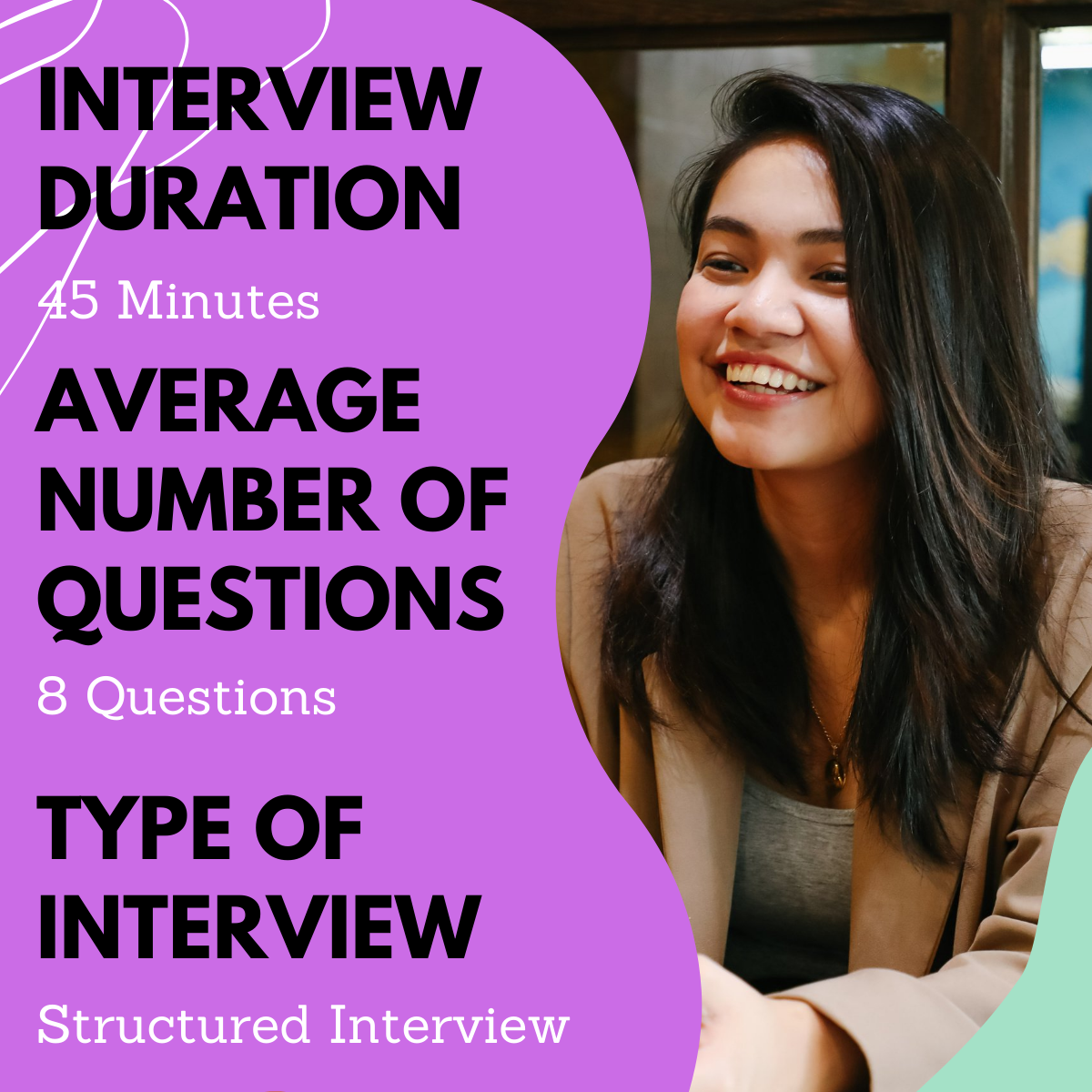
Structural job interview last 45 minutes with 8 interview questions being asked

Check the average pay.

The three rules of a successful job interview

One – identify the skills and experiences each employer requires you to possess as these will ultimately become the job interview questions

Two – be a self-promoter by highlighting skills, experiences, knowledge, and qualities the employer requires for the graduate position you are applying for

Three – communicate confidently – speak slowly, give detail, don’t waffle or use filler words. Pause, reiterate, and use public speaking skills to highlight your unique selling point

How to Pass a Job Interview

To pass a job interview, it is important to predict the interview questions and practice delivering the interview answers confidently.

  • Mock interviews help to practice an interview in full
  • Re-writing interview answers helps with memory
  • Talking at a slower pace (as interviewees then speed up due to nervousness) helps the employer to record your experiences and skills

Tell me about yourself.

Answer:
“I recently graduated with a degree in [your degree] from [University Name]. Throughout my academic journey, I developed a strong foundation in [key skills related to the job], and Iโ€™m particularly passionate about [specific area of interest]. Iโ€™ve also had the opportunity to work on projects related to [specific experience], where I enhanced my problem-solving and team collaboration skills. Iโ€™m excited to bring my knowledge, skills, and enthusiasm to a professional setting and contribute to [Company Name]โ€™s goals.”


Why did you choose this field of study?

Answer:
“I chose [your field of study] because of my passion for [specific aspect of the field]. I have always been fascinated by [related interest], and I wanted to deepen my understanding and gain the skills needed to pursue a career in this area. I enjoy solving complex problems and finding innovative solutions, which is why I felt this field was the perfect fit for me.”

What skills did you gain during your studies that will help you succeed in this role?

Answer:
“During my studies, I developed strong analytical, communication, and teamwork skills. I frequently worked on group projects, which helped me learn how to collaborate effectively and manage differing opinions to achieve common goals. I also gained expertise in [specific software or tools] and honed my ability to present ideas clearly, both in writing and verbally.”


Why do you want to work for this company?

Answer:
“Iโ€™ve done extensive research on your company, and I admire how [Company Name] is known for its [specific aspect of the company, e.g., innovation, commitment to sustainability, work culture]. The values and vision of the company align with my own career goals, and I believe my skills in [mention relevant skills] would be a strong fit for your team. Iโ€™m excited about the opportunity to contribute to your mission and learn from the talented professionals here.”

How do you handle stress and pressure?

Answer:
“I manage stress by staying organized and breaking down tasks into smaller, manageable steps. During busy periods, I prioritize tasks based on deadlines and importance, which helps me stay focused. I also find that maintaining a positive attitude and seeking support when needed helps me navigate challenges without feeling overwhelmed.”


What are your strengths?

Answer:
“One of my key strengths is my ability to quickly adapt to new situations. During my time at university, I worked on various projects where I had to learn new tools or approaches, and I was able to do so successfully. Iโ€™m also a strong communicator, which has helped me collaborate effectively with classmates and professors. Finally, I am highly organized, which ensures I can balance multiple tasks efficiently.”

What are your weaknesses, and how do you address them?

Answer:
“One area Iโ€™m working on is my tendency to be a perfectionist. Sometimes, I can get caught up in the details, but Iโ€™ve learned to balance quality with efficiency by setting clear time limits for tasks and asking for feedback when needed. Iโ€™ve found that focusing on continuous improvement helps me make more progress without getting stuck in overthinking.”


Tell us about a time when you worked as part of a team.

Answer:
“In one of my university projects, I worked on a team that was tasked with [project description]. We had to divide the workload based on individual strengths, and I was responsible for [your role]. I made sure to keep communication open by setting up regular check-ins and encouraging everyone to share their ideas. We were able to complete the project ahead of schedule, and I learned the importance of collaboration and clear communication.”

Evolve the mind book on Amazon

Where do you see yourself in five years?

Answer:
“In five years, I see myself growing within this company, contributing to major projects, and possibly taking on more leadership responsibilities. Iโ€™m eager to continue developing my skills and taking on new challenges, and I hope to be part of a team where I can contribute meaningfully to its long-term success while advancing my own career.”


Why should we hire you?

Answer:
“You should hire me because I bring a strong educational foundation, a proactive attitude, and a willingness to learn. Iโ€™m highly motivated to contribute my skills in [relevant area] and am excited to bring fresh perspectives to your team. I also have a strong work ethic and am committed to achieving results, which I believe will allow me to add value to your organization.”

Interview Answers for a Civil Engineering Job

There is a large need for civil engineers in the UK. As of the second quarter of 2024, approximately 96,600 civil engineers were working in the United Kingdom.

Civil engineer’s job duties include research and design, direct construction, and managing the operation and maintenance of civil and mining engineering structures. Job interview questions, therefore, will focus in on:

How competitive is a Civil Engineer job interview?

Medium in competitiveness

Interview Specifics:

Structural job interview last 45 minutes with 8 interview questions being asked

Can you demonstrate the relevant knowledge and experience to pass a Civil Engineer job interview?

  • technical competence
  • excellent numeracy and IT skills
  • strong communication and teamwork skills
  • the ability to supervise and lead others
  • the capability to work to budgets and deadlines
  • an understanding of relevant building and health and safety legislation
  • a creative approach to problem-solving
  • a flexible approach.

Check the average pay.

All civil engineer hiring managers will ask a variation of the common questions listed below, but it is important to follow the three rules of a successful job interview:

One – identify the skills and experiences each civil engineer employer requires you to possess

Two – be a self-promoter by highlighting design, mathematics and project management skills and experiences

Three – communicate confidently. Explain in detail your work experience and how it meets the job criteria
To pass a job interview, it is important to predict the interview questions and practice delivering the interview answers confidently.

  • Mock interviews help to practice an interview in full
  • Re-writing interview answers helps with memory
  • Talking at a slower pace (as interviewees then speed up due to nervousness) helps the employer to record your experiences and skills
What is the difference between civil engineering and structural engineering?

Answer: In my experience, civil engineering is a broad field that encompasses various types of infrastructure, such as roads, bridges, and water systems. I’ve worked on projects that involved the design of transportation networks and drainage systems. Structural engineering, on the other hand, is a more specialized area that focuses on ensuring buildings, bridges, and other structures can withstand the forces acting on them, like gravity, wind, and seismic forces. When I worked on a bridge project, I collaborated closely with structural engineers to ensure the design could handle heavy traffic loads and extreme weather conditions.

Explain the concept of the “dead load” and “live load” in structural design.

Answer: Iโ€™ve worked on multiple projects where understanding dead load and live load was crucial for the structural design. In simple terms, dead load refers to the constant weight of the structure itselfโ€”things like beams, floors, and walls. When I worked on a multi-story office building, calculating the dead load was essential to ensure the foundation could support the weight of the entire structure. Live load, on the other hand, refers to temporary loads, such as people, furniture, or equipment. During my time on a hospital construction project, we had to account for live loads like the movement of medical equipment and patients to ensure the floors could handle those fluctuating loads.

What is the importance of soil testing in civil engineering projects?

Answer: I canโ€™t overstate how important soil testing is. On one particular project I worked on, we were building a commercial complex on a site that had a high water table. The results from our soil testing informed us that we needed to design deeper foundations to avoid issues with settlement. In another case, we found that the soil was prone to liquefaction, so we had to take extra precautions when designing the foundation to ensure the structure wouldnโ€™t be at risk during an earthquake. Soil testing has always been a critical part of my planning process to avoid costly mistakes down the line.


Can you explain what “FEMA” stands for and its relevance in civil engineering?

Answer: FEMA, or the Federal Emergency Management Agency, has played a vital role in a number of my projects, especially those in areas prone to natural disasters. For example, I was involved in a project where we had to design a community center in an area vulnerable to flooding. By following FEMAโ€™s guidelines on flood-prone areas, we elevated the building above the base flood elevation to ensure the structure would be safe in the event of a flood. FEMAโ€™s standards for disaster-resilient design are something I always consider when working on projects in at-risk areas.

What is the difference between reinforced concrete and prestressed concrete?

Answer: In my experience, reinforced concrete is the go-to material for many projects because itโ€™s versatile and cost-effective. I worked on a parking garage where reinforced concrete was used to form the slabs and columns. Prestressed concrete, however, is used in situations where higher strength is required, and itโ€™s more efficient at resisting bending and cracking. On a recent highway bridge project, we used prestressed concrete beams because the span was large, and we needed to reduce deflection and improve load distribution.


What are the basic steps involved in a construction project from start to finish?

Answer: From my experience, the steps of a construction project typically start with careful planning and design. For example, during the design phase of a recent residential complex, we worked closely with architects to finalize the blueprints and get the necessary permits. After that, site preparation was keyโ€”on one project, we had to deal with a lot of rock on the site, which required extra excavation. During foundation construction, I closely monitored the pouring of concrete to ensure it was done correctly. The next stages involved building the structure, installing utilities, and finishing the interior and exterior. I always ensure that regular safety checks and inspections are part of the process to avoid any delays or issues before handing the project over to the client.

What are the most important factors to consider when designing a bridge?

Answer: In my experience working on bridge projects, I always start by assessing the site conditions, such as soil type, water levels, and potential seismic activity. For instance, when we designed a bridge across a river, we had to account for fluctuating water levels, which influenced the type of foundation we used. Load-bearing capacity is another key factorโ€”on one project, we had to design for heavy vehicular traffic and high pedestrian volumes. Material selection is also important to balance durability, cost, and aesthetic considerations. I remember working with a team to select the right steel for a bridge in a coastal area, which had to resist corrosion from saltwater.


How do you manage project timelines and costs in civil engineering projects?

Answer: Managing timelines and costs is something Iโ€™ve always had to stay on top of. For example, on a large infrastructure project I was involved in, I used project management software like Microsoft Project to develop a detailed schedule, breaking down tasks into phases. I worked closely with the procurement team to ensure materials were delivered on time and within budget. One thing Iโ€™ve learned over the years is to have contingency plans in place. On one project, unexpected weather delays set us back, so we adjusted the schedule and increased labor during the good weather days to make up for lost time.

Evolve the mind book on Amazon

What is the purpose of using BIM (Building Information Modeling) in civil engineering?

Answer: Iโ€™ve found that BIM has been an absolute game changer in improving project efficiency and collaboration. In one of my recent projects, we used BIM to visualize the entire building before construction started. This allowed us to identify potential clashes between systems, like HVAC ducts and plumbing, early in the design phase. BIM also made it much easier to communicate with the contractor and stakeholders, which streamlined decision-making. By using BIM, we were able to cut down on rework, which saved both time and costs.


How do you ensure safety on a construction site?

Answer: Safety is always a top priority in every project Iโ€™ve worked on. In one of the large-scale projects I was involved in, we had weekly safety meetings where the team would review potential hazards and discuss preventive measures. Iโ€™ve made it a point to ensure that workers are provided with the appropriate personal protective equipment (PPE), such as helmets, gloves, and safety boots. On-site inspections are part of my routine, and I always ensure that safety barriers are in place around dangerous areas like excavations and high structures. When accidents or near misses have occurred, Iโ€™ve made it a priority to address the issue immediately, conduct a root cause analysis, and implement corrective actions to prevent future occurrences.

Free Online Job Interview Course

The free 6-part online job interview course will help you gain the skills and knowledge to be successful in the recruitment process.

Each module is designed to build upon the last, increasing your likelihood of gaining more job offers. The course has been designed and created by Author and Interview Coach Chris Delaney.

The course will help you to pass more job interviews and make you more confident at ‘selling’ yourself

  • Become skilled at communicating your competencies confidently – this creates a higher score on the interview scorecard increasing the number of job offers you can receive
  • Learn how to relax before a job interview, giving you the confidence to share your knowledge and expertise during the recruitment process – be the best version of yourself in the job interview
  • Gain the knowledge to sell yourself. We will share interview answer structures, rapport-building techniques and explain what the employer wants to hear during the job interview – you will learn the psychology of the interview process

The course will ignore the basic advice that can be found on a million websites; research the company, prepare for the interview, and have a good night’s sleep. Instead, the course curriculum is based on the findings from a number of job interview academic research papers and psychology findings, to help the savvy interviewee to stand out from the crowd.

The three rules for a successful job interview outcome are:

  1. Identify the job criteria
  2. Be a self-promoter
  3. Communicate with confidence

A published author, job interview trainer, and interview coach, Chris Delaney, will share his 20 years of experience to help you improve your job interview performance. Chris Delaney specialises in advanced job interview techniques, and as a hypnotherapist, helps clients overcome their job interview fears and anxiety.

Identify the job criteria

  • Learn how to predict the job interview questions
  • Learn how to structure any interview answer
  • Learn how to take advantage of the structured job interview

Be a self-promoter

  • Learn how language can impact the interview outcome
  • Learn how the interviewer perceives you – take the interview identity test
  • Learn how to sell yourself with each interview answer

Communicate with confidence

  • Overcome interview anxiety quickly
  • Increase communication confidence in face-to-face and virtual job interviews
  • Build rapport with interviewers to increase likeability

Chris will share research on the job interview process and explain the hidden psychology in play that neither the applicant nor the interviewer is aware of, and how you can use this knowledge to your advantage.

Understand:

  • How unconscious bias affects the interview scorecard
  • What ‘what is beautiful is good’ bias is and how to use positive generalisations for your benefit
  • Why a structured interview is better placed to predict job performance than an unstructured job interview and how to win in a structured interview recruitment process

The ideal way to use this course is to watch each video in order, one video per week. The duration between the course modules allows students to practice the techniques described within the course helping the participant to increase their job interview skill set.

Module 1 – What Creates a Successful Job Interview Outcome?

Learn about the structure of a job interview, what makes a high-scoring interview answer, and the three rules for a successful job interview.

The module will also teach you how to speak more confidently, especially during a job interview presentation.

Module 2 – Unconcious Bias

Learn how unconscious bias affects all job interviews, the common types of biases within recruitment, and the power of a positive bias.

Module 3 – Understanding the Interviewer’s Behavior

Learn how the interviewer’s behavior affects the applicant’s interview, how an alfa interviewer needs winning over, and the power of a self-fulfilling prophecy

Module 4 – What Is Your Interview Identity?

Learn how an interview panel views the applicant (their interview identity) based on your perceived knowledge and confidence during the job interview.

Module 5 – Improve Your Interview Identity

Learn how to improve your interview identity, how to overcome anxiety when speaking in public, and what you can do to improve your level of job interview confidence

Module 6 – Interview Questions and Answers

Learn what type of interview questions you will be asked during the job interview, how to predict the job interview questions, and how to sell yourself throughout the job interview.

Also, learn what makes a high-scoring job interview answer that will result in more job offers.

The ‘what is your interview identity’ book is available from Amazon:

Why You Are Failing Job Interviews

For an activity that is so regular, many job seekers fail to prepare for the job interview.

A lack of preparation results in common, and avoidable, mistakes being made that often result in a job rejection.

This article will explain the top 5 common job interview mistakes and how to avoid them.

Believing that all interview questions are the same

A common misunderstanding is that interviewers across all job sectors ask the same interview questions.

This is why searching for โ€˜job interview questionsโ€™ is more commonly searched (around 1-10k per month Source Google keyword planner 20/22) than, as an example, โ€˜job interview questions for engineeringโ€™ (around 100-1k per month. Source Google keyword planner 20/22).

There are a few commonly asked job interview questions, that we will list at the bottom of the article, but in the main, recruiters ask specific questions relevant to the job role and company culture. As an example, a teacher job interview will be filled with questions about lesson planning, classroom management, and preparing for Ofsted visits. Whereas a manager job interview will feature questions on financial planning, leadership skills, and project management.

That much is obvious. What isnโ€™t as obvious is the difference in interview questions for the same, but in different organisations. A misconception is that all (sector) employers ask the same questions. This is true to an extent. A retail interview, for various retail outlets, is likely to feature a job interview question relating to customer service.  This doesnโ€™t mean that every question will be repeated with each employer.

With the retail example, one interviewer from a food retail outlet may focus questions on stock rotation, dealing with spoiled food, and food contamination. A second retail recruiter, from, let’s say a clothing retail store might ask questions on communication, fashion knowledge, and dealing with returns. 

The first rule for a successful job interview is to identify the job criteria. Review the job specification, read the job advert, research the company culture, vision and values. In fact, researching values and company culture is highly important as more employers use โ€˜value interviewsโ€™ and โ€˜strength-based interviewing’ as part of their recruitment process.

Only using examples from your current role

The most popular job interview is a behavioural interview, part of the structured interview process. The behavioural interview asks for examples of how the candidate has previously acted in past situations.

Example behavioural interview questions include:

  • Give me an example of when you have collaborated with stakeholders?
  • Have you ever had to deal with competing deadlines, what did you do?
  • Describe a time that you have influenced others to agree to one of your suggestions?

Most behavioural interview questions can be predicted. The key common tasks for the new role, in most cases, will be discussed in the job interview in the form of a set of behavioural interview questions.  

The problem comes when a candidate is nervous. An interviewee’s anxiety level affects their memory professing. The increase in cortisol, the stress hormone, results in memory loss. It becomes harder to recall details, such as answers to interview questions, or remembering the details of the experience the job candidate planned to discuss during the recruitment process.

The interview stress problem results in the overuse of one example. The interview panel ask an easy-opening interview question about a generic skill, teamwork or communication, and the applicant gives an example of using the required skill. The second question becomes more specific โ€œTell me about a time you used (required skill or knowledge)?โ€ The nervous applicant struggles to find a suitable example, so reverts to using the same example from question one: โ€œAs I said, when I wasโ€ฆ(previous example)โ€ฆI used (required skill)โ€

From the interview panel’s perspective, the repetitiveness of the same situation doesnโ€™t showcase enough variety, experience or knowledge for the recruiters to see the value of hiring the nervous applicant.

This is a very similar problem to only using examples from the current employer. In a job interview, when anxiety is often higher, it is easier to recall information from the current role. This is fine, often expected, for a least one or two interview questions.

Using only one employer example has one key barrier โ€“ the candidate can only highlight the skills and knowledge from that particular role, rather than showcasing a diverse set of skills, knowledge and experiences, that is gained by sharing examples from various roles and positions.

To prepare for a job interview, write down at least 10 behavioural interview questions that are likely to be asked. Next, reflect on 5 situations from at least 3 different employers.

The situations will become the examples that will be embedded into the interview answer. The ideal situation is one that required multiple skills and knowledge to create a successful outcome; teamwork, communication, leadership, industry knowledge, collaboration, stakeholder engagement, etc.

This allows the savvy interview applicant to reframe the example and situation depending on the interview question and the required skill or knowledge the employer is looking for the applicant to discuss. Remembering 5 examples that can be used for multiple interview questions is much easier than having to prepare 10-15 single-use interview answers.

Believing the interviewer is psychic

There is a myth that interviewers are superhuman.

The nervous interviewee believes that the employer is highly confident when interviewing, in fact, many are just as nervous as the job applicant. Some organisations allow their trained HR team to conduct the job interviews, which means they are skilled in interviewing but not always with the sector technical know-how.

The biggest misconception is that the interview panel is psychic. A high number of career professionals fail to mention key information during their interview answers. As an example, the applicant will describe a problem they faced and the actions they took to overcome the problem. On the face of it, the interview answer format sounds positive. In reality, the interviewee will delete essential information from the interview answer:

  • Decision-making skill
  • Reasons for declining an option
  • Creative thinking process
  • Time management
  • Communication skills and stakeholder relationships
  • Work ethic and commitment

The list can go on and on. It is important, therefore, to give as much detail that relates to the interview question as possible. In fact, some research has found how the higher number of words per interview answer increases the likelihood of a positive interview outcome.

A more basic problem for internal interviews is not understanding the impact of an interview scorecard. In a structured interview, each interview answer is cross-referenced against a set of job criteria recorded on the interview scorecard. The criteria includes skills, qualities, and experiences. Each interview question is scored on a scale, for example of 1-4. The interview panel can only score an applicant high if they reference all the criteria on the interview scorecard. This is why โ€˜identifying the job criteriaโ€™ is of the most importance.

Because the applicant, in an internal job interview, knows the interviewer has seen their work, they will naturally miss out key information. This lack of detail only results in a low-scoring interview answer.

To overcome the missing information problem 1) identify the job criteria 2) be a self-promoter 3) communicate confidently

Disclosing irrelevant information

If you this next common interview mistake you must stop straight away

One of the worst errors an interviewee can make is the self-discloser of weaknesses. Time and time again candidates will randomly disclose a weakness even when they havenโ€™t been asked.

When asked a technical question, it is easy to let slip out โ€˜Iโ€™ve never worked on something like thatโ€™ Instead it is better to confidently communicate your knowledge on the subject. Discussing knowledge will create a stronger interview identity than explaining that you lack experience.

Other negative slippage includes โ€˜I prefer working on my own initiative..โ€™ to questions about teamwork. Or, โ€˜Others in my team focused on that area of workโ€™ when asked about a particular skill.

The interview isnโ€™t just about past experience, its about potential. Negative slippage ruins a positive interview identity. The barrier here is that career professionals donโ€™t even know they are leaking negativities. When I coach career professionals to pass a job interview, I will record and list all of their negative communications โ€“ verbal and non-verbal, and most applicants are unaware of around 95% of the negative communication that is affecting their chance of winning a job offer.

Not being ready for the basics

Understanding the job interview format creates familiarity, familiarity increases confidence.

Failing a number of job interviews have a secondary gain, the applicant becomes familiar with the interview process, which in turn increases their self-esteem during the recruitment process.

You donโ€™t need to fail to win. A little research and some mock interviews are enough to become more confident. By understanding the format and preparing for commonly asked interview questions (as well as sector-specific interview questions as discussed above) helps reduce interview anxiety.

Most job interviews last around 45 minutes. The interview panel is made up of around 3 staff members, often including a HR manager. Interviewees will be told about the interview process before being asked, on average, 8 questions, including sector-specific questions and a few of the generic questions recorded below.

Evolve the mind book on Amazon

The 10 most commonly asked job interview questions:

  1. Do you have any questions for us (asked at the job interview end)
  2. Tell me about your experience
  3. What are your weaknesses
  4. What do you know about our organisation
  5. Give me an example of using (skill/knowledge)
  6. Describe a time that you worked well within a team
  7. How will you manage your time when you have competing deadlines
  8. Explain how you would (deal with a future duty/task)
  9. What are your salary expectations
  10. Give an example of developing your skills or knowledge

10 Job Interview Facts You Must Know Before Your Next Interview

10 Job Interview facts

Everyone, at some point or other, will attend a job interview. In fact, most people will attend 20-50 job interviews over their lifetime.

These 10 amazing job interview facts will help you to better understand the interview process and help you to land the job of your dreams.

The first job interview ever was conducted by Thomas Edison in 1921

Job interviews are conducted every day, for every job role, in every job sector, and in every country around the world.

Why are job interviews so popular and how did they originate?

In 1921 the New York Times headline read: โ€œEdisonโ€™s questions stir up a stormโ€ To gain a better level of employees Edison created the โ€˜Edison testโ€™ โ€“ the original job interview.

There were hundreds of questions that could be asked, with people complaining that you needed to be a โ€˜walking encyclopaediaโ€™ to be hired.

After being interviewed, Edison would take successful candidates out for dinner to be tested by eating soup. The famous ‘soup test’ was simple; Edison would watch if the candidate would salt the soup without tasting the soup first. This is because Edison wanted to hire โ€˜curiousโ€™ people and felt that people who salted the soup without testing it โ€“ as Edison didnโ€™t want to hire people who replied on assumptions to make opinions.  

Source

Since the pandemic, 86% of recruiters have been conducting virtual interviews

Prior to the pandemic recruiters had stated to use virtual job interviews. Covid, which kicked off the work from the home initiative, simply sped up the use of video technology in job interviews.

Online job interviews include human-delivered Q&A interviews, online psychometric tests and AI bot interviews โ€“ being interviewed by a robot.

Virtual interviews save time, no travel is required but do require an investment in technology and good internet speed.

Many HR professionals say that virtual interviewing is the new standard with an additional increase in AI bot systems being a major factor in hiring decisions.

Source

The average time for a job interview is 45 minutes

The interview process is in the process of change, especially for high skilled roles.

Previously one or two job interview rounds were enough to highlight enough of the job criteria to gain a job offer or rejection.

The structured interview, which is adopted by most employers, is the key recruitment intervention in the hiring decision. In a structured or formal interview, each applicant is asked a series of job-related interview questions within a 45-minute time frame.

In the main, the applicant is asked 8 interview questions, which are verbally answered by the applicant. Each answer, on average, lasts for around 3 minutes. Some research shows how the longer the duration of the answer the more likely you are to score higher on the interview scorecard, as long as the answer is relevant to the job criteria.

Interview identities, with a high position on the confidence axis, are more likely to give a self-promoting and detailed reply.

Source

Most applicants expect to hear back from an employer within 5 days of the interview

We have all been to a job interview only to wait days, weeks and sometimes even months to hear back from the employer.

There are numerous reasons for a delay in response; multiple interview rounds, staff sickness, and job offers need to be signed off by senior leaders, to the requirement of a DBS check.

Currently, with an increase in job vacancies due in part to the great resignation, job seekers are becoming restless โ€“ they want a quick turnaround.

In fact, the late response is affecting the recruitment of first-choice applicants. First-choice applicants, those candidates who are offered multiple job roles wonโ€™t hold out for job offers, even for recognised brands.

The average time for hearing back from an employer following a hiring round is 1-2 weeks.

Source

Over 75% of hiring managers use behavioural interview questions to test soft skills

There are many different types of interview questions from situational interview questions to value-based questions.

When hiring, employers need to evaluate sector knowledge, level of expertise, and essential soft skills needed for the advertised position.

The structured job interview is proven to be the best way to predict job performance. Two common types of interview questions, within a structured interview, are behavioural and situational questions.

Situational questions are based on future scenarios and behavioural questions are based on previous behaviours in past job roles. These questions include the famous opening: โ€œgive me an example of using X skillโ€

This type of questioning does have a downside. The best way people learn is through making a mistake. Also, job maturity changes the way a person would approach a similar work base situation. The framing of the question in the past can limit how the applicant responds and promotes their skills.

Source

On average 250 applicants apply for every advertised job

If a future me were asked how many job applicants apply for every advertised position, I would likely say 500, 1000 or even 5000.

These large figures may sound ridiculous. But it wasnโ€™t that long ago when the average number of applicants was around 25 per position. Further, we have already seen some companies receive over 25,000 applications for a job role.

The number of applications increases because of two key reasons. One, technology and globalisation are allowing people around the globe to apply for roles. Two, it is much easier and quicker to upload a resume, CV or application than it was to hand write an application as was previously required.

Source

Evolve the mind book on Amazon

60% of skilled workers will quit in the middle of an application if it is too lengthy

Applications are boring! The biggest killer of talented and high-skilled applicants is having a long and boring application process with various steps, assessments and uploads.

These days job seekers want to apply for lots of jobs quickly. Ideally by uploading an application, CV and Resume for various positions.

Some large organisations have already recognised this barrier to recruitment. Companies like the NHS allow a job seeker to upload one application that they can then send off for various NHS roles โ€“ each application can be edited if the applicant prefers.

Other research shows how having a count down โ€˜only two questions to goโ€™ or โ€˜page 2 of 3โ€™ can keep candidates engaged, as they know the application process is soon coming to an end.

Source

Only 2% of applicants receive a job interview

The top 2% have what it takesโ€ฆto write a good application.

The problem with job hunters wanting a quicker application process is that the targeting of individual applications is highly reduced. A reduction in targeting, and therefore meeting the job criteria, reduces the perceived value an applicant can bring to the company which results in a higher number of rejection letters.

The acceleration in AI bot automated tracking systems, where the AI bot scans an application searching for job criteria before deciding whether of not to offer the applicant a job interview, has a big impact on those job seekers who use the same generic application for all roles and for various organisations who have their own specific criteria based on that companyโ€™s values and vision.

Recent research found that 98% of fortune 500 companies now use an application tracking system.

Only, around, 8 applicants receive a job interview. This means competition is high. Some sectors will have a more flexible approach to recruitment as there is a need for staff but in others, where recruitment is less of a problem, a generic application just isnโ€™t good enough.

Source

40% of employers decline interviewees who show no enthusiasm during the recruitment process

The logical hiring process, scoring interviewee answers against the interview scorecard, isnโ€™t that logical.

All logical hiring decisions are influenced by the emotional section of the brain. It is this part of the mind that uses unconscious bias as a starting point in the recruitment process.

The research for the interview prediction grid model โ€“ a framework to reflect on how an interviewee is perceived during a job interview and therefore the outcome of the recruitment process, states the importance of confidence within a 1-2-1 or panel interview.

Confidence creates likeability and is associated with other positive attributes; being enthusiastic, intelligence and teamwork.   

It is clear then that a lack of confidence during the interview reduces the chances of a job hire.

90% of people who use an interview coach get a job offer as twice as fast as job seekers who don’t prepare

More and more people are now booking job interview coaches. This is especially true for high-skilled roles where competition for positions is high.

Interview coaches increase confidence through role plays, feedback and sharing job interview techniques.

The main reason why job seekers turn to professional interview coaches is that public speaking is cited as the number one fear in the world.

Does your background matter on a virtual job interview?

The number of online job interviews has rapidly increased over the past two years and only seems to be becoming ever more popular. In a recent Indeed poll, 82% of employers said they are using virtual interviews.

A virtual interview, from an employerโ€™s perspective, is quicker, easier, and cheaper. The convenience of being interviewed at home also has similar advantages for the potential employee โ€“ no travel required, saving transport costs, and having to put time aside to travel. But it also has a downside, the hiring manager gets a glimpse at the applicantsโ€™ private lives.

This sneak peek is a peephole into an applicantโ€™s personal life. Just like a face-to-face job interview, where the candidate’s clothes create an unconscious bias, the background of a virtual interviewee can influence the employer’s hiring decision-making process.

Background Matters

Many online platforms offer fake backgrounds; a beach, a beautiful countryside, or an office setting. These backgrounds either look fake, seem inappropriate for a job interview, or create a ghost effect โ€“ where the applicant’s body has a white shadow around it.

The number one rule for a virtual job interview is to use a real background.

3 Background choices

With a real background there are three obvious choices:

  1. Clean space (often a white wall)
  2. Single item (plant)
  3. Full view (able to see the whole room)

It is common for interviewees to choose a clean space, a close-up camera that captures the applicant’s face with a blank background โ€“ a painted wall.

The camera position is highly important as discussed in our โ€˜online interview tipsโ€™ article. But a blank background can be boring. A white wall doesnโ€™t say anything about the candidateโ€™s personality. Some hiring managers may even feel the applicants are hiding something.

If a blank wall is chosen, use a coloured wall. Ideally blue. Blue conveys relaxation, calmness and as discussed in Very Well Mind, blue is associated with stability and reliability.

Your Background Shows Who You Are

The background an applicant chooses says a lot about them, often speaking to the employer’s subconscious decision-making process.

Having one or two items in the background makes the who image a little more interesting. Too many items make a โ€˜busyโ€™ image that can be distracting.

The question is, what to choose to place in the background? A bookshelf filled with industry-related books can create the impression of authority or knowledge. But bookshelves can be overcrowded.

A few books on each shelf separated by an additional item can make a cleaner and more professional background. ย 

Plants are ideal for an online interview background. Potted plants, especially in bloom, are pleasing to the eye. They look good in the background and help create a calming atmosphere.

Ensure the plant isnโ€™t looking dried up, shriveled, or dead.

Whichever object is chosen should be to one side of the frame, not taking more space than 1/6th of the whole space.

Donโ€™t Show Everything

A full room frame is bad for virtual interviews. One, in a full view, shot the applicant’s face is less clear which leads to less non-verbal communication, facial expressions.

In addition, a full view of the room will either show too much โ€“ which is distracting, can highlight mess which doesnโ€™t create a good impression, or has lots of clear space, which is seen as boring.

Camera, Lights, Action

Finally, think about the essentials of creating a video. The virtual interview setup is similar to setting up a space for a video or film.

One of the most important elements of being on camera is the lighting. Some candidates will set up the camera with a large window behind, where the sun blinds the interview panel, hiding the applicant’s face.

Others will set up the video call in a dark room with little like creating dark shadows that create a horror film type of environment.

If a job seeker has the equipment, they can set up lighting behind the camera facing the interviewee which lights up their face. If not, a cheaper option if to have the camera in front of a large window, facing the job candidate, allowing the sun to naturally light up the room.  

The idea is to find a well-lit clean room where the job hunter feels relaxed and calm. Ensure the room is clean and add one or two small items in the background, a flower or book.

Evolve the mind book on Amazon

7 Things You Can Do To Improve Your Job Interview Outcome

Job interviews are tricky, aren’t they?

Most job applicants fear the job interview. Some, who are highly anxious, will even go as far as turning down an interview offer due to excessive low confidence.

This fear is real. In fact, the fear of speaking in front of strangers or in public – also known as glossophobia, is the number one fear in the world.

The job interview can double the impact of glossophobia and many candidates put an ‘all or nothing’ association on the job they are applying for – “if I fail this job interview, I will always be stuck in a job I hate”.

An article on Psychology Today explained how confidence comes from experiencing achievement in a task. There more you are successful in a task the more confident (in that task) you will be.

Most people fear public speaking, job interviews, or talking to strangers because of a previous negative experience. The experience of failure increases anxiety and fear.

As an example, a job hunter will fear being invited to an interview for a job they truly desire because of a past memory: when they were asked to read out a text in front of their classmates in school or their first public speaking experience that ended in disaster.

The job interview should be easy. Interviewees are asked questions about something they know well – themselves. Job applicants’ confidence should be high. If an application has resulted in a job interview offer from one company, it should then result in a second interview from another organization. This means a failed job interview can be a learning point that will increase future job interview performance and the applicant’s interview identity.

These 7 ideas will help you improve your interview confidence and interview performance.

People buy what they like.

In the psychology of sales, the โ€˜liking principleโ€™ is quoted as one of the key determinators in persuading customers to make a purchase.

It works through creating a likeability association. As an example, many brands will use celebrity endorsements to sell their products. Example: The audience likes George Clooney, so they will like a coffee brand if they see Clooney drinking that coffee brand in a TV advert โ€“ even though the audience knows Mr. Clooney was paid to star in the TV commercial.

Tupperware famously embedded likeability into the sales of its product. Rather than have their products in retail stores (they tried this approach and it failed) they created Tupperware parties. A host would invite friends and family round for a party and promote the Tupperware products. People purchased the products, not because they were good or they needed them, they made purchases because they liked the host โ€“ their friend or relative.

To improve your interview outcome, you can create likeability.

Likeability can start prior to the job interview. We know from recent data that 70% of employers check social media before a recruitment day. Create likeability through a second persuasion law โ€“ authority. If an employer views an applicant’s LinkedIn profile and the feed is filled with relevant industry insights, sector-related intelligence, and positive opinions the employer will create a halo effect that will have a big influence on the interview outcome.

Research has also found that commonality creates likeability. By disclosing information that highlights commonalities with the hiring manager a positive impression will be made. Commonality can include, well anything: same interest or hobbies, attending the same university, or living in the same town.

Which interview timeslot to choose

Timing makes all the difference. The interview timeslot allocation given to each interviewee makes seem unimportant. In fact, the timeslot can change the way an employer scores the applicant.

The timeslot is related to the hiring manager’s confidence in conducting the interview, the interview panel’s tiredness or alertness, and if you become the baseline applicant.

Research has found that the first interviewee becomes the baseline applicant โ€“ following interview scores for other candidates are influenced by the original scores given to the initial interviewee.

The final applicant of the day is often interviewed by a panel of hiring managers who are tired from a full day of recruitment affecting how they view the last interviewee. And post-dinner candidates are affected by biology โ€“ the process of digesting food affects a personโ€™s decision-making processes.

Itโ€™s the second or third interview time slot around 10:30-11:00 that is the ideal interview timeslot.

What we see we feel

Whatever the mind focuses on the body feels. A person looking forward to a holiday, a networking event or a job interview will feel positive. Whereas someone who fears flying, is anxious about meeting strangers or someone who hates talking about themselves will have a negative response to a holiday, networking event, or job interview.

Perspective creates motivation. Previously we mentioned how confidence is created through positive experiences. What is interesting is that the brain doesnโ€™t see the difference between a real-life experience and a vivid memory. This is why dreams can feel real.

If what you imagine you feel, you can feel positive about a job interview by imagining yourself being successful in a forthcoming recruitment process.

To have a lasting impact, the process has to start with a relaxed state. Taking deep breaths or imagining being in a relaxed place; a countryside or peaceful beach helps to calm the mind and body. In this peaceful state imagine by relaxed during a job interview, then imagine being confident in a job interview, and final imagine being charismatic in a job interview. Make each visualisation vivid; see yourself confident, hear yourself being confident, and feel confident.

The repetition of the visualisation creates new neuro-pathways that create a positive association: job interview = calm and confident.

The hands have it

A little technique to help improve the first impressions is to manipulate the hands.

Anxiety kicks off the fight or flight response which sends oxygen from non-virtual parts of the body (hands and feet) to essential organs. The redirection of the blood cells leaves hands feeling cold and clammy.

At the initial introduction, where a welcome handshake is expected, the first impression is weak as a damp and cold handshake has a negative unconscious bias.

To be viewed as confident requires a warm and firm introductory handshake. When you arrive for the interview, either accept a cup of coffee (and wrap your hands around the warm cup) or visit the bathroom and hold your hands under the warm water for a few seconds, to warm the hands.

Evolve the mind book on Amazon

Turn off your phone the night before

One sleep study showed how using your phone three hours before you plan to go to bed can disrupt your sleep.

In addition, many people charge their phones overnight in the bedroom. If the phone is left on small LED lights will be on display. The brain is trained to stay more awake when there is light. Charging the phone in a different room, and having thick curtains to cut out any streetlights allows for a deeper sleep.

Deeper sleeping restores energy, increases blood supply, and improves cognitive ability. All this helps the brain to respond to tricky interview questions.

Create high status

How we view ourselves, as high or low status, is leaked through our language. The language used in a job interview is subconsciously filtered by the hiring manager creating a โ€˜gut feelingโ€™.

As an example, a low status would use weak language such as โ€˜tryโ€™ โ€“ โ€˜I would try my bestโ€™ compared to a high-status person who uses assertive language โ€˜willโ€™ โ€“ โ€˜I will achieve the taskโ€™.

One experiment found that writing a letter to yourself that assertively states skills, strengths and abilities increase self-worth, creating high status. The letter must use positive language, be true, and be assertive.

Get good at asking questions

The tip to improve a job interview outcome seems a little odd, it’s to be good at asking, not answering questions.

Obviously, in a job interview, the ability to confidently communicate competencies within a job interview answer is essential. But what makes a person stand out is their ability to ask the interview panel questions.

Questions create a conversation. Conversations improve likeability. Likeability, or rapport, increases job offers.

Also, the ability to ask questions relaxes the interviewee and helps them to clarify the required content of the interview answer.

At the interview start, the applicant can ask the interview panel questions about their day or the company.

During the questions, the candidate can ask for specifics to generic questions and can ask the employer’s opinion or an aspect of the interview question.

Towards the interview end, the employer will allow the interviewee to ask any questions to help clarify the company culture and job role.

Asking questions shows confidence, and confidence is a quality that all employers want staff to possess.

Questions, or their answers, also allow the applicant to decide if the employer is one they want to work for.

Why you are better than 97% of the competition

optimistic interviewee

Imposture syndrome is the biggest barrier to job interview success. The data proves that a lack of job interview self-esteem is unfounded as any career professional who has been offered a job interview is in fact 97% better than the competition.

Much research has highlighted that the average number of applications per vacancy is around 250 (vastly higher for global organisations such as Microsoft or Google) HR statistics tell us how only 6-8 of the 250 applicants are offered a job interview.

The data speaks for itself. The percentage of 6-8 interviewees out of 250 applicants is around 3% – That means a candidate who has received an interview offer is in the top 3 percent of most โ€˜suitableโ€™ from the employerโ€™s perspective.

And itโ€™s the employers perceptive that counts.

How an Employers Views a Perspective Candidate

How an employer views a candidate, either via their application or during the job interview, increases the likelihood of that applicant being offered the job role, or not.

The candidates โ€˜interview identityโ€™ which is formed by the job seekers level of knowledge/experience vs their level of confidence creates 1 of 16 interview identities with only a small number of the โ€˜identitiesโ€™ being view as suitable enough to be offered the advertised vacancy.

The office for national statistics explained how for the first time ever there are more job vacancies than unemployed people.

There hasnโ€™t been a better time to gain a salary increase, by finding a new job opportunity, then now. Employers from across job sectors are looking at creative way to encourage applicants to accept their job roles from offering a blended office/home working option to wage increases.

The fear of career change

With an increase in job opportunities, a potentially high salary with a new employer and an awareness of growth sectors that offer a more secure career, why arenโ€™t career professionals applying for new vacancies?

Even career professionals who hate their job role, those who are stressed out due to workload, or graduates that picked the wrong job sector to work in, donโ€™t make a career change.

The reason is simple. Humans fear change.

In the world of work many career professionals see a career change as a backwards step where they would have to start of the bottom rung of the career ladder. This limiting belief is inaccurate as employers look for a diverse workforce who can bring a new perspective gain from experience in a different industry.

In fact, many employers seek to gain talented team members without direct experience in the sector. An example of this would be a manager โ€“ skilled at leadership, staff recruitment, finance projections. Managerial skills are transferable into many job sectors.

Humans fear failure

At a basic level humans have in built desire to โ€˜belongโ€™. Humans are pack animals. To survive in a pack individuals need to be accepted by others. To be rejected is to die. The same emotional pull happens in all social situations. Many humans avoid asking someone on a date as they donโ€™t want to chance being rejected. People fear public speaking as they fear being โ€˜laughedโ€™ at. And career professionals hate job interviews because they might be told they โ€˜are not good enoughโ€™.  

It is easier to stay with the devil you know than to make a change, even is the current situation is a toxic workplace that is making you ill.

It is time to make a change

A confident career professional with over 10 years industry experience and/or a degree level qualification or above should easily gain a number of job interviews โ€“ creating the 3% rule.

This means the competition is now only 6 other applicants. Six people, rather than 250 candidates, doesnโ€™t seem so overwhelming.

During the 45 minutes job interview the average employer will ask 6 job interview questions โ€“ often behavioural interview questions (question based on past experiences โ€“ โ€œgive me an example of doing Aโ€)

The initial question commonly asked is: โ€œtell me about yourselfโ€ An easy question to ask, and the final question is โ€œDo you have any questions for us?โ€

Knowing the structure of the job interview reduces the candidateโ€™s anxiety levels. Lower levels of anxiety increase performance confidence, allowing an interviewee to produce more detailed job interview examples relevant to the job interview question.

Employers will hint towards the job interview questions by sharing the essential criteria of the job role. It is the main duties or essential criteria that is referenced in the job interview questions. This insight can help a job seeker prepare high-scoring interview answers and examples prior to the job interview.

Fear creates procrastination. As a high number of people fear the job interview it is unlikely that each candidate will complete the essential preparation before a recruitment process. If for example only 50% of candidates fully prepare, including yourself, that is only 2 other applicants who are confident enough to give good job interview answers.

From 250 initial applicants, only 3 of the 6 interviewees will be interview ready. This means you only need to give higher scoring answers then the two other prepared people.

Evolve the mind book on Amazon

How Do You Handle Stress in an Interview?

job interview stress

A job interview is one of most stressful situations you can put yourself in.

This is because, most people, fear being the center of attention.

It is the fear of being rejected by the hiring manager that creates stress and anxiety. Job interview stress changes the candidate’s behavior which in turn creates a weak interview identity. Answers are weak, lacking detail and filled with an excessive number of filler words and weak language.

This article will explain how to handle job interview stress to create a strong interview identity that results in job offers.

Is a job interview a stressful situation?

Stress happens:

  • When we experience something new
  • When something unexpected happens
  • When we feel we have little control over something

All three stress activators can happen during a job interview. On the other hand, a well prepared career professional will feel confident if they:

  • Carry mock interviews and/or attend public speaking training – this reduces the ‘something new’ fear
  • Understanding the job interview process – this helps overcome the ‘unexpected’ fear
  • Predict job interview questions and prepare strong answers – this creates control

Humans are confident in familiar situations. Routine, processes, the norm, are all things that reduce stress. This is why some career professionals who are unhappy at work don’t search for a new job. The fear or something new outweighs the fear of the staying in an unhappy job role.

On average career professionals look for work, and therefore attend job interviews, every three to five years. It is the lack of preparing and attending the interviews that increases their levels of stress.

Stress isn’t an on or off button, its more of a scale. The higher up the stress scale you are the worse the stress can affect you. Stress can:

  • Create pain – stomach cramps, headaches, etc
  • Stop you sleeping
  • Increase nail biting, grinding teeth, and jaw clenching
  • Make you irritable, sad, or depressed
  • Stops you eating as your body is in ‘flight or fight’ mode

Do Employers Make the Job Interview Stressful on Purpose?

The myth that all job interviews are difficult, with employers asking awkward curveball questions designed to increase pressure on the applicant is just that – a myth.

Employers may asked: ‘how do you handle stress?’ for stressful positions, or ask problem solving riddles in engineering, IT or mathematical roles but for most advertised vacancies each job interview question will be based on the essential criteria for the job role.

In fact, employers will go out of there way to make the interview an ‘enjoyable’ or at least informative. Think about it, a recruitment manager is looking to hire the best person for the role.

All employers know that job seekers will be attending several job interviews over a short period of time, often with a rival company. It is in the employers interest to hire the best applicant.

If the employer did created an unnecessary pressurized job interview environment it is quiet likely that the 1st choice candidate will take the job offer with another, more friendlier’ employer.

Most employers use a ‘structured job interview’ process, by familiarizing yourself with this process will help you feel more in control and less stressed.

Reduce Job Interview Stress

Some well known basic stress reducers include:

  • Drink water
  • Eat healthy
  • Regular exercise
  • Learn to say ‘no’ as this increases assertiveness
  • List your skills and talents as positive reflection increases confidence
  • Use deep breathing or mindfulness to feel more calm and in control
  • Use a blackout curtains and a soundless room (no mobile phones, etc) to get a good nights sleep

Negative self-talk

Remove negative self-talk.

  • ‘I’m not good enough’
  • ‘Others are better skilled then I am?
  • ‘I don’t have the relevant experience’

What you focus on you feel.

If you focus on negative statements you will feel negative. Instead focus on your strengths your skills, qualities and what you have to offer the new employer – your unique selling point.

  1. Make a list of your key skill set
  2. Reflect and record key experiences where your ideas, hard work or leadership resulted in a positive outcome
  3. Re-read past appraisals and focus on what a previous manager liked about you

Perception

Perception creates or reduces the power balance.

Viewing the job interview as a life or death situation increases the body’s flight or fight response.

Breakdown what a job interview is. At the bottom level, the interview is you talking about you. And you are the expert on you!

View the interview as a meeting where you are teaching other people about what you have learnt; your knowledge, your experiences, and the techniques you have picked up to get a job done.

Reframing a job interview changes the perceived power balance. Being stress makes you feel you have no power, no influence. Feeling confident about talking about you makes you feel powerful, invincible.

Interview Questions and Answers

Repetition is the key to mastering a skill and practice creates perfection.

The more job interviews you attend (or mock interviews) the more confident you will be as an interveiwee.

This is true with any task. To be a good tennis player, play more tennis. Master chefing by cooking on a regular basis. Learn to speak a second language practice, make mistakes, and learn.

First-choice applicants – career professionals who receive a high number of job offers, will follow the three rules for passing a job interview.

  1. Identifying the job criteria
  2. Being a self-promoter
  3. Communicating confidently

The more an interviewee practices job interview questions and answers, the better prepared they will be on the day in question.

Preparation equals confidence, confidence reduces stress.

Job Interview Procrastination

Stress is a barrier to action.

To avoid stress, job candidates will procrastinate – ‘I will start my preparation tomorrow’

When you hear yourself putting tasks off, you must STOP and take immediate action.

  1. Write down all the interview preparation tasks; research the company, predict questions, prepare answers, check the venue address
  2. Start with the easiest task and do this first – momentum creates motivation
  3. Give yourself a deadline for each task
  4. Reward yourself when you have completed a certain number of tasks
  5. Meet with other people to research together as we like approaching difficult task in groups
Evolve the mind book on Amazon

Final Interview Questions and Answers

High skilled positions often come with a long recruitment process, consisting of several interview stages:

  1. AVI – asynchronous video interview (a virtual job interview conducted by an AI bot) used to screen applicants
  2. Technical interview to check a candidates competencies – this may include practical tests
  3. Group interview and/or values interview to review suitability/company culture fit
  4. Final interview for shortlisted candidates

A large number of career professionals on platforms such as LinkedIn express their concern over the high number of interview rounds – or ‘hoops’ they are made to jump through to secure a job offer.

So, why do employers have multiple interview rounds?

From the employers perspective, when paying a high salary for a highly skilled role, the hiring manager needs to ensure they recruit the right person. Often a single interview gives an indication of a persons suitability but doesn’t always highlights the individuals temperament, skills, knowledge, work-ethic, and values.

For low to medium skilled roles, most employers will have one or two interview rounds. For leadership positions, high-skilled roles, technical jobs the recruiters must hire someone who can add value, this requires a more in-depth recruitment process.

What does a final job interview mean?

Research shows how the top three candidates in a job interview will only have one or two points between them – the structured job interview is a close run thing.

Having such a close match can result in the interview panel being influenced by an unconscious bias. Rather then being forced into a decision, the recruitment team, often led by a human resources hiring manager, will invite the top performing interviewees to a final interview.

The final interview means that all the candidates are employable, they all meet the essential criteria and can add value to the team.

Only three to five applicants are offered a final interview round. This shortlist of candidates will all hold relevant industry qualifications , many years of sector experience and the confidence to delivery high-scoring job interview answers during the recruitment process. In short, they have a strong interview identity.

Competition, therefore, is high in terms of quality but low in terms of quantity – as the weaker candidates have already been dismissed.

Border force job interview is competitive

Interview Specifics:

Structural job interview last 45 minutes with 8 interview questions being asked

Can you demonstrate the relevant knowledge and experience to pass a final job interview?

  • Do you give detailed examples?
  • Do you state measurable data during examples?
  • Do you reference industry models and theories?
  • Do your answers meet the job criteria?
  • Are you a self-promoter?
  • Are your answers delivered confidently?
  • Do you use an excessive number of filler words?
  • Does your unique selling point stand out during the interview?

Check the average pay for your job role.

How to prepare for a final interview?

The biggest mistake most career professionals make during a final interview is not repeating examples from previous job interview rounds.

For all rounds, the job interview panel must score applicants based on the answers given in that interview round. Remember that each interview round maybe conducted by a different interviewer.

Not that all previously used examples will be needed. Each employer has their own way of conducting a final interview.

Some employers, will ask similar questions throughout all the interview rounds (worded a little different) to check that the applicant does possess the required skills and knowledge for the job vacancy.

In this approach, the final interviewers – often trained HR and senior leaders will ask more specific interview questions looking for data and evidence that they can measure.

As an example:

  • Interview round 1 question: “Tell me about a time when you worked with stakeholders?”
  • Interview round 2 question: “Tell me about a time when you had to influence a stakeholder?”
  • Interview round 3 question: “Give me an example of when you have influenced a senior stakeholder to overcome an objective on a collaborative project?”
  • Interview round 4 question: “Explain the specific steps you took to get a stakeholder with an objective to a project to agree with a proposal you had created?”

In other organisations, the final interview round will be focused on added value. The interview questions maybe open, even informal, to understand how an applicants experience will make a difference in the current team, on a project, and/or to achieve the company vision.

The employer is looking for:

  • Unique selling points
  • How an (experience) can be used to improve production or output/increase profit
  • What industry related knowledge can help progress the company
  • Specific skills and how they can be used to influence the workforce/achieve an objective
  • How the (applicant) can raise the bar

Final job interview tips

By the final interview stage, the employer has a high opinion of the candidate. The opinion must be reinforced.

It is often the confident, the charismatic interview identity, who is finally offered the role.

This is because employers value confidence. A self-assured employee gets things done. Humans also associate other positive personality traits to confident people. We believe they are hard-working, skilled, knowledgeable, and that they possess good personal skills; communication, listening, teamwork.

To be viewed as confident:

  • Be assertive with your communication
  • Use the power of a pause – don’t rush your answers
  • Add characters and storylines to your examples – entertain as we as explain
  • State researched information about the company within the interview answer
  • Be a master of the basics; eye contact, positive posture, power voice

Be ready to answer scenario interview questions.

Employers recruit for a reason – there is a recruitment to gain a person with the knowledge and experience to achieve a key objective.

The final job interview often focuses on the candidates abilities to achieve these objectives. The questions asked can be both open or closed:

  • What do you know about X?
  • What would be your 5 step plan to achieve (objective)?
  • We are facing a (barrier) who would you turn this around?
  • Describe the operational plan, over a 5 year period, you would implement to achieve (objective)?
  • Tell me more about that?

The employer leaves it to you!

In the final interview, don’t wait to be asked follow up questions. If questions are ambiguous:

  • Tell me more about that (often used in informal job interviews)
  • Describe your leadership style
  • Give me an example of success

It is up to the interviewee to provide the detail. Research shows how the higher number of words per answer often results in a high number of job offers.

Give detailed and specific answers as this increase word count. This can be achieved by:

  • Talk about the pro’s and con’s of a situation, management style, product, machinery, process
  • Use multiple situations in answers. As an example, to answer a ‘leadership style question’ talk about using different leadership styles in different (sector related) environments
  • State a theory or model and give an example of the theory/model in use
  • Embed short metaphors and examples into a longer example, ensuring their is a golden thread

Create a conversation.

Dont wait until the end of a job interview to ask the employer questions about the company.

Ask questions throughout the recruitment process and use the answers to give your own suitable replies. As an example if, by asking the interview questions, it is clear that the company value innovation, ensure you reference times you have been creative and innovative.

Mirror the language an employer uses; build on their metaphors, copy jargon and acronyms. By using a similar level of language a stronger level of rapport will be built.

Final job interview questions and answers

Final job interview question: Tell me what would you do in the first 3 months of working for the organization?

The interviewer here, is checking that the applicant is a self-motivated individual who can get things done.

Explain:

  • Understanding the vison/project brief
  • Planning for risk
  • Reviewing budget spend
  • Team motivation
  • Taking action
  • Being results driven

Final job interview question: How will you motivate the team to achieve the objective?

A leader creates a vision that the team work to achieve. The two parts vision and action(s) come together by ‘motivation’.

Discuss:

  • Different leadership styles
  • Staff motivation models
  • Operational plans
  • Previous examples of motivating teams

Final Interview Questions: What problems do you foresee?

Nothing is streamless in the world of work.

All managers, senior leaders and project managers can predict and manager risk. To answer the ‘problem’ question:

  • State potential problems
  • Discuss risk management models
  • Give solutions to common industry problems
  • Explain reactive and proactive approaches
  • Talk about risk budgets

How competitive is a final job interview?

Final job interviews aren’t competitive in terms of numbers.

The average number of applicants per vacancy is around 250. The average number of interviewees for each role is 8-10. The average number of final interviewees is just 2.

The two final interviewees will be highly skilled, knowledgeable and experienced. In these terms competition is high, because both job candidates are equally matched.

Often, the job offer goes to the candidate who has best prepared, and therefore the most confident in delivering high-scoring interview answers.

For a final job interview, high scoring answers are the answers that give specific and measure data that highlights the candidates competencies relevant to the job criteria and beyond.

Evolve the mind book on Amazon