
Interview Questions for an FLT Driver Job Interview

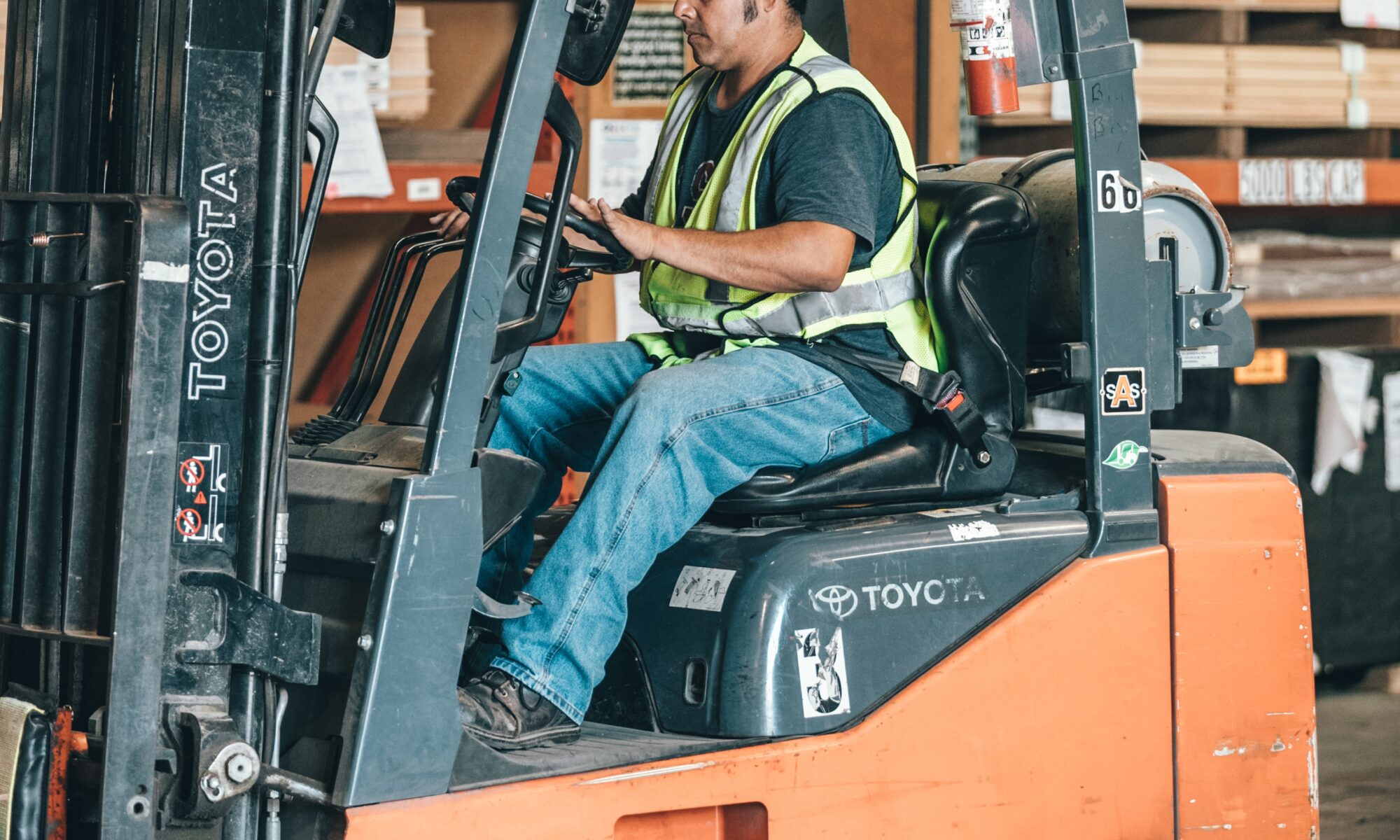
In years gone by, the FLT (fork lift truck) duties were part of the warehouse job role. These days, due to the large size of many production and warehouse operations, a full time fork lift truck operations team is required.

Some long-distance drivers now have a FLT attached to the lorry, requiring drivers to understand the FLT operations and load balancing.

In the main fork lift truck drivers load and unload goods, check load security, move palatised materials around the warehouse, while following health and safety regulations.

Interview questions, therefore, will check an applicants spatial awareness, attention to detail, being able to work alone/operate the FLT and follow delivery orders.

FLT Driver Interview Questions and Answers

For a fork lift truck operator job role, all employers will ask similar interview questions based on FLT driving experience, health and safety and the movement of goods.

We have listed commonly asked fork lift truck operator questions and the required approach to answering each question.

Can you give me an overview of your warehouse and fork lift truck experience?

The initial job interview question, is an opening question to help the applicant to start communicate their experience and therefore to relax.

Even though the initial question is an ‘open’ question, applicants can use this question to match their skills and experiences to the job criteria of the structured job interview.

Start with ‘An experience fork lift truck driver with over X years experience moving (type ie dangerous) goods…’

Add qualifications ‘…I have a FLT license and a warehouse Level 3 NVQ, plus a H&S certificate…’

End by stating relevant skills ‘….after working in this industry for X years I proven skills in (add skills) that would be relevant for this role..’

When did you pass your FLT test?

Often asked as a follow up question to the initial ‘experience’ question, employers ask the ‘duration’ question to check experience.

The belief is the longer duration as a FLT operator the more skilled the FLT driver will be.

Answer confidently: ‘ I have been driving FLT for X years, X of these were as a part-time driver in a production company and the remaining X years as a full-time FLT operator. Where I check load weights, load security, and ensuring the correct goods are loaded onto the operate trucks’

What is a pre-use check on the FLT for?

The ‘pre-use check’ is becoming a more commonly asked question especially for RTITB trained employers.

When answering this question following the 3 steps:

  • Confirm that you always complete pre and post checks
  • Explain what parts of the FLT is checked and give reason for some the parts IE wheel, forks and engine
  • Discuss completing a log for H&S and damage, with a view of keeping drivers/warehouse staff safe and tor save cost on repairs

How do you know how much weight you can carry on the FLT?

A bit of a tricky question, as each truck has a different load capacity.

What is important is to show awareness of load capacity and the reason for knowing this.

  • Discuss checking the load capacity of each truck before using it
  • Explain calculating difference load capacity depending on the size of the load

How do you let other workers know you are approaching them in the warehouse?

As with many FLT operator interview questions, they are around health and safety.

This question can be answered in several ways:

  • Checking the route before moving a load
  • The use of horn/flashing lights
  • Truck speed
  • Busy areas of the warehouse

What do you need to check for when unloading a truck using an FLT?

As the main duty of the job role, there will always be a question regarding the loading and/or unloading of goods.

Discuss:

  • Checking goods against delivery notes
  • Checking the size, security and weight of each pallet before loading/unloading
  • Ensuring the load capacity of the FLT meets the load of the goods
  • Having allocated space in the warehouse before unloading begins
  • Signing off the goods to the driver

What would you do if you had a spillage?

Another common health and safety interview question.

Explain the 3 step process used when a spillage is made:

  1. Rope of the area of the spillage
  2. Clean the area – using PPE for dangerous materials
  3. Report spillage to a manager/add to any reports
  4. Create a new load for delivery

Why are delivery notes so important?

Delivery notes are key as they ensure accuracy.

Explain how you use delivery notes to check all details of goods prior to delivery:

  • Delivery address
  • Quantity and quality
  • Multiple drops
  • Signature to sign off the goods

How would you handle an angry delivery driver who was trying to rush you?

Sometimes drivers can be ‘angry’ as they are ‘rushed’ to get goods loaded and they take the pressure they are under out on the FLT driver.

To answer this it is good to give an example.

  • State the situation – why the driver was angry
  • Explain your actions – how you remain calm and adhered to all processes and procedures
  • The outcome – how the goods were loaded in a timely fashion and if the driver was happy

Do you have any questions for me?

  • What are the busiest periods in the calendar year?
  • How many FLT are in operation in the warehouse?
  • Does the company offer any apprenticeship training or other CPD opportunities?
  • Are there any plans for business expansion?
  • What is the management style and culture of the warehouse?

Why Do You Keep Recruiting the Wrong Employees?

Some research has shown how companies can spend over 35% of their profits on recruitment.

This is a staggering amount to be spent on recruitment cost, with a large amount of that spend, being spent on the time it takes to interview applicants, shifting the hundreds of job applications received and the cost of advertising vacancies.

You first need to ask yourself how much are you spending on recruitment cost? And how many new employees leave or are sacked?

Asking the wrong interview questions

Many companies ask the wrong type of questions at the job interview, which results in the wrong applicant being offered the position. Many businesses state they have an interim period and if the new employee doesn’t meet the standards they can get rid of them. Often this doesn’t happen as the employer puts the mistakes made down to the employee being new. The cost of re-recruiting is also very high and can put employers off the thought of re-advertising a position.

Many interviewers ask the wrong question, they ask age-old questions including “have you experience in X.” Some interview questions will help you understand the applicant’s knowledge of your sector, but what is more important is how the employee is motivated and what stresses the employee, because we can all agree that a motivated employee work rate is increased.

Readers of this can relate, as we have all been in one job where we work well, but when you have started in a new company in the same position your work rate drops. But why does this happen?

Motivated employees have a higher output

We are all motivated and stressed in different ways, some employees need to be organised and planned, and others need variety and creativity to stay motivated.

Employers first need to understand their job role and company.

Are you looking for a pro-active or re-active employee, as both have benefits and negatives?

Do you require a problem solver or a goal setter as these employees work completely different to one another?

Do you need an employee who is motivated through praise or an employee who is internally motivated, as work rates can increase both of these two types depending on the job role?

Understanding the job role

First you need to breakdown the job role and how your company operates, including your management style. Do you require a proactive or reactive employee? Would you prefer a goal-orientated or problem solver? Will the applicant need to be motivated externally or internally? Do you want some to follow procedures or would someone who can take the initiative? Will the job be repetitious or will the duties change through the working year?

By knowing exactly what you require, you can ask job interview questions that pull out a persons motivational and stress states.

For one person following procedures will keep them well motivated but for another having to follow procedures can make them stress as they may know a different a better way to do it.

This is why someone you know who has a good reputation in your sector becomes your employee, instantly their performance drops, they are just motivated and stressed by the way an organisation operates.

What questions to ask

Below is a set of questions, that you can to your interview to understand an interviewees motivation and stress indicators.

People, who are motivated and stressed in different ways, show this to us by the way they word their interview answers.

To understand if you are recruiting the applicant who will be motivated in your workplace you need to listen to the words they use, as the words indicate how they are best motivated.

Interview Question                      Motivation/Stress Pattern      Language Indicators


No question                                                Proactive                  Action, Do It

                                     Re-active                  Try, Think, About It

What do you want in your  career?          Towards                   Attain, Gain, Achieve

                                                                           Away From            Avoid, Exclude, Recognise

How do you know if you                         Internal                     Knows within himself

Have done a good job                             External                    Told by others, facts and figures

Why did you choose                                 Options                      Criteria, Choices, Possibilities,

your current job                                        Procedures               Story, how, necessity, didn’t

What is your relationship                       Sameness                   Same No Change

Between your work this          Sameness with Exceptions     More, Better, Comparisons

Year and last year                                      Difference                   Change, New, Unique

Sameness with Exceptions    New and Comparisons

and Difference

Interview Questions for an Electrical Engineer Interview

Electrical Engineer Interview

  • Can you tell me a little bit about yourself?
  • What experience do you have as an electrical engineer?
  • What is the difference between a generator and an alternator?

  • What are the benefits of an AC system?
  • What cables would you use for transmissions?
  • What does a slip in an inductor motor do?
  • Explain the application for storage batteries?

  • Is health and safety an important part of this role?
  • What are your current electrical engineering qualifications?
  • Do you have any questions for me?

The 6 Stages of a Job Interview

Often interviewees to prepare for a job interview need to know what the stages of a job interview are.

This knowledge can help them prepare for the forthcoming job interview and allows the interviewee during the job interview to know at what stage they are at during the job interview.

The job interview is broken into 6 parts. This can vary slightly with each individual company, but as a rule of thumb, this is the general breakdown of most job interviews.

  • The introduction:

    1. the employer will introduce themselves, the company and the reason they are currently recruiting new members of staff. Some companies will use the introduction to sell their company, as they have only invited to interview those applicants they know will add value to their company.
  • The Opening:

    1. the opening of the interview is a few questions to get you talking and to help you relax. The question often include “what do you know about our organisation?” and “tell me a little bit about yourself and your experience” If your a confident interviewee you can use these opening questions to start selling yourself from the off.

  • The Skills:

    1. as the interview is underway the interviewer will question you on your skills and knowledge to see if your ability matches that required by the company. You may be asked technical questions at this stage.
  • The Experience:

    1. heading towards the end of the interview, you will be asked a series of questions related to your experience. You have confirmed you have a certain skill, you now need to back this up by giving answers relating to real experiences.
  • The Personality:

    1. employers understand that employees that work well together offer more output. Most interviewers will ask you a few questions on personality and values to ensure you will fit in well with both the team and the organisation.
  • The Sum Up:

    1. at the job interview end, the employer will thank you for your time and if needed ask you one or two more questions to finish of the job interview and may summaries the interview and how you preformed. In 9/10 job interviews, the interviewer will ask if you have any questions to ask them; this is your time to ensure that the company meets your values. This is sometimes overlooked by the interviewee but is highly important as you want to pick a company that you will grow in.

Overall the job interview on average will last around 45 minutes with the interviewer asking around 10 questions. Some interviews also ask you to complete the test, physically show a skill or to take part in some type of group exercise.

Interview Questions for a Nursery Nurse Interview

One of the largest job sectors is the education sector, employing over 450,000 staff members, including a high number of nursery nurses

Most nursery nurses around £25,000 with nursery nurse managers having an average of £30,000. Having a qualification is key, with employers looking for a Level 3 Diploma in Early Years Education and Care – Early Years Educator or a T-level in Education.

Other entry routs include a level 3 nursery nurse apprenticeships. Employers during the recruitment process will check qualifications and experiences relevant to the role.

In the job interview, the interviewers will focus on skills and knowledge for the nursery nurse position.

Nursery Nurse Interview Questions

We have listed the most commonly asked nursery nurse interview questions and provided a breakdown of what the employer is looking to hear from an applicant.

In the main the nursery nurse interview will be structured, with each question being allocated a point – the highest scoring candidate will be offered the role.

To prepare for a job interview, it is also good to familiarise yourself with the generic commonly asked questions.

Can you tell me a little bit about yourself?

  • Show experience level by discussing the duration in the industry
  • State your highest level of nursery nurse qualification to highlight knowledge level
  • Give examples of working with a particular cohort (SEND pupils) to reference your unique skills and experiences

This results in: Experience x Qualification x USP interview formula 

What experience do you have working with children?  

The ‘experience’ questions requires additional detail to the generic ‘about you’ question.

  • Describe different vulnerable groups, age ranges, if the pupils had a disability – any specifics here works well, as a positive assumption is made when an applicant has direct experience with targeted leaners
  • Talking about working with older age also helps, especially when you link the experience to the criteria of the nursery nurse job role
  • Explain your knowledge of learning styles, how play is utilised in education and how to recongnise safeguarding concerns

Give me an example of when you had safeguarding concerns and what processes you followed?

What steps have you taken outside of work to develop yourself?

Employers, these days, are looking for staff who want to develop professionally. In the education sector increasing knowledge is very important as legislation changes on a regular basis.

To answer the CPD session it is good to describe the activities from any of the following four areas of learning:

  • Volunteering
  • Eventbrite sessions
  • Academic reading
  • Qualifications

Discuss the CPD opportunity, what you leant and how you can use the learning in the workplace.

Do you have any examples of when you have proactively involved a parent or carer in their child’s development?

A real-life example is a good way to explain the actions you took to support a parent. Tell the story by explaining the following 4 steps:

  1. Describe the situation – why was it needed for the parent to be involved?
  2. State the actions you took – how you engaged with the parent
  3. What barriers did you over?
  4. The positive outcome – how it supported the child

What would you do with a child who demonstrated challenging behavior?

There is a variety of challenging behavior when working with young people. Again, using a real-life example helps to highlight the skills you have to help a child with their behaviour.

  1. Describe the challenging behaviour
  2. Give context – was there a reason for this behaviour
  3. Discuss collaborative working with parents, child psychologist or social worker
  4. Discuss actions you took
  5. Describe the outcome

What would you do if you saw a colleague taking pictures on their phone of the children playing in the play area?

Safeguarding questions are very common in nursery nurse interviews. The NSPCC have a wealth of information that can be quoted in job interviews.

First state safeguarding regulations as this shows an understanding of the law and processes.

Next, explain the process of your current employer (reporting to manger, recording incidents, challenging colleagues) and safeguarding regulations.

The employer, here, is trying to understand your level of safeguarding knowledge.,

What is your understanding of OFSTED?

For all educational job interviews it is very important to be aware of the OFTSED inspection framework. 

  • State your awareness of the framework – ideally you will highly knowledgeable
  • Discuss past inspections in previous roles
  • Explain business as usual tasks that you complete adhering to OFSTED regulations

Why is health and safety deemed important?

When working with young child, the H&S interview question is from the perspective of the child not the work (as it is in other job sectors)

  • Explain the importance of H&S awareness
  • Discuss daily tasks you complete to ensure the safety of child – this could be as simple as removing dangerous/sharp objects or completing risk assessments for activities
  • Discuss ‘risk’ in detail

What would you do if you heard a child or parent saying something racist?

Some nursery nurse workers find this situation difficult. Which is why employers ask challenging interview questions.

  • Explain how you would challenge the comment
  • Give an explanation on why the comment would need challenging
  • Tell a story about a real-life example of dealing with a similar situation

Do you have any questions for me?

Always have questions prepared. As an example:

  • How many nursery centers do you have?
  • What training is available for new staff members?
  • What is the projected intake of children over the next 3 years?

What is the Difference Between Behavioral Job Interview Questions and Situation Job Interview Questions?

The two main types of structured interview questions are classed as behavioral interviews and situational interviews.

Behavioral job interview questions are designed to help the interviewee to discuss how you behaved or acted in past workplace situations.

Behavioral job interview questions often come in the form of “describe a time when you X..” in this instance the employer is looking at how you previously acted.

  • Describe a time when you had to make a difficult choice
  • Describe a time when you had to discipline a member of staff
  • Describe a time when you dealt with a difficult customer  

When the interviewee delivers their examples, the interviewer is looking to find out how you acted in this situation – your behavior.

  • Were you angry or confident?
  • Did you follow a process or act on your own initiative?
  • Did you do well or could you have done better?
  • Depending on the behavioral question depends on what the employer is looking for.

Situational interview questions are designed to help the interviewee look at the future; how will you act when X happens. You will often be presented with a problem and the employer is looking at your skills to solve the problem, your industry knowledge and your expertise.

  • What would you do if a customer said X?
  • How would you handle yourself in a pressurized situation?
  • If X happened what would you do to resolve it?

You rarely attend a “situation” or “behavioral” interview in reality the interviewer will ask you both situation and behavioral questions through the job interview process.

Interview Questions for a Zoo Keeper Interview

Zoo Keeper Interview

  • Can you tell me a little bit about yourself?
  • What is your experience as a zoo keeper?
  • A big part of this role is communicating and working with the public, how are your communication skills?

  • Why did you choose a zoo keeper profession?
  • Define animal husbandry?
  • What would you do after a change of shift, if you found a cage unlocked?
  • Why are zoo’s important?
  • How can you tell when an X animal is ill?

  • When have you used operant conditioning in the past?
  • Do you have any questions for me?

Interview Questions for a Social Worker Interview

Social Worker Interview

  • Can you tell me a little bit about yourself?
  • What is your experience as a support worker?
  • A service user tells you that the shift leader has just threatened to hit them, the manager is not at the home and the phone is in the office which is locked, what action do you take?

  • What does safeguarding mean?
  • What are the key responsibilities of a support worker?
  • What external agencies do you think you will have to work within this role?
  • What do you think the importance of a support worker’s role is in terms of the client’s life?

  • How do you deal with stressful situations?
  • What would you do if you felt a client was being neglected?
  • Do you have any questions for me?

Interview Questions for a Receptionist Interview

Receptionist Interview

  • Can you tell me a little bit about yourself?
  • What is your experience as a Receptionist?
  • What were the main responsibilities as a receptionist?

  • What ITC packages can you use?
  • What is your typing speed?
  • Why is customer service important to your role?
  • What do you understand about my diary management?


  • Are you confident on the telephone?
  • How do you organise your day?
  • Do you have any questions for me?


Interview Questions for a Doctor Interview

Doctor Interview

    • Can you tell me a little bit about yourself?
    • What is your experience in medicine?
    • Why did you choose medicine as a profession?

  • Describe your day to day activities and duties?
  • What are the key challenges in the medical field?
  • What does the quality of life mean?
  • What are the biggest challenges facing the NHS?

  • While working in the hospital, you smell alcohol on a colleagues breath, what would you do?
  • How do nurses play a role in the hospital?
  • Do you have any questions for me?