Turn Your Job into a Career

Turn Your Job into a Career


For many young people today, the biggest Career challenge seems to be getting onto the employment ladder in the first place.


We are often brought up with the limiting belief that the longer you stay in education the better employment prospects you will have. This is not always true, as many graduates who leave education and find it hard to secure employment, sometimes this is due to their grades or attitude and in many other cases because they picked the wrong subject!

 workplace

The wrong subject


With university fee’s increasing, you don’t want to spend thousands of pounds on a course designed to secure you a career, which half way though you realise “it isn’t for me”


You can get good careers advice, but the key is to find your passion and then get paid for doing it – what is it that really gets your juices flowing? Helping people, complex sums, creating a masterpiece, performing to thousands? You need to ask yourself what will make me wake up every day and shout “yes I’m going to work”


We are all excited about different things, your passion is personal to you and I would add, Once you know your passion, it is easy to find the route to your career.


What if I get it wrong?


Einstein failed his exams and later became the figurehead of geniuses throughout history. Richard Branson was bankrupt and is now a successful billionaire. Elton John took a risk, walking out half way through a concert with his band as he knew that his real desire was to be a successful solo singer.


To have a successful career you first need to know what you are passionate about and then you can ask yourself “what is the best way for you to achieve your career goal?”


Apart from certain professions such as medicine and law, higher level education qualifications do not necessarily open the door to desirable employment opportunities.


I personally know several very successful business people, who quit university to pursue their dreams and they all had two things in common “passion” and the belief that they would “succeed”


Career Planning


Once you know your passion, you need to plan your career path, for some this will be through education, for others their path will be through apprenticeships and employment and for some they will do it by themselves.


It’s not about which career path you choose, it is about identifying each of the steps needed to be taken along the way and committing to your goal, as some days it will be harder to do this than others.


You need to plan the steps from the YOU now to the successful future YOU- How can you become successful? What do you need to learn? What experiences do you need? What resources will help you?


As an example someone choosing to work instead of attend college, may have a goal to own their own hairdressing business – for this they know they need learn about business, become a competent hairdresser and have financial backing.


To do this, they may first gain a hairdressing job, working at the bottom rung of the ladder cleaning up hair and making cups of tea. For some young people completing these “boring” task is an insult, thinking “this duty is beneath me- why should I do it?” Whereas the successful young person with a career plan, knows that one day they will have their own business, and everything they are doing, seeing and hearing is helping them to become a better future hairdresser and business professional and I would add, this is often seen by others as you having a “good attitude” which results in them offering you more responsibility and the chance to learn new hairdressing skills, further supporting your long term career goal.


What is a good attitude?


So what is a ‘Good attitude’?  The short answer is that it is a positive approach to the work situation. (As Jim Rohn says, the guy who whistles as he hauls out the trash is worth at least 10cents an hour more.) Show as a Pull quote. Employers say they are always looking for people who:


  • Are prepared to take that bit more responsibility
  • Look for better ways of doing their work
  • Look for extra work they can do a part of their existing job


While the official policy of most employers is to encourage talent and initiative to rise through the ranks, it usually doesn’t feel like that if you are working at the bottom of the hierarchy.


As the employee, you need to look at each task as a learning opportunity, asking “what am I learning from this experience?” “How can I use this experience to achieve my career goal?” “How can I make this task more exciting?” and “How can I be the best at this task?”


Once you start asking these questions to all task, you will be quickly become known as a good worker, with a good attitude and when the opportunity arises to move up the career ladder you can take it, often with the positive support of your previous employers.

Other People Who Read This Article Also Read:

Sponsored Ad


How To Download My Free Tricky Questions Killer Answers E-book

Hot To Download My Free Tricky Questions Killer Answers E-Book

the 73 rules

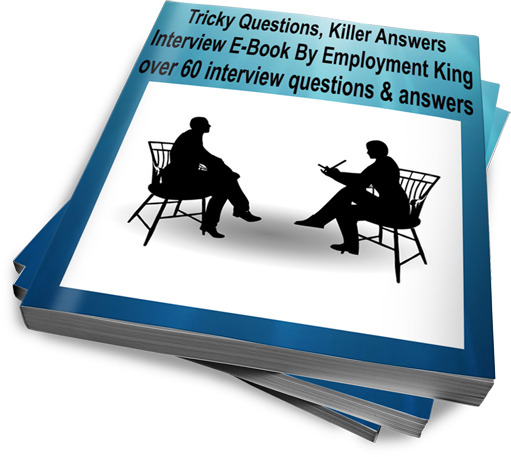
After buying The 73 Rules for Influencing the Interview using Psychology, NLP and Hypnotic Persuasion Techniques you can download a FREE copy of the Interview E-Book, Tricky Questions, Killer Answers – over 50 Interview Questions and Answers.

Interview e-cover


To download your FREE e-book click this link: Tricky Questions, Killer Answers – FREE Download and enter the code found in The 73 Rules for Influencing the Interview book PAGE 115


People Who Read This Article Also Read


Is the Objective Obsolete?

Is the Objective Obsolete?


The objective is obsolete. These days due to the high number of applicants for every signal position, employers only want a maximum of a two page resume, which in the scheme of things isn’t enough to sell yourself while recording all of your employment history.


 cv service


The objective takes up to much space, which once deleted, can now be used to sell your unique selling point. Still the employer needs to know the position you are applying for, so the key here is to add the objective on to the covering letter and let the resume to be used only to record your key selling points.


People who read this article also read:


How To use sales Psychology in Job Interviews

How to Use Sales Psychology in Job Interviews

The New book The 73 Rules for Influencing the Interview using Psychology, NLP and Hypnotic Persuasion Techniques teaches you how to sell yourself in the job interview.

You can now download chapter one on Sales Psychology for FREE  by clicking this link below to download your free extract.

Influencing the Interview – FREE EXTRACT Chapter One

The book is now available to buy on Amazon

Which of the 73 Techniques did you like best?  How will you use the hypnotic language patterns to pass your job interview? LIKE US on Facebook and add your comments and questions.


If You Enjoyed This Article You Will Also Enjoy Reading: 


Workplace Influence; Internal and External Motivation

Workplace Influence; Internal and External Motivation  


Employees are motivated and influenced in different ways, one way is through internal or external references (or meta-frames for all you NLP-ers)

For some employees they are motivated externally, they need a ‘pat on the back’ or colleagues and managers to tell them that they did a good job. External motivated workers need to see the smile or their customers face and they buzz from meeting their targets. By gaining external praise these employees know they have done a good job which motivates them to work harder.


nlp


At the opposite axis, internal motivated people don’t need or want the ‘pat on the back’ because they know when they have done a good job, they don’t need to see a customers smile, or a chart representing how well they are doing. Internal people just know ‘know’ when they have done well and that’s all the praise they need. Even when a manger says you’re not doing well, the internally motivated employee will be unconvinced unless they agree with them.

Two chefs bake cakes, one internally motivated and one externally motivated. The internal chef will know he has done a good job he can just tell, if a customer leaves part of the cake after only one bite the internal chef won’t care as he knows this is the best cake he has made. The external chef may like his cake, but the proof will be all the empty plates he sees around him and the thanks he receives from his satisfied customers. Without this external reference he may worry about his ability and at the extreme never bake that same cake again.

Frame of Reference

Internal and external feedback is just a frame of reference; in the workplace you can use these frames of reference to motivate your employees, by speaking their language.

External employees need reassurance at all times, give it to them and their workload will increase. If you want them to do X tell how wonderful this thing is, how everyone would like to be a part of this team or project because external people will go with what others tell them.

Internally motivated employees just don’t care what others think, you may shout about the wonderful project until your red in the face but the internal employee will make his own decision.

To influence the internally motivated, you have to appeal to his own experience “last year you were part of the X team, I remember you telling how much you enjoyed the marketing side of the project, well this new project has a large marketing campaign, you should take look and decide if this is something you would like to be involved in?”

Is it one or the other?

We are all motivated by both our internal and external frame of reference, but generally people have a strong preference to one of these motivational traits. By speaking in language that they can reference can motivate and influence the employee in the workplace.

If you enjoyed this article you will also enjoy reading:


Workplace Extrovert Good or Bad?

Workplace Extrovert Good or Bad?


In every workplace there is always one extrovert, but is having a workplace extrovert good or bad? Leave your comments below.

workpalce extrovert

Good Extrovert – the extrovert always has a story to tell, a quip to share and an ideas to discuss. The Monday morning blues are lightened when the extrovert arrives, their happy chatter can go along way when you need a break. The extrovert will say whatever is on their head, in team meetings they will ask the question that you have wanting to ask for the last twenty minutes, the extrovert will start the group discussions in team exercises, and the extrovert shares their thoughts on new innovative ideas. The extrovert can bring a new energy to a team, they can boost morale and the extrovert can be the one person you can turn to when you need a workplace boost.


Bad Extrovert –  the extrovert will often interrupt your work, with no thought to your forthcoming deadline, they will join in conversations even when uninvited, and they will share their thoughts and ideas when they’re not required.  The Extroverts negative side comes out, when on a late Friday afternoon, you are halfway through a series of task, your concentration is complete and then the singing extrovert enters, singing, chatting and discussing any old thing that pops in to his mind. The extrovert can eat away at your free time, as the team meeting ends, the extrovert will have a hundred questions to ask when all you want to do is go home. The extrovert can interrupt, annoy and share unwanted thoughts with whoever is in listening range.


If you enjoyed this article you will also enjoy reading:


The Difference Between a Life Coach and a Counsellor

There are many varied therapists that people can access and as a potential client, you need to look at what type of therapy best suits you.

Life coaching and counselling are two very popular options; generally, counselling will look into a person’s past, with the view to deal with the individual’s emotional pain or conflict, often discussing past events.

A life coach on the other hand will focus on the persons present and future, helping them to set and achieve goals with a focus on setting new strategies to live by and by taking immediate action.

 life coach

Let’s imagine you wanted to learn how to cook, but something was holding you back.

The counsellor would discuss with you what it is that is holding you back from cooking.

The counsellor will look at past events, maybe you had a trauma when you previous cooked in the kitchen.

The coach in this situation, would help you set goals and will look at the outcome “if you could cook in the kitchen, what would change in your life?” the coach would encourage, motivate and support you.

They would plan the different steps required to give you the skills and personal resources to happily enter the kitchen and create amazing dishes, this can include using NLP techniques to change the way you emotionally feel about a certain activity or event.

3 Strategies for Coping with a Job You Hate

Sometime you will find yourself in a job you hate, in these situations don’t be rash and hand in your resignation before finding a career you love, first follow these 3 strategies for coping with a job you hate.

careers manchester

1. Job Planning

– by starting to plan for a new career you will feel you have a way out of the current job you hate, but it’s not good enough to just say I’m looking for a new job, you need to have a plan of action “I will see a career advisor on 12/12/25, I will apply for 5 jobs a week, etc. By having a plan of actions with dates you are much more likely to commit to them, as you start to see your success you will feel less stressed in your current position. 

2. Reframe the Problem

– when looking to get a new job because you don’t like your current role there is always a reason. Maybe there are rumours of redundancies, your manager may be lazy and never does any work or maybe you asked by your boss to do extra work. This negative thinking can make you stressed and ill, which is not a good place to be in when your applying for new jobs.

First, write down what you don’t like about your job “lazy manager”, I’m asked to do all the work”, “I will have no income if I get made redundant” and then look at the positive to all these situations, by looking at the positives or by looking at the problems from a new perceptive will make you feel more positive and in control, and remember because your job hunting you not going to be there that long.

Example reframes “the potential redundancies have given me to the push I need, I have already found 3 jobs I could apply for which pay a higher salary” “Being asked to take on more work shows me that my employer values my work” “my boss not doing any work is a sign that he doesn’t know what he is doing”

 3. Killer Reference

– Knowing you are going to leave is a great feeling, now you have made that decision you can go out with a bang. Pick a new project or task and put your all into it, make it a real success. Your line manager is now highly impressed with your work ethic and skills. Once you hand in your notice, you will know that they gutted that you are leaving especially when they hear that a competitor has recruited you because you have been seen through your last project as a valuable employee. After trying to get you to stay, the only thing they can do now to show their appreciation for your hard work is to offer you a killer reference.

If you enjoyed this article you will also enjoy reading 

Improve Your Performance Review

Most organisations complete regular performance reviews with their employees.

The performance review is designed to boost the employee’s motivation by highlighting their strengths while at the same time putting in a plan of action to help the employee to overcome any working barriers.

In this instance, the performance review should be a positive experience, but many employees see the performance review as a negative experience.

This is often because managers are not trained in coaching employees, and a performance review is in essence a coaching session.

3 steps to perform better in the performance review

1. Preparation for Performance

Most employees see the performance review as a dreaded task, where the employer will pick out the employee’s weaknesses, which can only result in the employee nervously answering the questions sometimes lying about their performance to get a more positive review.

In a team meeting explain what will happen in the performance review, how you will look at the employee’s strengths and skills, that the employee will be given a chance to discuss what would make them happier and motivated in work, explain that the employee will have a chance to discuss what training they require and where they want to progress to in the business long term.

In short, you need your staff to see the review as a positive session, so many businesses will use the performance review as a tool for redundancy criteria or as a tool that can affect the employees bonus – this can only result in an unrealistic session, the key to a performance review is honesty, the employee should be able to say what they like without it affecting their future at the company, this way the employer will end with a stronger workforce

2. Solution Focus

Many managers are trained to coach their employees by asking questions such as “why did that go wrong?” negative questions can only end with the employee feeling accused, worthless and unmotivated. Using solution focus questions such as “what would you do differently next time to get a better result?” allows the employee to feel valued, confident and open.

This will lead to the employees having an action plan to follow increasing their work output, while feeling positive and motivated.

3. Venue

In the workplace, rooms are often unconsciously allocated a feeling. “The dreaded bosses office where people go when they’re in trouble” the performance review should be delivered in a neutral room, where the “power chair” (the bosses chair) has gone.

This allows for a more relaxed air, and it is important that phones are turned off and a “do not disturb” sign is placed on the door – this rule sounds obvious but is rarely followed

If You Enjoyed This Article You Will Also Enjoy Reading:

The 2 main reasons why doing something between jobs is so important

When between jobs it is easy to fall into a negative routine off staying up late watching a late-night movie, waking up past dinner time, which leads to a late breakfast and by the time you have finished watching the afternoon talk show the time for job searching is over.

To combat this negative routine job hunters need to fill their time between job searching and a second activity IE training, volunteering, etc.

There two main reasons to fill your time:

Reason One: from the employers point of view, when reading your CV a gap in your employment can look negative, with some employers generalising that gap means your lazy or you have served a short term prison sentence.

As with all generalisations this conclusion has no evidence, but once an employer has a negative thought about you it is hard to  have a change of mind. So the first reason is, by volunteering or training you will have a gap-free CV

Reason Two: a job is more then just an income it is an identify, when being between jobs you can easily become down beat or depressed falling into that negative routine we discussed before.

By undertaking a training course or by volunteering, you will create a purpose, a positive routines and a new identity, in short you will feel good about yourself keeping you motivated during your new job applications and interviews.

If you enjoyed reading this article you will also enjoy reading: